
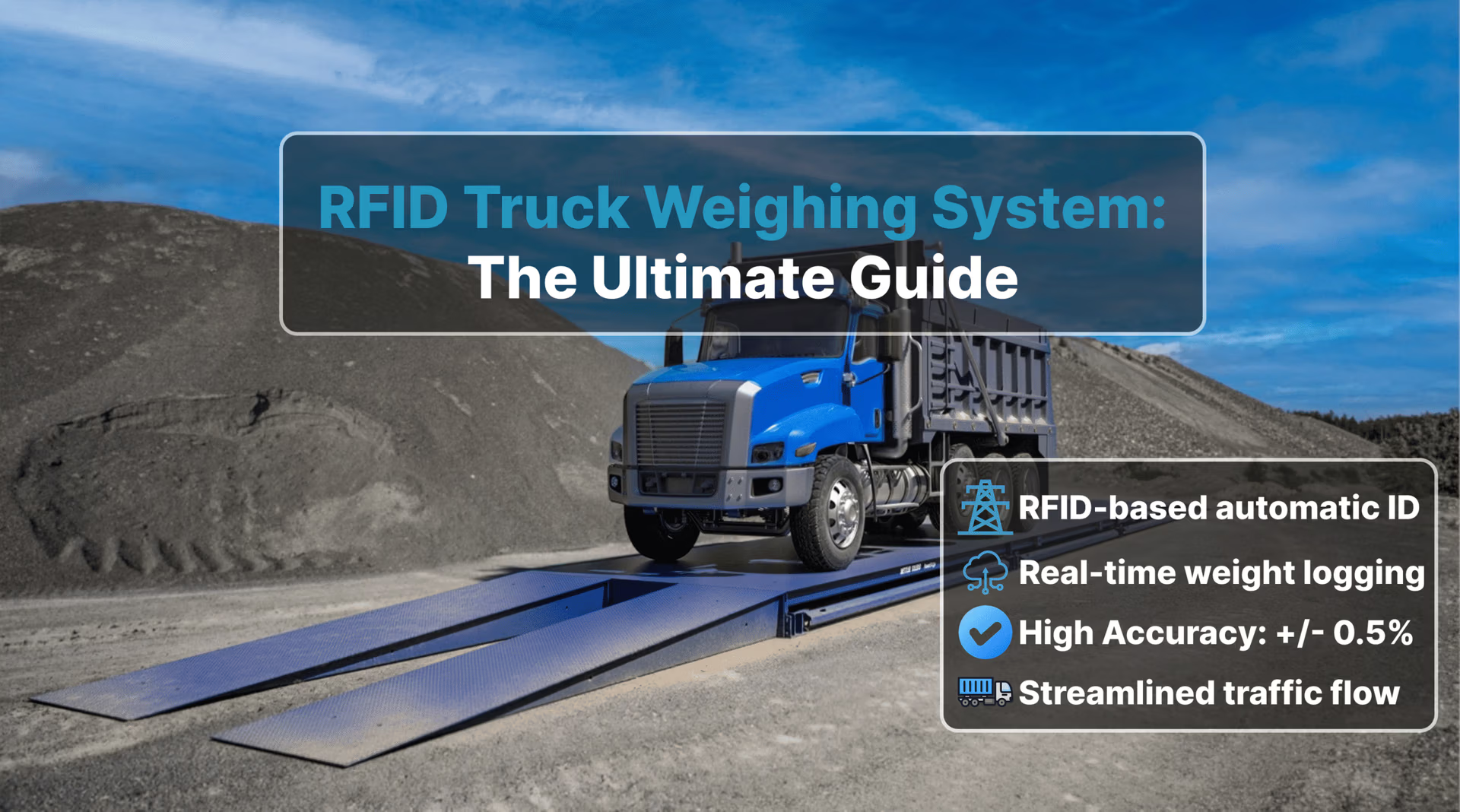
All You Need To Know Before Making The Switch To Unmanned Truck Scale
Run a high-volume operation anywhere in Saudi Arabia; mining, logistics, petrochemicals (you name it) and the weighbridge is almost always one of the first things that starts causing problems after a while. As trucks stack up and attendants are buried in paperwork in 45°C heat, one thing is bound to happen. Numbers entered by hand, which means the probability for error is real. And at the end of the month, someone has to reconcile all of it.
An RFID truck weighing system is how you fix that. And I’m not saying partial fix. I mean entirely.
This guide covers the full picture: how the technology actually works, what our official partner, Mettler Toledo’s system includes and why the individual components matter, and what’s driving the shift toward unmanned weighbridge setups across KSA. If you’re evaluating a first automated scale or replacing something that’s been held together with workarounds for years, start here.
What Is an RFID Truck Weighing System?
RFID, aka Radio Frequency Identification, isn’t a new concept, but its application in truck weighing is one of the more practical implementations of the technology. Every vehicle in your fleet carries a tag. Could be windshield-mounted or embedded in the chassis. When that truck pulls up to the weighbridge, a reader antenna picks up the signal from several meters away and there is an instant notification: the system identifies which vehicle, which driver, what they’re hauling, what the last recorded tare weight was.
Nobody steps out of the cab. Nothing gets written down. The weighing transaction runs automatically, generates a digital ticket, and sends it where it needs to go. That’s the core of it. What turns that into a serious operational tool is everything built around it: the load cells, the software, the automation hardware, the data pipeline into your ERP. We’ll cover all of it.
How a Weighing Transaction Actually Runs
The flow is simpler than most people expect once they see it laid out.
Vehicle entry. The truck approaches. The RFID reader catches the tag signal before the vehicle even reaches the barrier. System authorization kicks in; opens the gate and logs the timestamp. All done with no check-in or windshield conversation with a guard.
Tare weight capture. First-time vehicles or any vehicle due for a tare update roll onto the scale. The system connects the dot and links RFID data to the weighing record, captures the empty weight, photographs the truck, and stores everything against that vehicle’s profile.
Loading or unloading. The truck does what it’s there to do: collects ore, delivers aggregate, picks up bulk material, loads up wholesale goods for retail, whatever the site moves.
Gross weight capture. On the return pass, the system recalls the stored tare, captures the loaded weight, calculates net automatically, and generates the transaction record. Receipts go to a printer on-site or direct to the driver’s device.
Data pushes to your systems. Every weight, every timestamp, every vehicle ID and material type goes into your ERP or fleet management platform in real time. All you’ve got to deal with are clean records, ready for audit.
Door to door or gate to gate, the whole process is wrapped up in under two minutes. No manual steps anywhere in the chain to slow down the procedure or introduce errors.
What Mettler Toledo’s System Includes: The Breakdown
Our official partner, Mettler Toledo, builds industrial weighbridges for the kind of hot Saudi environments that break other equipment. Their truck scale ecosystem embodies that philosophy. Here’s what’s in it and what each piece actually does for your operation.
IND9U Unattended Terminal with RFID Reader
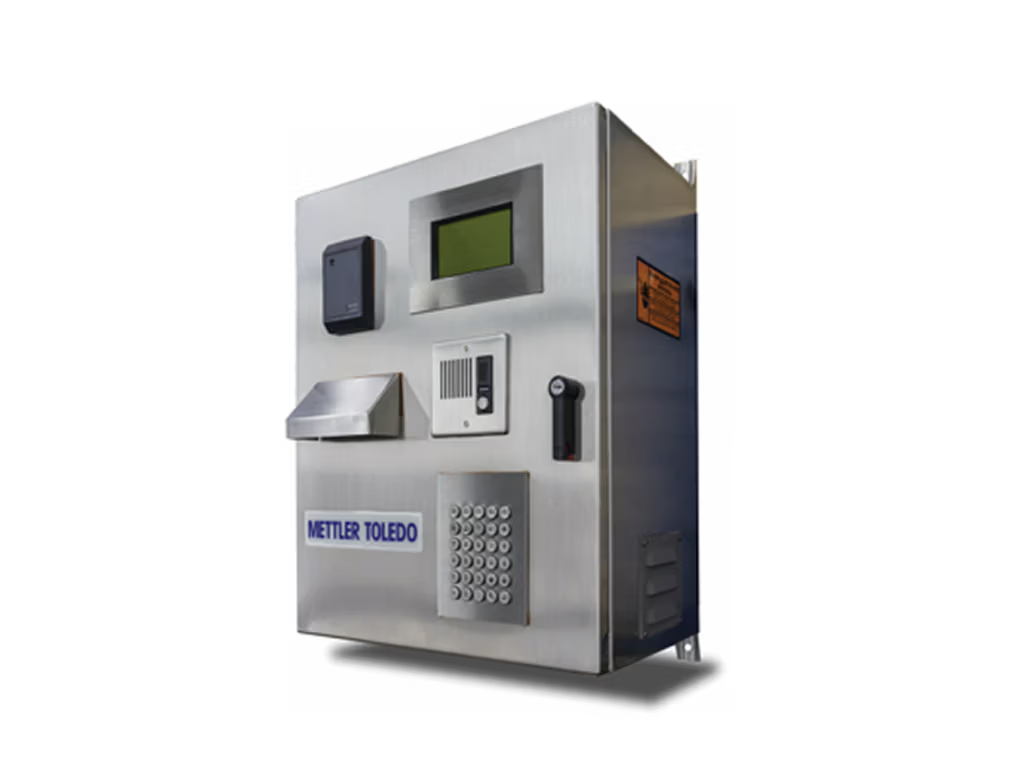
The IND9U is a weatherproof kiosk, driver-facing, designed for direct sunlight and extreme heat. Built to read RFID cards or tags, print receipts via integrated thermal printer, manage transactions, and has a built-in intercom for the occasional situation that needs a human response.
The above is the game changer. Not only does it allow drivers to seamlessly carry out their duty without leaving their vehicle, it also eliminates the scale attendant role for routine transactions. Weekdays, weekends, staffing gaps, or even in the case of public holidays, you are always online and operational. And nobody’s standing in the sun at noon in Riyadh managing paperwork. That last point sounds minor until you’ve watched it affect both staff retention and safety incident rates.
DataBridge™ Transaction Management Software
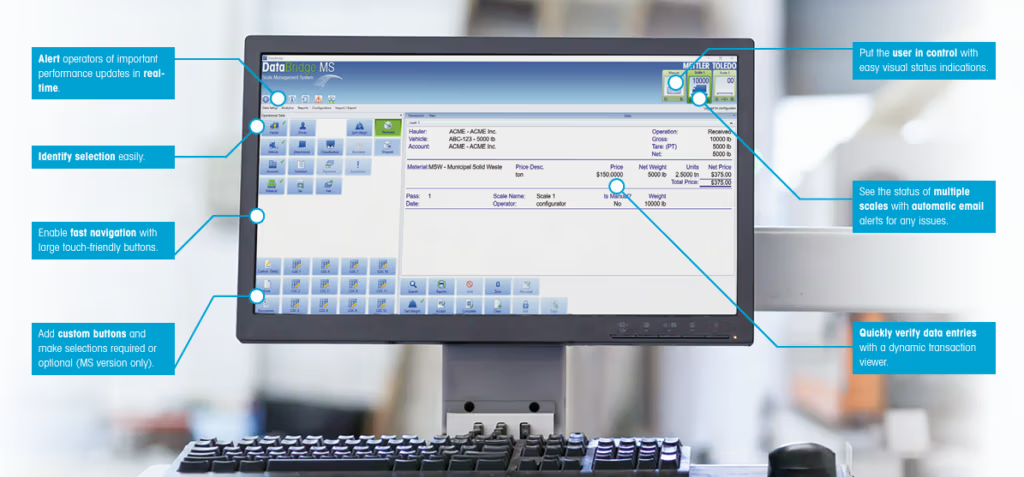
DataBridge is Mettler Toledo’s scale management software, and it comes in tiers that reflect actual operational complexity rather than just feature count. SS covers standard single-site setups. MS handles high-volume sites with fraud detection and multi-scale connectivity. AP is built for secure unattended environments. ES manages centralized data across multiple sites.
With all of them, we help you solve one key problem: weighbridge that extracts data, manual entry eliminated, and reports generated in seconds. The MS tier adds real-time weight curve monitoring that flags anomalies; the kind that tend to indicate either equipment issues or someone testing the boundaries of what they can get away with.
Those are the kind of nuances you don’t want to leave to chance. We’ve seen transaction speeds reportedly go as high as 50% faster as opposed to traditional ticketing setups. These are the kind of little details that quickly add up when you’re processing hundreds of trucks a day.
POWERCELL® PDX® Smart Digital Load Cells
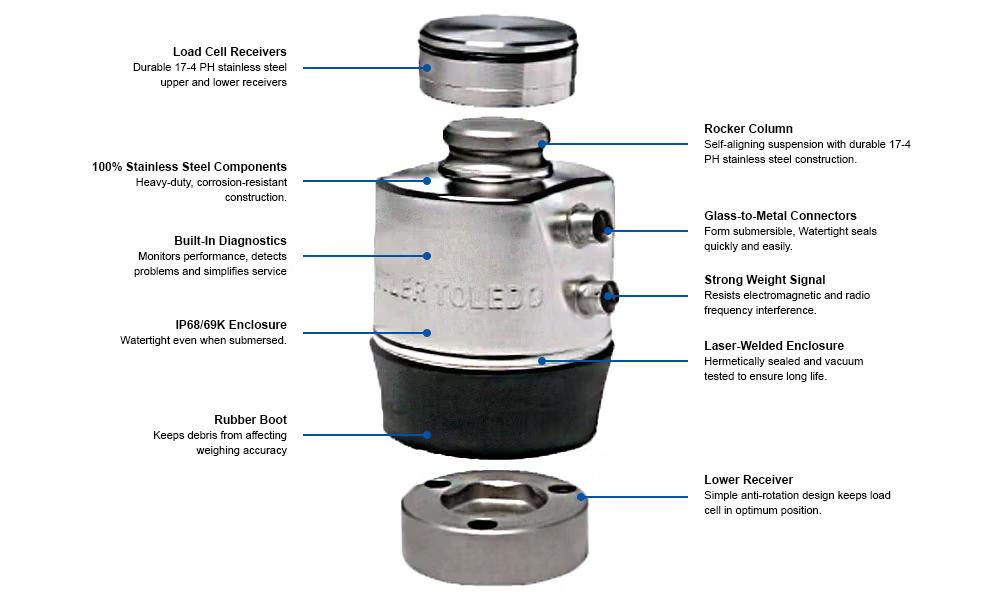
Now to a truly important part. Load cells are where a lot of systems quietly fail, especially in environments with extreme temperature limits, vibration, and the occasional lightning strike. The PDX cells from Mettler Toledo, our official partner, address that directly. They’re digital, self-diagnosing, and each one monitors its own performance continuously. Issues warnings before they cascade into downtime.
The StrikeShield lightning protection is tested to 80,000 amperes, which matters in parts of the Kingdom more than people often account for. IP68 and IP69K ratings mean they hold up to submersion and high-pressure washdown. Mettler Toledo backs them with a 10-year warranty. For an operation running 200+ trucks daily, you can’t afford to experience a load cell failure.
Because, doing so shuts revenue down. Our load cells offer up to 50% reduction in maintenance cost, saving you a lot of margin in the long run. But the bigger value is the predictive alert system that keeps you from finding out about a problem when the scale stops working. That’s a proactive advantage you have over your competitors that are not using such.
TruckPass™ Weigh-in-Motion (WIM)
TruckPass lets trucks cross the scale at up to 8 km/h without stopping. RFID data integrates with each weight record automatically. Compared to static weighing, our data indicates up to 3 times increase in throughput.
If you have peak-hour congestion at the weighbridge, and most high-volume sites do, this is the most direct answer to it. Three times the throughput means the queue that was stacking 20 trucks deep at 7am either disappears or becomes manageable. And that’s not to mention that less idling means lower fuel burn and lower emissions, which is increasingly relevant for operations looking to maintain their sustainability obligations.
Gates, Lights, Induction Loops, and Cameras
The IND9U connects to all of it: traffic lights, induction loops for vehicle detection, automatic barrier gates, cameras. A system that takes a picture of every transaction, manages vehicle flow and has it all linked to the weight record and driver ID.
The practical value here is in dispute resolution. Think of this as your all seeing eyes and all hearing ears. When a customer claims their delivery was short, or a contractor pushes back on a material charge, you have a timestamp, a photo that backs it up, a weight, all tied to a driver ID. It’s all on record and ready to be accessed. That resolves disagreements with data rather than with memory, and it removes a substantial amount of friction from supplier and customer relationships over time.
Why Unmanned RFID Weighing System Makes Sense in Saudi Arabia
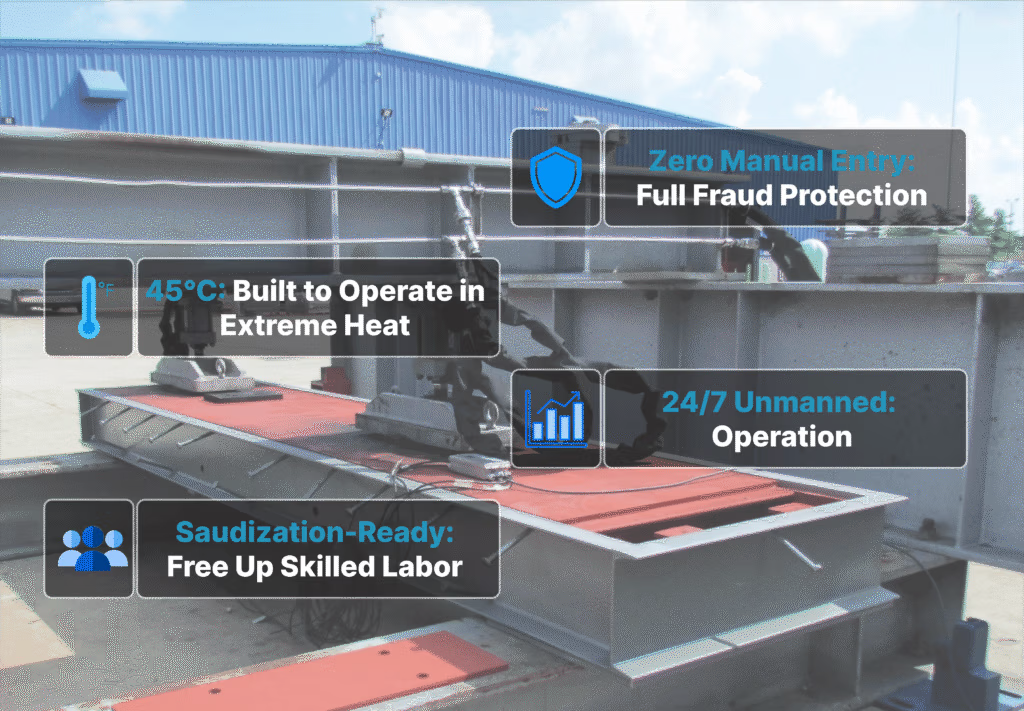
Yes, we can say some of the reasons are operational. Other times, they are more specific to the KSA context in ways that suppliers outside the region don’t always account for. Let’s go over them one after the other:
Labor deployment. Vision 2030 and the Saudization requirements across major industries shape how operations staff their sites. Running a scale house 24/7 with trained attendants can be inflexible. Automating the weighbridge doesn’t eliminate jobs, it only redirects the people who were doing manual data entry and shift coverage into roles that actually benefit from human judgment.
Temperature. Sustained heat above 45°C for months at a stretch creates real constraints on manual operations. The IND9U kiosk is sealed and designed for exactly that environment. Mettler Toledo’s POWERCELL load cells include onboard temperature compensation that continuously corrects for measurement drift as conditions change.
Traceability requirements. So many crucial operational use cases here. Proof-of-delivery in logistics, mining output reporting, bulk material tracking in oil and petrochemical; these all require records that are accurate, tamper-evident, and audit-ready. The RFID Truck Weighing System creates a highly structured and documented chain of custody for every transaction without anyone having to manually build that record each time.
Fraud. In a high-volume operation, it’s expected to find unscrupulous individuals that might want to cause havoc: weight manipulation, unauthorized vehicles, and falsified records. These are not just one offs, they are genuine cost centers that put operation at risk. With a simple yet sophisticated combination of automated weight monitoring, RFID identification, and photo capture, Global Scales and Systems offers a system that’s genuinely difficult to work around. The MS tier of DataBridge adds anomaly detection specifically for this.
Which Sectors See the Most Immediate Return
Mining and quarrying. High truck volumes, harsh environments, and strict material tracking requirements. The POWERCELL load cells were designed for exactly this kind of abuse.
Logistics and transport hubs. Ports, dry ports, and logistics parks, particularly those tied to Vision 2030 infrastructure development, need scalable, high-throughput weighing that talks to ERP and fleet management platforms. DataBridge handles that integration.
Oil and petrochemicals. Bulk material transfers in this sector require legally defensible, auditable weight records. Mettler Toledo’s OIML and NTEP-certified equipment meets the international trade measurement standards recognized in KSA and across the GCC.
Construction and aggregates. Large sites moving sand, gravel, and concrete at volume need fast, reliable weighing with minimal staffing. The unmanned kiosk setup is a natural fit.
What to Actually Evaluate in a Weighbridge Supplier
The market in Saudi Arabia has options, and not all of them deliver the same level of technical capability or post-installation support. A few things worth pressing on:
OIML certification. Load cells and systems used for legal-for-trade weighing in the Kingdom must meet OIML R60 standards. Mettler Toledo’s POWERCELL MTX and PDX cells carry OIML C3/C4/C6 certification. This is an important verification point with the supplier you’re evaluating. You can’t just assume.
Local service capability. A weighbridge is critical infrastructure. When something breaks, you want assurances that a certified engineer will be on-site within hours. Ask every supplier how many service engineers they have in-country and what their contractual response time looks like. The more details provided, the better.
ERP and system integration. DataBridge connects to ERP platforms, fleet management systems, and third-party reporting tools. That level of out-of-the-box integration isn’t universal. Ask for specifics before committing.
Multi-site management. DataBridge ES allows centralized management across multiple facilities. If you operate across several sites in KSA or elsewhere in the GCC, this is worth understanding before you buy a system that creates data silos.
Retrofit options. Already have a weighbridge? Mettler Toledo’s POWERCELL conversion kits make the switch seamless. We upgrade competitor scales with current-generation load cell technology. In this case, we’d support your goal to ensure a cost-effective fit rather than full replacement outlay.
Frequently Asked Questions
Can the system run with no attendant at all?
Yes. IND9U combined with DataBridge AP or MS and the automation peripherals is built for fully unmanned autonomous operation. Drivers handle everything.
What happens with a truck that doesn’t have an RFID weighing tag?
The system can be configured either to allow manual entry at the kiosk for non-registered vehicles or to hold them at the gate until authorization is confirmed. That’s a workflow decision, not a technical constraint.
Does extreme heat affect accuracy?
The POWERCELL MTX load cells include an onboard microprocessor that continuously corrects for temperature-related measurement drift. They’re independently tested across temperature ranges that include desert operating conditions.
Are the weight records valid for trade settlement?
Yes. Mettler Toledo’s systems carry OIML and NTEP legal-for-trade certifications, recognized in Saudi Arabia and across the GCC. The records are valid for commercial invoicing and, if it comes to it, dispute resolution.
What does ROI typically look like?
It depends on operation size and what you’re currently spending on labor, throughput losses, and error correction. Most high-volume sites see return within 12–18 months, driven by labor savings, faster processing, and fraud reduction. Smaller sites may take longer; while operations running 150+ trucks daily often come in faster.
Ready to Talk?
If any of this describes where your operation is right now: trucks queuing, data you can’t fully rely on, staffing costs that keep climbing, or a system that’s just old and clunky, a conversation could help optimize your operations and boost production.
Get in touch with our team → Request Free Site Assessment
Learn more about the DataBridge software →
All product data referenced in this article is sourced from Mettler Toledo. Specifications are subject to change; contact us for current technical documentation.

 Click to start chat