
Types of Industrial Weighing Scales and Which Industries Use Each
From weighbridges to checkweighers, explore every type of industrial weighing scale used across KSA's key sectors, with specs, pricing, and how to choose right.

There's a conversation I keep having with procurement managers across the Eastern Province, and it usually starts the same way. They've got a budget, a vague requirement ("we need weighing scales"), and three quotes sitting in front of them that might as well be in three different languages. One vendor is pitching a floor scale. Another's pushing a full weighbridge. A third is talking about load cells. And nobody has explained the basic question: what type of weighing scale does your operation actually need?
The wrong answer to that question costs money. Not just the capital outlay; the downtime, the SASO compliance failures, the recalibration bills, the throughput losses. Industrial weighing scales are not a commodity category where you can just pick the cheapest option and walk away. The type of scale is a function of your application, your throughput, your payload, and your regulatory environment. In KSA, add ambient temperature tolerances and SASO certification requirements to that list.
This article breaks down every major type of industrial weighing scale, what it does, how it works, what it costs, and exactly which industries it's built for. No fluff.
01 What "Industrial Weighing Scale" Actually Covers
Before getting into types, it's worth being clear about what we mean. The term industrial weighing scales spans everything from a 300kg stainless-steel bench scale in a pharmaceutical cleanroom to an 80-tonne truck weighbridge buried into a desert access road at a cement plant. That's a staggering range. What ties them together: they're designed for continuous or high-frequency use, they're built to withstand industrial environments, and they're typically required to meet legal-for-trade or SASO metrological standards.
There are roughly eight primary types of industrial weighing scales in active use across GCC industries today. Each is engineered around a different measurement scenario. Knowing the difference between them, and matching the right type to your operational reality, is one of the few genuinely straightforward procurement decisions in industrial equipment. If you get this right, everything downstream gets easier.
02 Weighbridge Scales (Truck Scales / Axle Weighers)
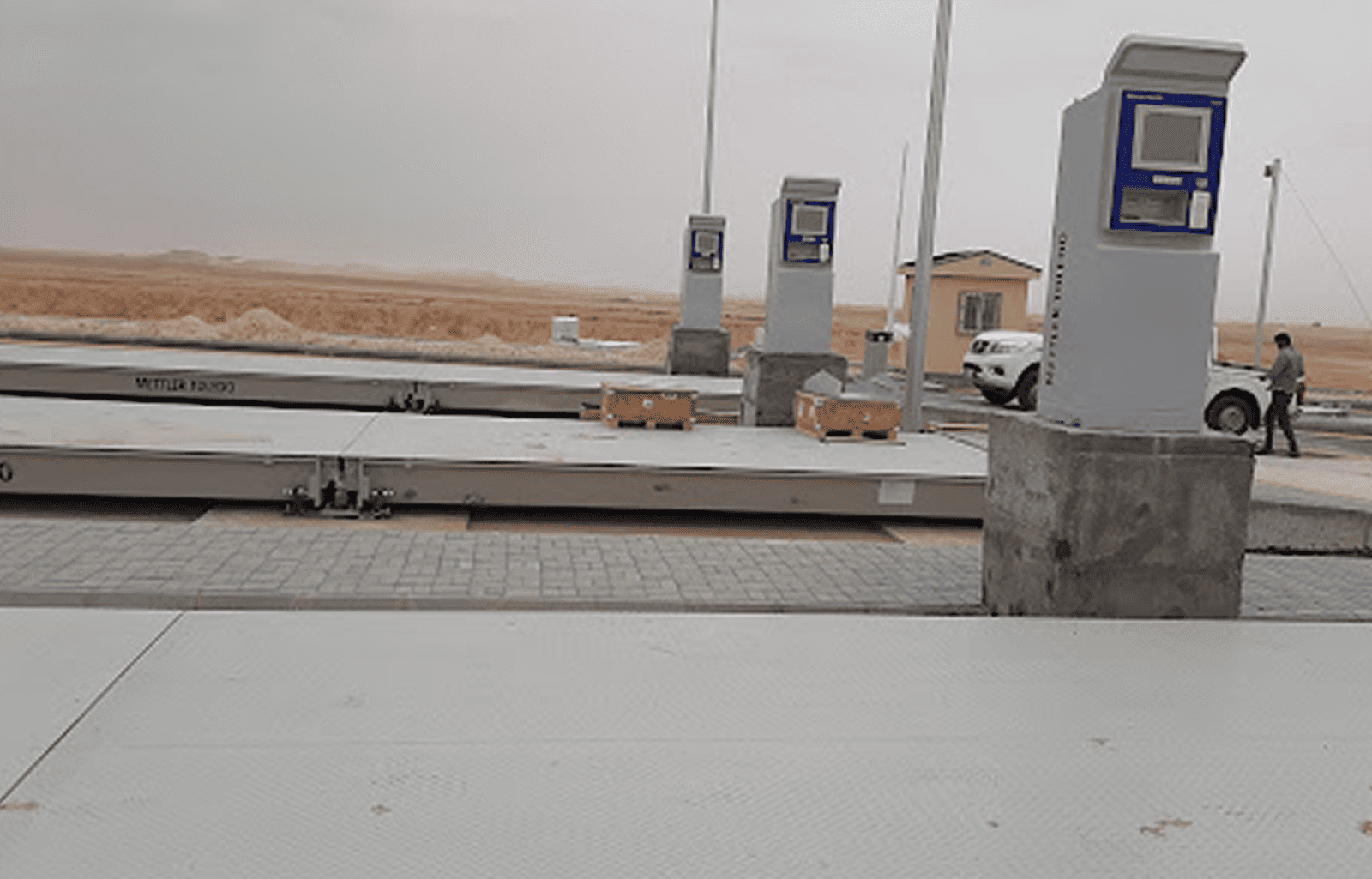
Weighbridges are the heavyweights of the industrial weighing world, and I mean that both literally and figuratively. A standard truck weighbridge handles anything from 30 to 150 tonnes, with platform lengths ranging from 18 to 24 metres. In KSA, you'll find them at the entrance of every major quarry, cement plant, logistics hub, and port. They're not glamorous. But without them, you don't have verified custody of the materials moving through your gates; and in a compliance environment as tight as Saudi Arabia's, that matters enormously.
Modern weighbridge installations use load cell technology, typically four to eight cells positioned beneath the platform, which transmit weight data to an above-ground terminal. The premium end of the market, like the Mettler Toledo POWERCELL® PDX® system, brings a 10-year load cell warranty with built-in predictive diagnostics that flag degrading performance before you hit a failure. In the desert conditions of the Eastern Province, where ambient temperatures routinely breach 50°C and summer lightning storms over industrial sites are common, the POWERCELL's StrikeShield lightning protection is genuinely critical, not optional.
Who uses weighbridge scales?
- Cement and aggregate producers (inbound raw materials, outbound finished goods)
- Logistics and transport operators (payload verification, legal-for-trade billing)
- Oil and gas facilities (chemical and equipment movement)
- Mining and quarrying operations
- Port and terminal operators (KSA's Vision 2030 port expansions are driving serious procurement activity here)
- Waste management and recycling facilities
Unattended vs. attended operation is a major decision point. If you're running 300+ truck movements a day, and some of our logistics clients in Riyadh certainly are, you can't have a human operator processing every transaction. The Mettler Toledo IND9U Unattended Terminal with RFID handles truck identification and weight capture automatically, with an IP69K-rated stainless steel enclosure that survives the sandstorm season. That changes your labour model meaningfully.
| Configuration | Typical Capacity | Est. Price (SAR) | Est. Price (USD) |
|---|---|---|---|
| Basic surface-mounted (no RFID) | 60–80 tonnes | SAR 85,000–130,000 | $22,500–$34,500 |
| Mid-range with RFID terminal | 60–100 tonnes | SAR 130,000–220,000 | $34,500–$58,500 |
| Full spec (POWERCELL, DataBridge) | 80–150 tonnes | SAR 220,000–400,000 | $58,500–$106,500 |
| Enterprise (custom, pit-mounted) | 100–200+ tonnes | SAR 400,000+ | $106,500+ |
These are indicative budget ranges only, not formal quotes. Civil works, foundation design, and site conditions affect final pricing significantly.
“ Without verified custody at your gates, you don't have a billing record; you have a guess. — Section 02
03 Platform Scales (Floor Scales / Industrial Bench Scales)
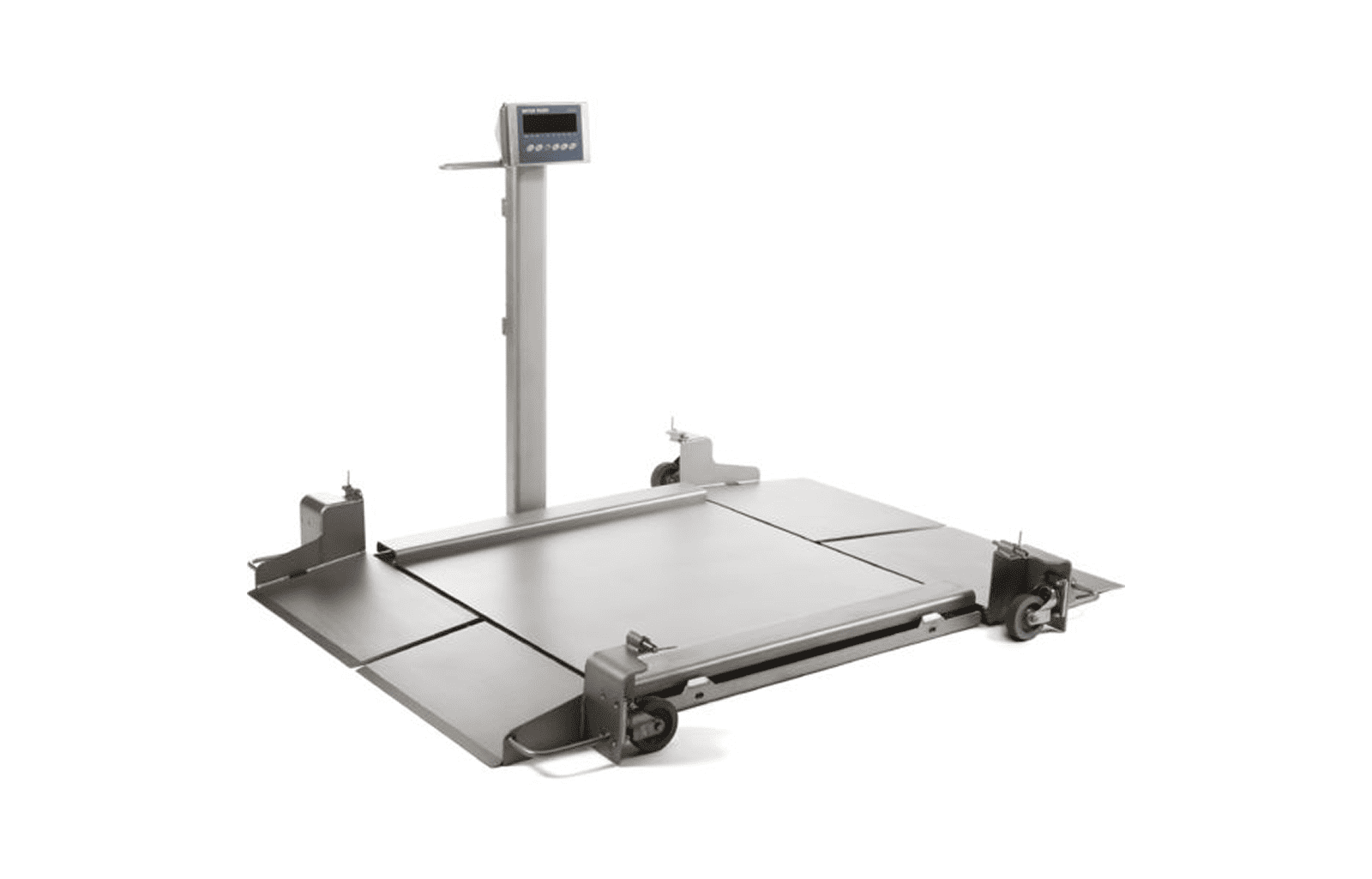
Platform scales are probably the most widely used type of industrial weighing scale in absolute terms. Walk into any warehouse, production floor, or loading bay and you'll find one. They range from compact bench units handling 5–50kg up to large floor platforms managing 2,000–5,000kg, all sitting flush with or slightly above the floor surface.
The design is simple: a rigid load-bearing platform over one to four load cells, connected to a digital indicator. What varies is the specification, because a platform scale for a food production facility in Jeddah needs different materials and certifications than one in a petrochemical plant in Jubail. Stainless steel, IP67/IP69K ratings, ATEX zoning, OIML approval, SASO certification; each industry has its own compliance requirements layered on top.
Here's the thing nobody mentions when you're comparing basic platform scale quotes: the indicator matters as much as the platform. A cheap indicator in a dusty environment, even one with a decent platform, will give you drift, instability, and calibration failures. We keep seeing this pattern with clients who bought on price.
Pro tip
When comparing platform scale quotes, always ask the vendor to specify the indicator model separately. A well-built platform paired with an under-rated indicator is the most common reason scales fail early in harsh KSA environments. IP rating, temperature tolerance, and EMI shielding on the indicator should all appear in the spec sheet before you sign anything.
Who uses platform scales?
- Food production and FMCG (portion control, batch weighing, recipe compliance)
- Pharmaceutical manufacturing (precise dispensing, GMP-compliant designs)
- Petrochemical and chemical facilities (ATEX-rated variants for explosive atmospheres)
- Warehousing and distribution (pick and pack verification, goods-in weighing)
- General manufacturing (component weighing, quality control)
- Retail wholesale and markets (SASO legal-for-trade units)
04 Checkweigher Scales
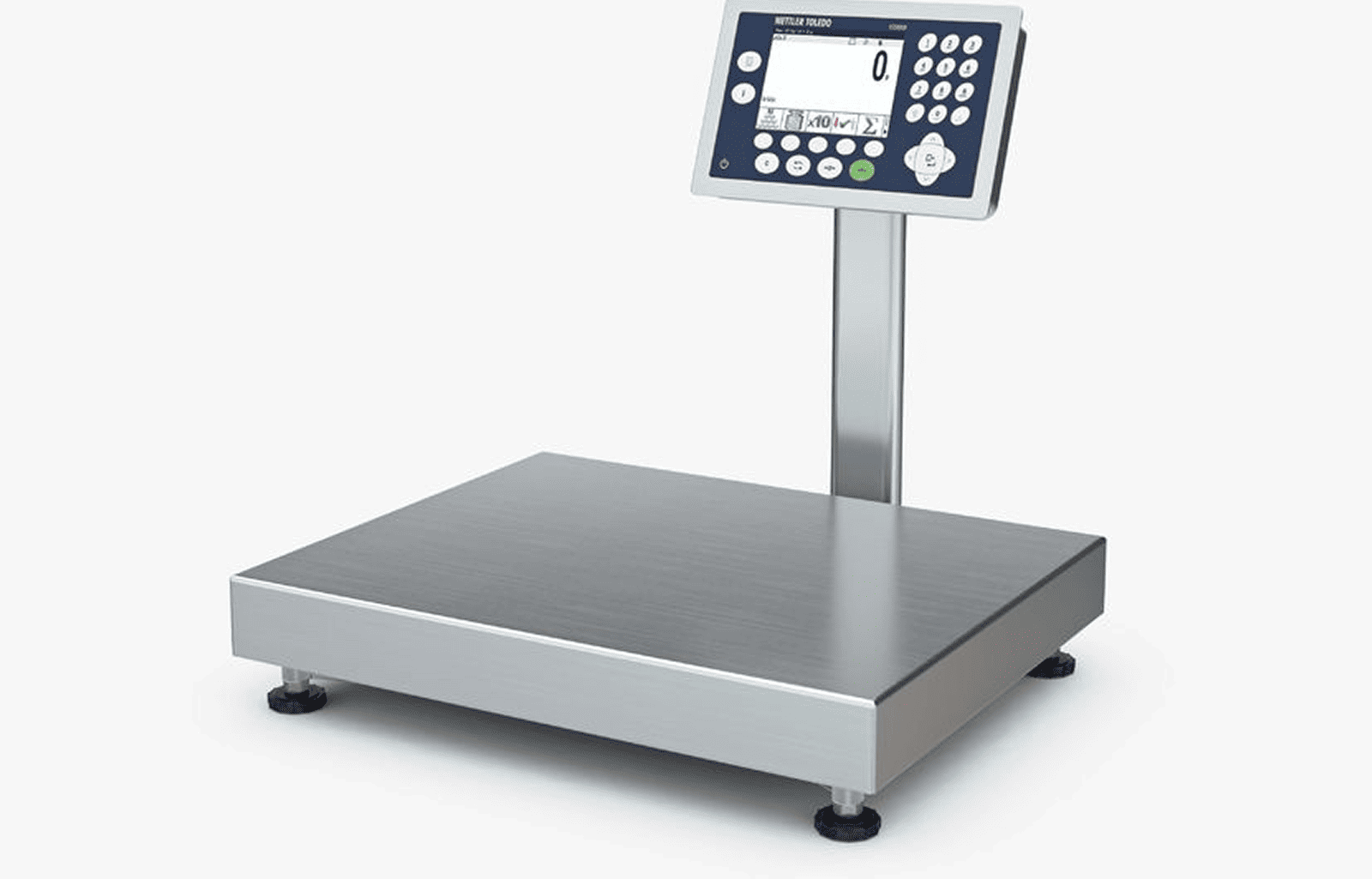
Checkweighers are a different animal entirely. These aren't static weighing stations; they're inline, high-speed systems that weigh products in motion as they travel along a production line, automatically rejecting anything outside a predefined weight tolerance. We're talking measurement cycles of 50 to 300+ products per minute.
For KSA food manufacturers, pharmaceutical packagers, and consumer goods producers, checkweighers are increasingly non-negotiable. SFDA product labelling regulations require accurate declared net weights. Getting it wrong at the retail level triggers fines, product recalls, and reputational damage; none of which look good in an annual Vision 2030 compliance report.
The Mettler Toledo checkweigher range covers everything from a 10g powder sachet to a 30kg case. The newer systems tie directly into MES/ERP environments via DataBridge, pushing weight data upstream in real time so QC managers can catch drift patterns before they generate non-conforming batches.
Who uses checkweigher scales?
- Food and beverage manufacturers (net weight compliance, SFDA regulations)
- Pharmaceutical packaging lines (tablet count, capsule fill weight verification)
- FMCG and consumer goods (packaging integrity, underfill/overfill prevention)
- Export-oriented manufacturers (customs and duty weight accuracy)
05 Crane Scales and Hanging Scales
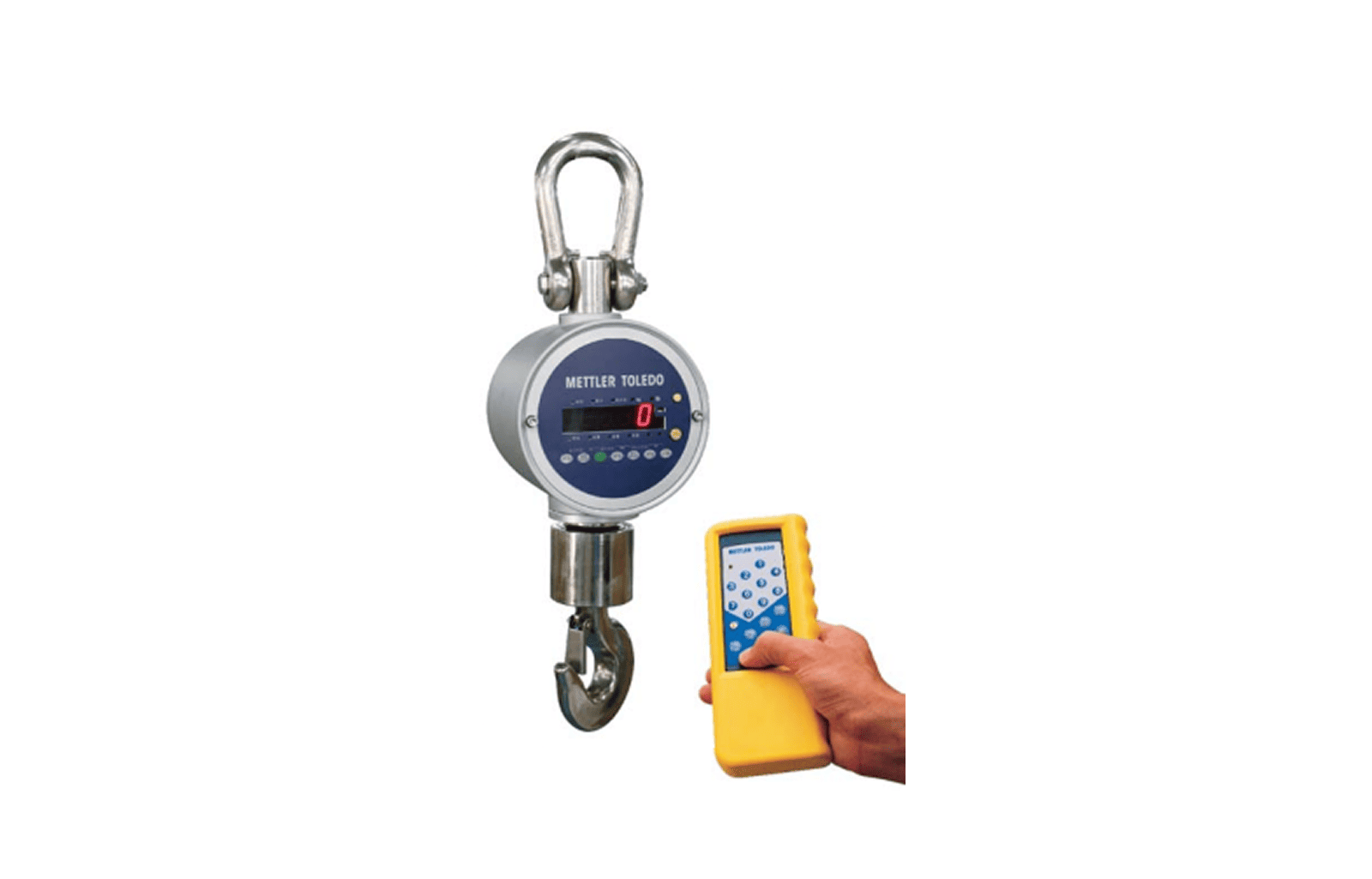
Any time you're lifting, you're weighing. Crane scales, which attach to overhead hoists and lifting equipment, let operators know the weight of a suspended load in real time; both for safety and for process tracking.
In Saudi Arabia's heavy industries, this is where crane scales earn their keep. An offshore oil platform component gets lifted and weighed for logistics calculation. A steel coil gets weighed before it hits the rolling mill. A construction module destined for a NEOM megaproject gets a certified weight before transport. These aren't "nice to have" readings; they're operational data points with safety, cost, and compliance implications.
| Type | Capacity Range | Common Application |
|---|---|---|
| Shackle crane scale | 500kg–50 tonnes | General industrial lifting |
| Hook crane scale | 100kg–5 tonnes | Warehousing, fabrication workshops |
| Below-hook dynamometer | 1–1000 tonnes | Heavy engineering, port cranes |
| Wireless digital crane scale | 500kg–30 tonnes | Remote display, overhead gantry systems |
Who uses crane scales?
- Steel fabrication and metalworking plants
- Shipbuilding and offshore facilities (Jubail, Dammam industrial clusters)
- Construction and mega-project contractors (NEOM, Red Sea Project)
- Port and terminal operations
- Mining and mineral processing
06 Conveyor Belt Scales (Belt Weighers)
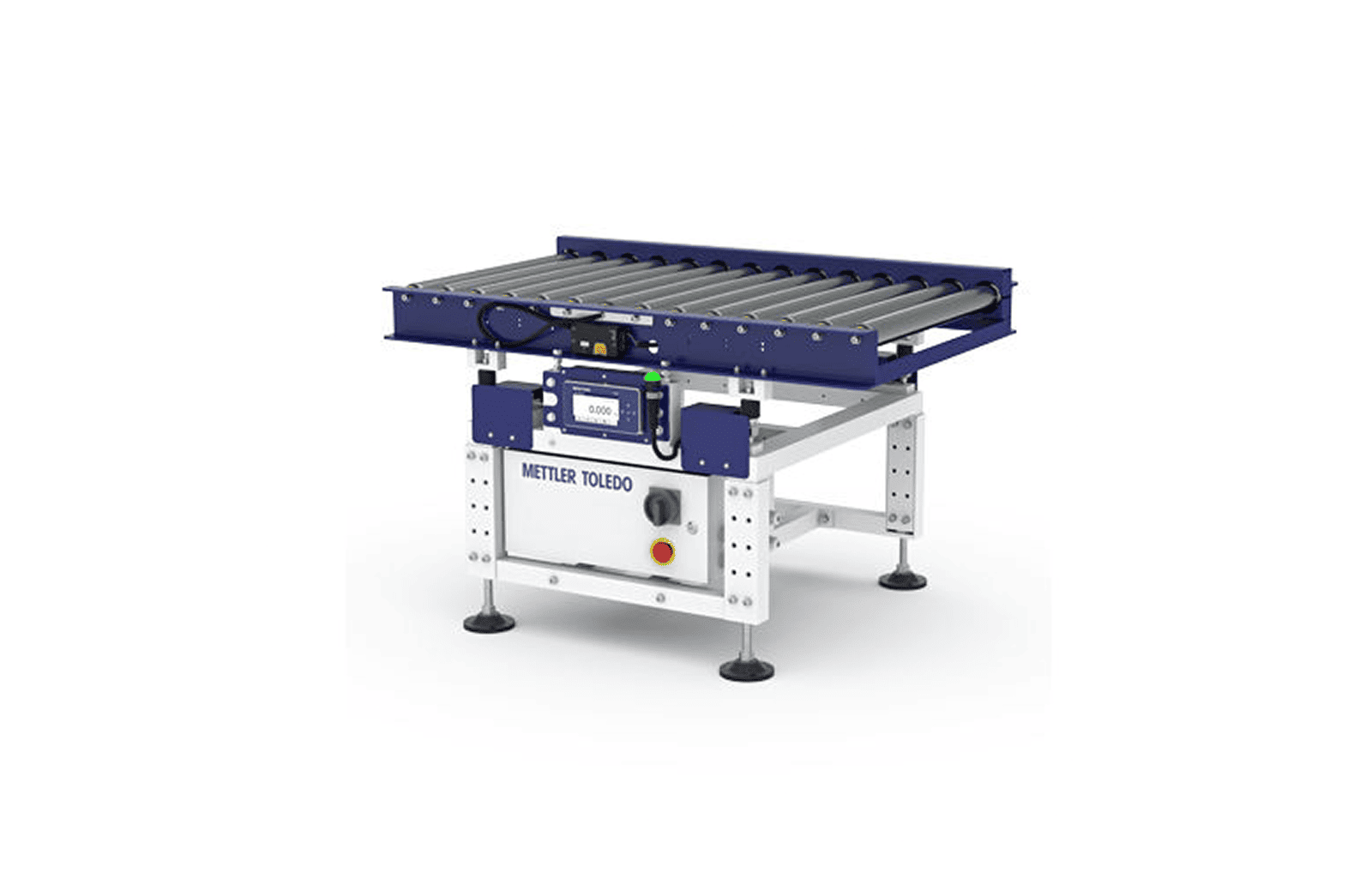
If weighbridges are for discrete vehicle loads, conveyor belt scales are for continuous bulk material flows. They measure the weight of material moving across a conveyor in real time, calculating throughput by combining a load cell reading with a belt speed sensor. The output is a flow rate (tonnes/hour) and a running total.
For cement plants, mining operations, and bulk terminals, this is critical data for production management. You want to know exactly how many tonnes of limestone went into the kiln this hour; not next week when you reconcile your inventory. Real-time belt scale data feeds production control systems, optimises energy consumption per tonne, and provides audit-ready transfer records.
Integration with DataBridge (Mettler Toledo's process weighing software) is where the real operational value comes in; the belt scale data becomes part of a connected production record, feeding ZATCA-compliant billing documentation automatically.
Who uses conveyor belt scales?
- Cement and lime producers (raw material and clinker flow measurement)
- Mining and aggregate operations (ore and tailings tracking)
- Grain silos and agricultural bulk handling
- Port bulk terminals (coal, phosphate, grain)
- Fertiliser and chemical bulk production
“ Many bulk operations need both: a weighbridge at the gate for billing compliance, and belt weighers inside the plant for real-time production management. — Section 06
07 Tank and Silo Weighing Systems
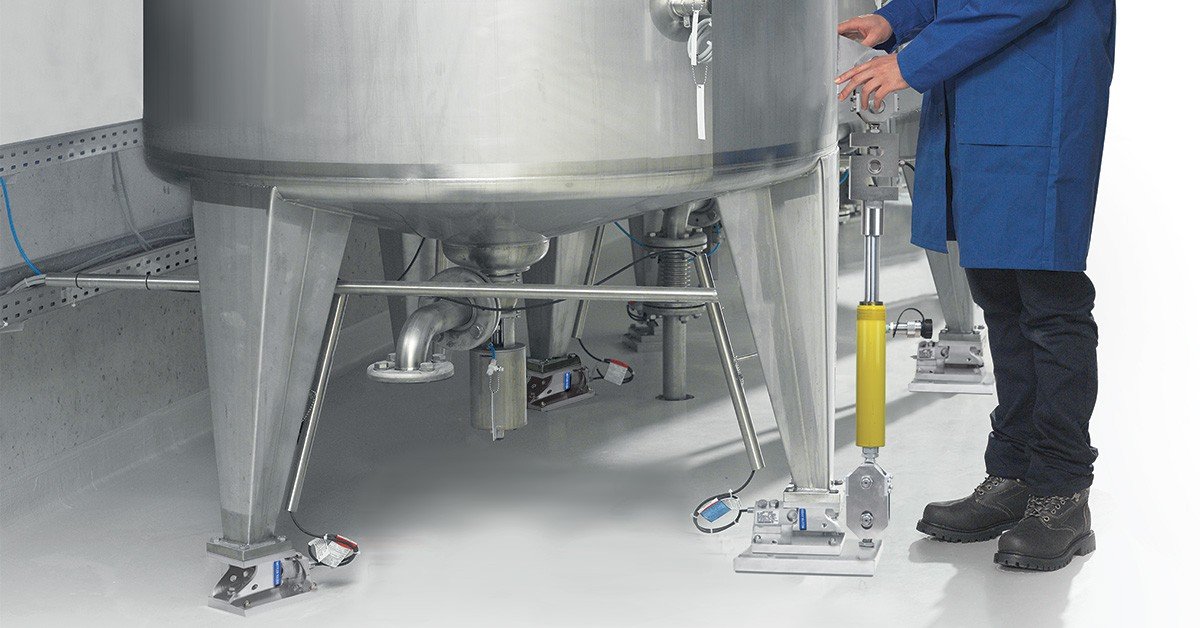
Rather than weighing what goes in or comes out, tank and silo weighing systems measure what's inside a vessel at any given moment. The load cells sit under the vessel supports, typically three or four cells per tank, and give a continuous weight reading that your SCADA or DCS can interpret as a fill level.
The clients most likely to underestimate the value of this are chemical and petrochemical operators who've been relying on level sensors for inventory management. Level sensors work on the geometric assumption that your material has a consistent bulk density. That's fine when it's water. It's not fine when it's a hygroscopic powder that packs differently depending on humidity; which happens constantly in coastal Saudi facilities. Weight-based level measurement doesn't care about density variation. It just measures mass. Much harder to fool.
The POWERCELL PDX load cells handle the thermal expansion challenges of large vessels particularly well, which matters in KSA where a steel silo sitting in direct sun can expand significantly, introducing measurement error in systems that aren't designed for it.
Who uses tank and silo weighing systems?
- Petrochemical plants (reactant dosing, product inventory)
- Food processing (ingredient silos, blending vessels)
- Cement and lime plants (raw meal and finished cement silos)
- Pharmaceutical manufacturing (liquid and powder vessel management)
- Water and wastewater treatment (chemical dosing tanks)
08 Axle Weighers and Weigh-in-Motion (WIM) Systems
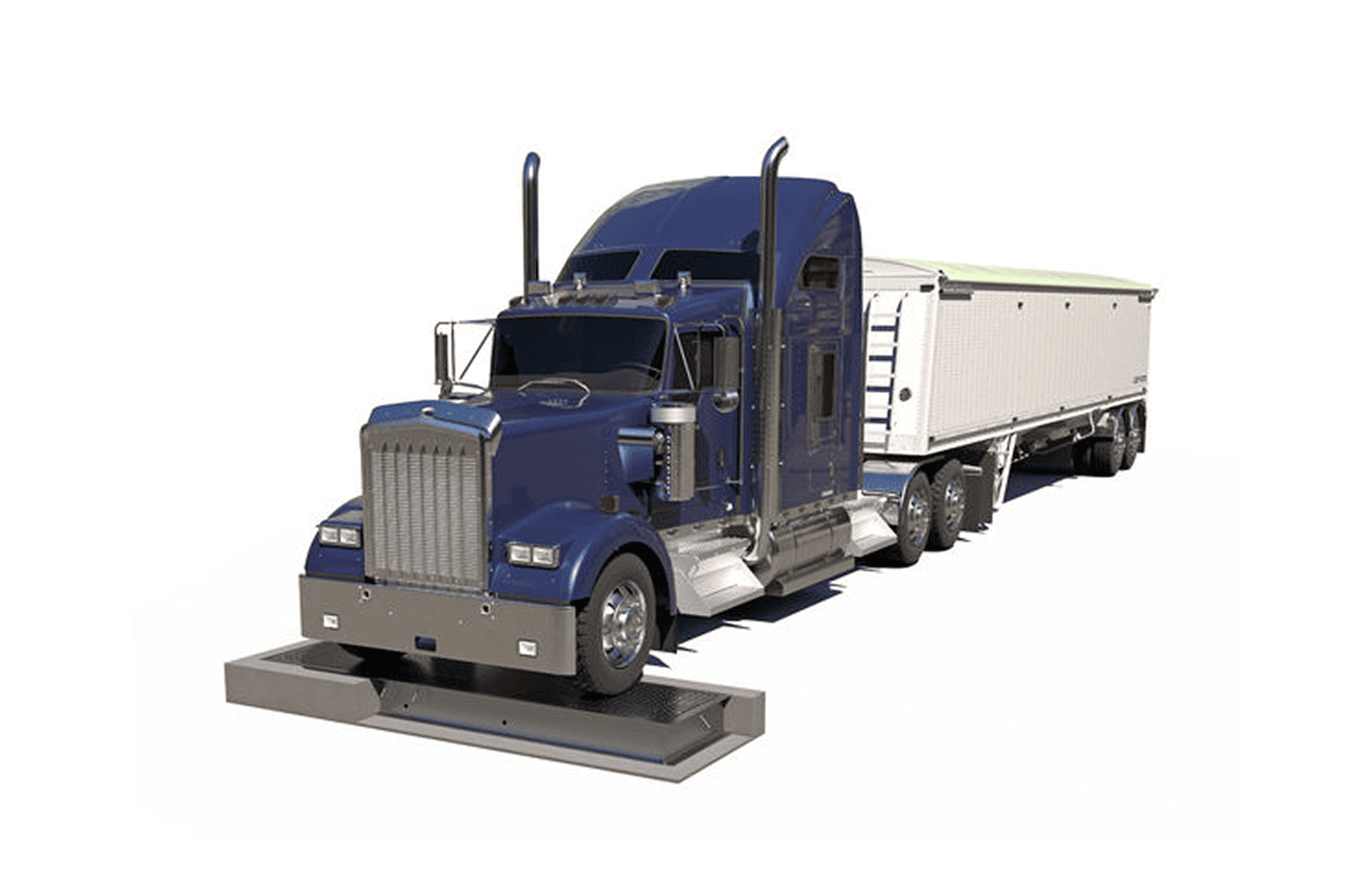
Axle weighers are the precision tool where vehicle compliance rather than just total load matters. Instead of measuring total truck weight on a single platform, they measure the weight distribution across individual axles, allowing operators to verify whether a vehicle is within legal axle load limits before it exits a facility.
Weigh-in-Motion (WIM) takes this further: the truck drives through at normal road speed and the axle weights are calculated dynamically, without stopping. For high-throughput port and terminal environments, WIM is the only option that doesn't create bottlenecks.
Who uses axle weighers and WIM?
- Road freight operators and logistics hubs
- Port authorities and customs checkpoints
- Road construction contractors (monitoring delivery truck compliance)
- Mining operations with public road access
- Saudi Arabia's National Transport Authority, increasingly deploying WIM systems on highways around Riyadh and Dammam as part of Vision 2030 transport modernisation
09 Bench Scales and Precision Balances
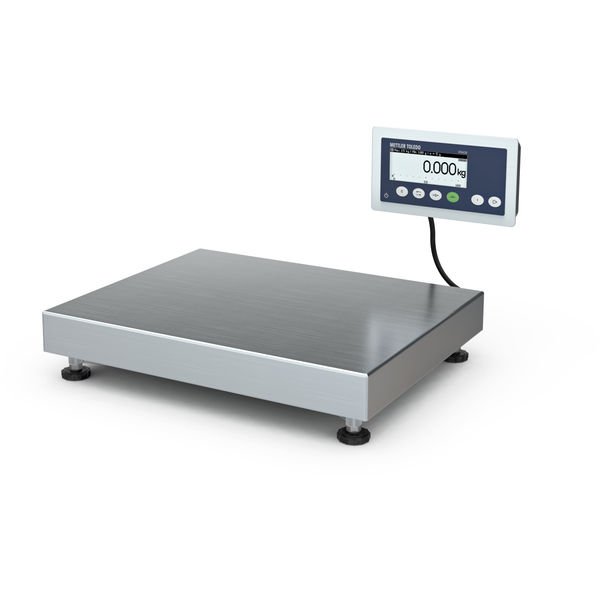
At the smaller end of the industrial weighing world, bench scales and precision balances cover applications where the measurement range is lower but the accuracy requirement is higher. A bench scale in a laboratory might weigh 5kg with 0.1g resolution. A jewellery or gold assay scale might measure 200g with 0.001g precision.
In the GCC, this category gets complicated by SASO legal-for-trade requirements. If you're using a bench scale for any transaction involving a price based on weight, you need a SASO-certified unit. That rules out a lot of the imported grey-market product that circulates in regional industrial districts.
Who uses bench scales and precision balances?
- Pharmaceutical laboratories and compounding pharmacies
- Gemstone and precious metals trading
- Chemical and petrochemical QC labs
- Food production (recipe and batch validation)
- Courier and logistics parcel operations (dimensional weight calculation)
Common mistake
Grey-market bench scales purchased outside authorised channels frequently lack SASO certification and OIML classification documentation. For any legal-for-trade application in Saudi Arabia, including goods-in pricing, pharmaceutical dispensing, and precious metals transactions, the absence of a valid SASO certificate exposes your business to fines and operational shutdowns during regulatory inspections. Always verify certification status before procurement.
10 Feature-to-Benefit Breakdown: What the Specs Actually Mean
Spec sheets are full of product features that mean nothing until you translate them into operational outcomes. Here's what the most commonly cited Mettler Toledo scale specifications actually deliver on the ground in Saudi Arabia.
| Feature | What It Actually Means for You |
|---|---|
| POWERCELL PDX 10-year warranty | No load cell replacement surprises for a decade; budgeting becomes predictable |
| StrikeShield lightning protection | No scale failure during summer lightning seasons in the Eastern Province |
| IND9U RFID unattended terminal | Trucks process in and out without a gatekeeper; you save on operations headcount |
| DataBridge software integration | Weight data flows directly into SAP or your ERP; no manual transcription, no ZATCA billing errors |
| IP69K rating | Washdown with high-pressure water won't kill the terminal; critical for food and pharma environments |
| OIML Class III certification | Legal-for-trade across GCC markets; SASO-acceptable without additional certification battles |
11 How to Match the Right Scale Type to Your Application
This doesn't have to be complicated. Work through three questions:
1. What are you weighing? A truck, a product on a line, bulk material in flow, or the contents of a vessel? Each answer points to a different scale category.
2. What is your throughput requirement? A single weigh transaction per day (one receiving dock) versus 300 truck movements versus continuous flow measurement; these are completely different operational profiles requiring completely different systems.
3. What's your compliance obligation? SASO legal-for-trade? SFDA product weight declaration? ZATCA-linked transaction records? Each requirement constrains your equipment options and your integration architecture.
As Mettler Toledo's official partner in Saudi Arabia, Global Scales & Systems has worked through this matching exercise with operations teams across cement, logistics, oil and gas, pharma, and food production. The answer is rarely just "the cheapest scale in the right category." It's about total cost of ownership; uptime, calibration intervals, software integration, and what happens when something goes wrong in a remote site at 2am.
“ The answer is rarely the cheapest scale in the right category. It's about total cost of ownership over the operating life. — Section 11
12 FAQ
The questions we get asked most often about industrial weighing scales in Saudi Arabia, answered directly.
What is the most commonly used type of industrial weighing scale in Saudi Arabia?
Weighbridges (truck scales) are the most prevalent type across KSA's industrial sectors, driven by the dominance of logistics, cement, and oil and gas in the economy. Platform scales are close behind in terms of unit count, given their use across virtually every warehouse and production facility. Checkweighers are growing fastest, driven by SFDA packaging compliance requirements in food and pharma.
Do industrial weighing scales in Saudi Arabia need SASO certification?
Yes, for any legal-for-trade application, meaning any transaction where weight determines a price or a regulatory threshold, the scale must be SASO-certified and regularly calibrated by an accredited body. This applies to weighbridges used for materials billing, platform scales in commercial settings, and checkweighers used for statutory product weight declarations. Non-legal-for-trade industrial monitoring applications have more flexibility, but certification is still strongly recommended for audit purposes.
How often do industrial weighing scales need calibration in KSA?
The standard interval for SASO-regulated scales is every 12 months, though operational environments can require more frequent checks. Extreme temperatures, which KSA has in abundance, accelerate load cell drift, particularly in scales without thermal compensation. Industrial best practice for high-throughput sites is a quarterly verification check with annual recalibration by a certified lab. Global Scales provides both on-site verification and full recalibration services.
What's the difference between a belt weigher and a weighbridge in a bulk materials operation?
A weighbridge measures discrete vehicle loads; one truck at a time, static measurement. A belt weigher measures continuous material flow on a conveyor in real time, giving you a running tonnes-per-hour figure. Many bulk materials operations use both: the weighbridge at the site entrance for vehicle compliance and billing, and belt weighers inside the plant for production flow management and mass balance reconciliation.
Can industrial weighing scales integrate with SAP or ERP systems?
Yes, and this is increasingly a standard requirement rather than an optional upgrade. Mettler Toledo's DataBridge software (available in SS, MS, and ES tiers) connects scale hardware to ERP environments including SAP, providing real-time data transfer, automated reporting, and ZATCA-compliant transaction documentation. The ES tier supports multi-site deployments with up to 50% improvement in transaction processing speed compared to manual data entry workflows. As Mettler Toledo's official partner in Saudi Arabia, Global Scales & Systems handles the full DataBridge deployment and integration scope.
How much does a commercial weighbridge cost in Saudi Arabia?
Indicative pricing runs from SAR 85,000–130,000 for a basic surface-mounted unit without advanced automation, up to SAR 400,000+ for enterprise-grade configurations with RFID, POWERCELL load cells, full DataBridge integration, and custom civil works. The civil foundation, which is site-specific, adds further cost that's difficult to generalise. Get a site survey done before taking any quote seriously.
Which type of scale is required for a pharmaceutical production line in KSA?
Pharmaceutical manufacturing typically requires multiple scale types operating at different points: high-resolution bench scales or precision balances for raw material dispensing, platform scales for bulk ingredient receipt and goods-in, and checkweighers on finished product lines for SFDA net content compliance. All must meet GMP documentation requirements and carry appropriate OIML/SASO certifications for the relevant accuracy class.
Global Scales & Systems Co. Ltd is the official Mettler Toledo partner in Saudi Arabia and the GCC, serving industrial clients across weighbridge, platform, process, and precision weighing applications. For application-specific recommendations or a site assessment, contact our team.

 Click to start chat