
How Automatic Nozzle Sealing Prevents Inkjet Nozzle Clog and Startup Waste
Inkjet nozzle clog wastes product at every shift start. Here is exactly how automatic sealing interrupts the failure chain, and what the prevented waste actually costs.

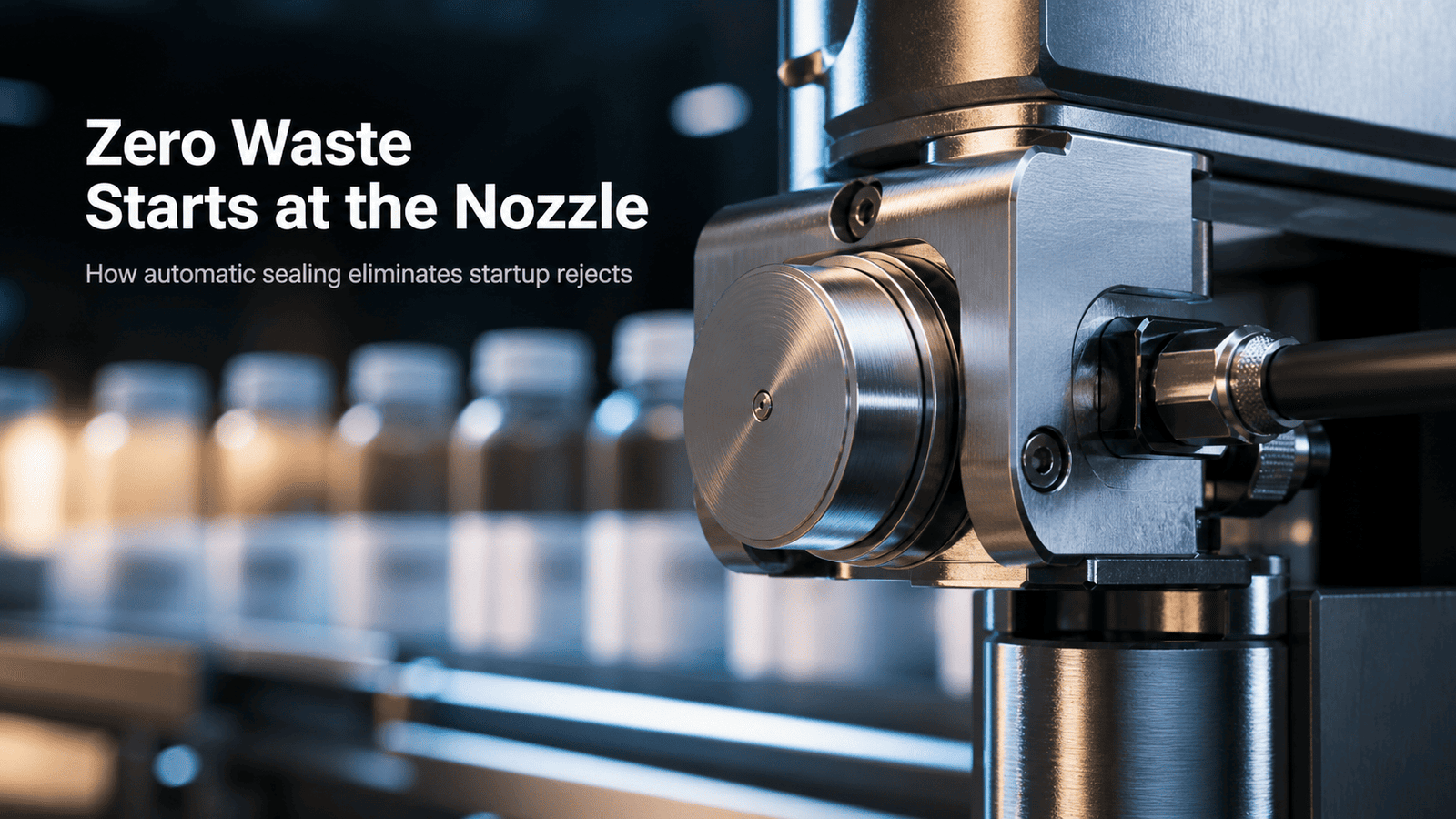
Every production supervisor in the GCC knows the feeling. First shift, 6am, the line's about to run and someone calls from the floor: the inkjet printer isn't coding cleanly. You've got a blocked nozzle, a growing pile of uncoded product, and a team standing around waiting. Again.
Inkjet nozzle clog is one of those problems that looks small on paper but adds up to a real number by the end of the quarter. Missed codes mean rejected product. Rejected product means rework, waste, or worse, a compliance failure. And the frustrating part is that most of it is preventable. The mechanism that prevents it is called automatic nozzle sealing, and if your industrial printer doesn't have it, you're leaving money on the line, literally.
This article breaks down exactly how nozzle sealing works, what happens in the machine when the nozzle is properly sealed versus when it isn't, and what the real cost of startup rejects looks like when you run the numbers.
01 Why Inkjet Nozzles Clog in the First Place
To understand the fix, you need to understand the failure. Continuous inkjet (CIJ) printers work by pushing electrically charged ink droplets through an extremely small orifice, typically 40 to 70 microns in diameter. To put that in perspective, a human hair is around 70 microns wide. The precision is extraordinary, and that precision is also the vulnerability.
When a CIJ printer is powered down, especially without proper nozzle management, residual ink inside the nozzle head is exposed to air. Inkjet ink contains fast-evaporating solvents, by design, because that's what makes it dry instantly on packaging. But those same solvents evaporate from the nozzle tip during any period of rest. What's left behind is a partially dried ink deposit, sometimes called a plug or skin, that partially or fully blocks the orifice.
Restart the printer the next morning, and you're pushing ink through a compromised nozzle. The droplets deflect incorrectly. The gutter doesn't catch them cleanly. You get satellite drops, smearing, or complete print failure. And the machine may run a purge cycle to try and clear it, which wastes ink and takes time, or the operator may not notice until several metres of product have already passed under the head with no code, or a bad one.
This is the inkjet nozzle clog cycle, and it repeats every time the printer is shut down and restarted without proper nozzle care.
KSA climate alert
Ink solvent evaporation rate is temperature-dependent. At 40°C or above, which is a realistic figure for an unventilated production area in Riyadh or Jeddah during summer, solvent evaporates from an unprotected nozzle tip several times faster than at European ambient temperatures. If your current printer was specified for a moderate climate, nozzle clog risk in a Saudi facility is meaningfully higher than the manufacturer's default maintenance intervals assume.
02 What Automatic Nozzle Sealing Actually Does
Here's the mechanism, step by step, because most people have a vague idea of "it seals the nozzle" without understanding what that actually involves or why it works.
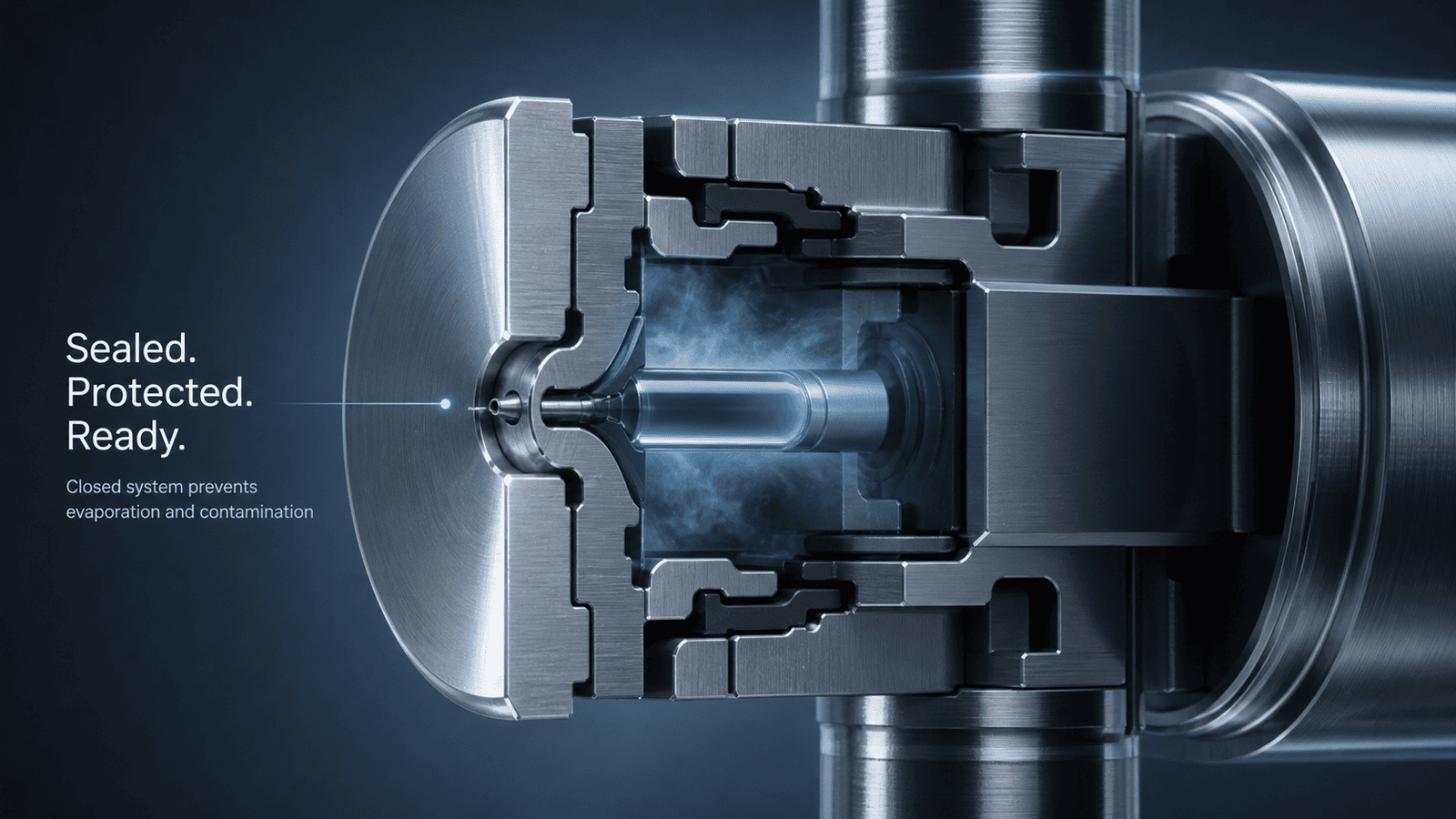
When a printer with automatic nozzle sealing is shut down, the system initiates a controlled sequence before powering off completely. First, the ink circuit purges cleanly, pulling residual ink back away from the nozzle tip. Then a physical sealing cap, usually a solvent-moistened seal or a precision-fitted valve, closes over the nozzle orifice. This does two things simultaneously.
One: it prevents ambient air from reaching the ink meniscus inside the nozzle tip. No air contact means no solvent evaporation from the critical orifice area. The ink inside stays at the right viscosity and doesn't form a skin. Two: the solvent moisture inside the cap keeps the microenvironment around the nozzle tip saturated with vapour, which actively discourages drying of any residual ink film that might be present.
When the printer restarts, the cap retracts, and the ink jet fires into a correctly clean nozzle. No plug to push through. No purge cycle required. The printer reaches stable, print-ready condition in seconds rather than minutes, and it does so consistently.
That consistency is the whole point. It's not just about preventing one bad start. It's about removing nozzle condition as a variable entirely, so that every shift start, every restart after a line changeover, every time the printer powers up, it behaves the same way.
“ The printer reaches stable, print-ready condition in seconds rather than minutes, and does so consistently, every single time. — Section 02
03 The Startup Waste Problem, Quantified
Let's put some numbers to this, because this is where it stops being a maintenance conversation and starts being a finance conversation.
A typical CIJ printer without automatic nozzle sealing requires a purge and stabilisation period at startup. That period varies, but commonly runs between 2 and 8 minutes depending on how long the printer was idle, ambient temperature (which matters a lot in a Saudi facility running at 40°C or above), and the ink type in use. During that stabilisation window, the printer may be printing, but not reliably. Products passing the head can receive incomplete codes, smeared codes, or no code at all.
Here's a conservative model for a single printer on a mid-volume line:
| Parameter | Conservative Estimate |
|---|---|
| Startup events per day (shift changes + stoppages) | 3–5 |
| Uncoded / rejected products per startup event | 20–80 units |
| Daily rejected units (single printer) | 60–400 units |
| Product value per unit (FMCG example) | SAR 5–25 |
| Daily waste cost per printer | SAR 300–10,000 |
| Annual waste cost (operating 300 days) | SAR 90,000–3,000,000 |
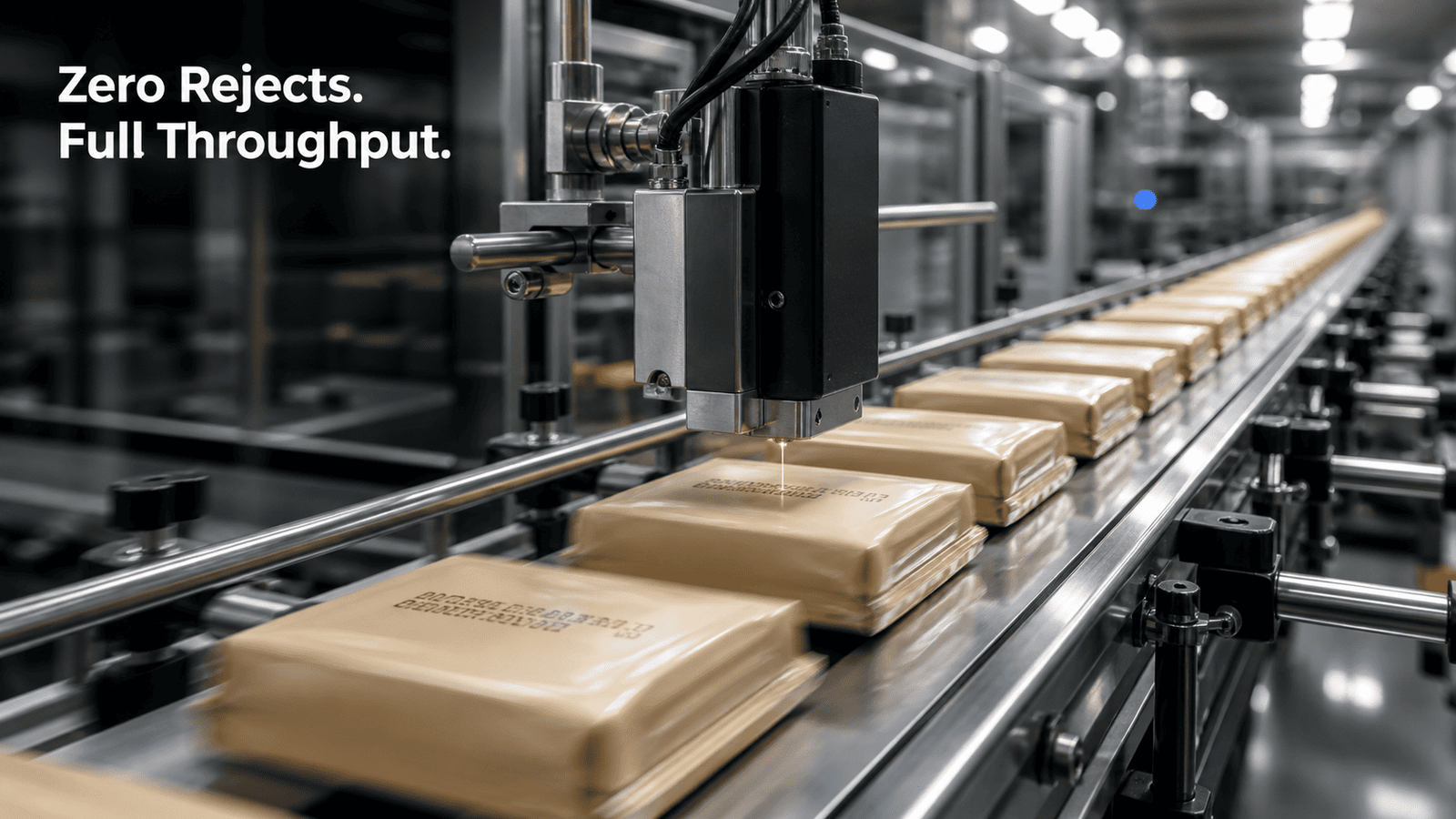
That top-end number is not typical for a single low-value line. But if you're running pharmaceutical packaging, dairy products with short shelf life, or any product where a missing date code means the entire batch is suspect, the numbers land closer to the high end, fast. And that's before you count the indirect costs: operator time spent monitoring startup, ink wasted in purge cycles, and the occasional compliance investigation triggered by a batch that left the facility with incorrect or missing coding.
04 How Sealing Translates to Fewer Rejects
The connection between automatic nozzle sealing and reject reduction is direct, not indirect. It's not about better ink chemistry or smarter software. It's about removing the physical root cause of the problem.
When the nozzle is sealed correctly during shutdown, the printer starts clean. A clean nozzle means the ink stream forms correctly from the first drop. Correct droplet formation means accurate electrostatic deflection. And accurate deflection means the print head places ink exactly where it should go, from the first second of operation.
In practical terms: a sealed-nozzle printer reaches full print quality at startup in under 30 seconds, versus 2 to 8 minutes for an unsealed system. That gap closes the window during which rejects accumulate.
We keep seeing this on lines that have upgraded from older printers to current-generation CIJ units with automatic sealing. The shift-start reject rate, which supervisors had come to accept as "just how it is," essentially disappears. It's not a marginal improvement. It's a category change in how the printer behaves.
“ The shift-start reject rate that supervisors had accepted as just how it is essentially disappears. It's not marginal — it's a category change. — Section 04
05 Other Waste Pathways That Sealing Eliminates
Startup rejects are the most visible cost, but they're not the only one. Here's what else automatic nozzle sealing removes from the maintenance equation.
Purge ink waste. Without sealing, every startup typically requires one or more purge cycles to clear dried material from the nozzle. Each purge cycle consumes 2 to 10 ml of ink depending on the system. Across multiple printers and multiple startups per day, that adds up to hundreds of millilitres of ink per week, wasted. Automatic nozzle sealing removes most purge cycles entirely by preventing the condition that requires them.
Unplanned maintenance calls. A nozzle that's been repeatedly dried and cleared without sealing suffers cumulative wear. The orifice geometry degrades subtly over time. You start getting chronic print quality issues that resist cleaning, and eventually you're looking at a nozzle replacement that could have been avoided.
Production stoppages for manual cleaning. Some facilities without automatic sealing have developed manual cleaning protocols, which is better than nothing, but relies entirely on operator discipline and consistency. Miss a cleaning step at the end of a shift, and you're dealing with the consequences at the start of the next one. Automatic sealing makes all of this unnecessary. The machine manages its own nozzle condition, the same way, every time, without depending on anyone remembering to do it.
Pro tip
When auditing your current inkjet printer's total running cost, track purge cycles per week and multiply by the ink volume consumed per purge. Most production managers are surprised by how much ink disappears into maintenance cycles rather than onto product. That number, combined with startup reject rates, is usually enough to build a solid business case for upgrading to a sealed-nozzle system.
06 What to Look for in an Industrial Printer with Automatic Nozzle Sealing
Not all nozzle sealing systems are equal. When you're evaluating CIJ industrial printers for a new installation or a replacement, here's what to look at specifically:
| Feature | What It Means for Your Line |
|---|---|
| Automatic cap and seal on shutdown | No manual intervention needed, no reliance on operator discipline |
| Solvent-moistened seal environment | Active prevention of in-nozzle evaporation during idle periods |
| Clean startup sequence under 60 seconds | First products on the line get a correct code, not a test reject |
| Self-cleaning nozzle purge management | Purges only when genuinely needed, minimising ink waste |
| Extended idle capability (8+ hours without quality loss) | Reliable overnight, weekend, or holiday restarts without pre-startup rituals |
| Remote startup diagnostics | You know the nozzle is ready before the line starts, not after the first batch runs |
The Leibinger CIJ printers that Global Scales & Systems Co. Ltd supplies, as Mettler Toledo's official partner in Saudi Arabia, include automatic nozzle sealing as a standard capability. The Leibinger JET3up series in particular is designed with what Leibinger calls "perfect restart" functionality: the printer can remain sealed and idle for up to four weeks and restart with full print quality in seconds. That's the kind of spec that matters in facilities with irregular production schedules, weekend shutdowns, or seasonal downtime.
And in a GCC operating environment, where ambient temperatures in an un-air-conditioned plant can hit 45°C or above, ink drying risk is meaningfully higher than in a European or North American facility. The sealing mechanism compensates for that. It's not a nice-to-have feature in this climate; it's a functional necessity.
07 Real Cost Savings: Running the Numbers for a KSA Production Facility
Let's put together a realistic scenario for a mid-size food or beverage manufacturer in Saudi Arabia, running two CIJ printers across one shift per day, five days a week.
Without automatic nozzle sealing:
| Cost Category | Monthly Estimate (SAR) |
|---|---|
| Startup rejects (40 units × 2 printers × 22 days) | SAR 4,400–22,000 |
| Purge ink waste (est. 150ml/week per printer) | SAR 600–1,200 |
| Operator time spent on startup cleaning and monitoring | SAR 800–1,600 |
| Periodic nozzle servicing from premature wear | SAR 500–2,000 |
| Total estimated monthly waste cost | SAR 6,300–26,800 |
With automatic nozzle sealing, startup rejects drop to near zero. Purge cycles reduce by 70 to 90 percent. Operator startup monitoring time drops from 5 to 10 minutes per startup to under one minute. Nozzle service intervals extend significantly. The payback calculation on upgrading to a printer with proper sealing technology, in a facility like this, typically runs 6 to 14 months. That's a conservative estimate. In pharmaceutical, dairy, or anything with high unit value, it's faster.
In my experience working with production managers across the Eastern Province and Riyadh industrial zones, the conversation usually starts with "we already have printers" and ends with "why didn't we switch two years ago." The operational reality of a sealed-nozzle printer is just that different to live with.
“ The conversation starts with "we already have printers" and ends with "why didn't we switch two years ago." — Section 07
08 Frequently Asked Questions
Here are the questions we hear most often from production and maintenance teams evaluating CIJ printer upgrades.
What causes an inkjet nozzle to clog?
The primary cause of inkjet nozzle clog is solvent evaporation from the nozzle tip during idle periods. CIJ ink contains fast-evaporating solvents that keep the ink fluid during printing. When the printer is stopped and the nozzle is unprotected, those solvents evaporate from the orifice, leaving behind a viscous or dried plug that blocks or partially obstructs the droplet stream. High ambient temperatures, which are common in Saudi and GCC industrial environments, accelerate this process considerably.
How does automatic nozzle sealing prevent startup rejects?
By physically capping the nozzle during shutdown and maintaining a solvent-saturated microenvironment around the orifice, automatic sealing stops the evaporation process before a clog can form. When the printer restarts, it faces a clean, correctly conditioned nozzle and reaches full print quality within 30 to 60 seconds rather than several minutes. Products printed from the first moment of operation receive a correctly formed code, eliminating the reject window that occurs during conventional startup stabilisation.
How much ink does a nozzle purge cycle waste?
A single purge cycle on a CIJ printer typically consumes between 2 and 10 ml of ink depending on the system and the severity of the nozzle condition being cleared. On a printer that runs two or three purge cycles per startup, across two or three startup events per day, that's 12 to 90 ml of ink wasted daily per printer, not counting the solvent used in cleaning. Automatic nozzle sealing removes most purge cycles entirely by preventing the condition that requires them.
Can nozzle sealing extend the service life of an industrial printer?
Yes, significantly. Repeated drying and manual clearing of the nozzle causes cumulative wear on the orifice geometry. Even with careful cleaning, the nozzle tip gradually degrades, leading to progressive print quality decline that becomes harder to correct. Automatic sealing, by preventing the dry-and-clear cycle from happening at all, preserves nozzle integrity and extends the interval between nozzle replacements. In a high-use environment, this can add years to the effective service life of the printhead.
Is nozzle clog a bigger problem in hot climates like Saudi Arabia?
Yes, considerably. Ink solvent evaporation rate is temperature-dependent. At 40°C or above, which is a realistic figure for an unventilated production area in Riyadh or Jeddah during summer, solvent evaporates from an unprotected nozzle tip several times faster than at European ambient temperatures. CIJ printers designed for moderate climates may perform adequately in their home markets but suffer chronic inkjet nozzle clog issues in GCC industrial environments. Automatic nozzle sealing compensates for this by removing ambient temperature as a factor in nozzle condition management.
Does Global Scales & Systems supply CIJ printers with nozzle sealing for Saudi production facilities?
Yes. Global Scales & Systems Co. Ltd, as Mettler Toledo's official partner in Saudi Arabia, supplies and supports the Leibinger range of CIJ and thermal inkjet printers across the KSA and wider GCC. The Leibinger JET3up series includes automatic nozzle sealing as a standard feature, alongside local-language support, on-site installation, and ongoing calibration services. Contact the team at to discuss your production environment and get a recommendation suited to your line speed, substrate, and operating conditions.
Disclaimer: Waste cost estimates in this article are based on industry-typical parameters for illustrative purposes and should not be taken as guaranteed performance figures. Actual savings vary depending on line configuration, production schedule, product type, and existing maintenance practices. Contact Global Scales & Systems for an assessment specific to your facility.

 Click to start chat