
SILO WEIGHING
ZERO DRIFT. ZERO DOUBT.
A level sensor tells you a distance. A silo weighing scale tells you a mass, the number that actually drives your procurement, your production planning, and your margin. Built on POWERCELL PDX load cell technology and engineered for the heat, dust, and hazardous zones of Saudi and GCC industrial sites, GSS-installed silo weighing systems give you continuous, auditable inventory data you can put in front of Aramco, SASO, or your own finance director without a second thought.
Silo Weighing
At Global Scales and Systems Co. Ltd., we specialize in silo weighing solutions for the petrochemical and food and beverages industry, ensuring accurate measurement and monitoring of raw materials such as flour, sugar, grains, milk powder, and other bulk ingredients. Our high precision load cells and advanced weighing indicators help food manufacturers maintain consistency, reduce wastage, and achieve compliance with quality and safety standards. With real time data tracking and seamless integration into production lines, our silo weighing systems support efficient inventory management, recipe control, and batching processes.
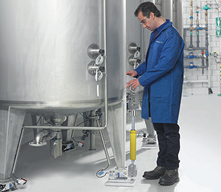
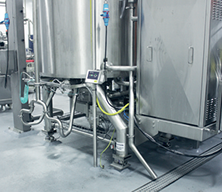
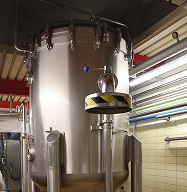
Product Information
Every silo eventually asks the same question: how much is actually in there? Level sensors answer with an estimate based on the assumption that your material sits at a consistent bulk density. That assumption breaks down fast with hygroscopic powders, variable-density aggregates, or anything that compacts, bridges, or cakes, which describes a large share of what gets stored in KSA and GCC silos, from cement and gypsum to grain, resin pellets, and chemical powders.
A silo weighing scale removes the guesswork. Compression load cells sit under the silo’s support legs or skirt, typically three or four per structure, and measure the true combined mass of the vessel and its contents, continuously. That reading goes straight to a weighing terminal and from there into your SCADA, DCS, or ERP system, giving your operations and procurement teams a number they can actually act on: reorder before you run dry, catch overfills before they become a spill or a safety incident, and settle supplier delivery disputes with a timestamped, calibrated weight instead of an argument.
Global Scales & Systems, as your industrial weighing partner for Saudi Arabia and the UAE, specifies, installs, and calibrates these systems locally, with SASO-aligned documentation and NMI-traceable calibration built into the process from day one.
Description
The Silo Weighing Scale Solution is an engineered weighing chain, not a single component. It combines heavy-capacity compression load cells (canister, ring, or POWERCELL PDX digital cells), a weigh module or mounting assembly that converts your silo’s structural supports into calibrated load points, and an advanced weighing terminal that turns raw load cell signal into a number your control system can use.
The load cells are hermetically sealed and rated up to IP69K, so washdown, dust ingress, and coastal humidity are non-issues. Where the digital POWERCELL PDX cells are specified, each cell carries its own onboard microprocessor, continuously correcting for temperature drift, non-linearity, hysteresis, and sensor creep, and reporting its own health back to the terminal. That means a failing cell shows up as a diagnostic alert on the terminal screen, not as an unexplained inventory discrepancy three weeks later.
For hazardous-area silos, oil and gas, petrochemical, and grain-dust environments among them, the load cells and terminal are available in ATEX, IECEx, and FM-approved variants, so the system can be specified correctly against your site’s zone classification from the outset rather than retrofitted after a rejected shipment.
Installation, calibration (including CalFree weightless calibration, which removes the need for test weights or confined-space entry), and ongoing accredited calibration services are delivered by GSS engineers on the ground in KSA and the UAE.
Product Parameters
| Parameter | Specification |
|---|---|
| System type | Compression load cell-based silo/tank/hopper weighing system |
| Load cell capacity range | 250 kg – 300 t per cell (canister/ring family); 7.5 t – 22.5 t per cell (POWERCELL PDX digital cells, typical tank/silo duty) |
| Weigh module capacity range | 5 kg – 300 t |
| Accuracy class | OIML R60 (C3, C6, C10); NTEP HB44 (5,000d / 10,000d) |
| Load cell protection rating | IP68 / IP69K, hermetically sealed |
| Terminal protection rating | IP65 (panel mount); IP69K (harsh washdown enclosure) |
| Load cell construction | High-strength alloy steel or stainless steel (316 stainless for washdown/food-grade) |
| Hazardous area approvals | ATEX, IECEx, FM, cFM, NEPSI (load cells and hazardous-rated terminal variants) |
| Terminal scale channels | Up to 4 concurrent (Analog, IDNet, POWERCELL, POWERCELL PDX, or MT-SICS) |
| Terminal A/D sampling rate | Up to 366 Hz, concurrent measurement |
| Communication protocols | EtherNet/IP, Ethernet TCP/IP, Modbus TCP, PROFIBUS DP, ProfiNet, ControlNet, DeviceNet, RS232, USB Host |
| Calibration method | CalFree (weightless) for load cells; RapidCal or traditional 5-point linearization at terminal level |
| Terminal operating/storage temperature | -40°C to 60°C, 10–95% RH, non-condensing |
| Terminal power supply | 100–240 VAC |
| Lightning/surge protection | StrikeShield integrated protection (POWERCELL PDX cells) |
Product Features
- Real mass, not an estimate. Weight-based measurement is immune to the density and packing variability that throws off level sensors, particularly relevant for hygroscopic powders and materials affected by Gulf humidity swings.
- No junction boxes to fail. POWERCELL PDX digital cells network directly to the terminal, eliminating the field-wired junction boxes that are a common point of failure and downtime in analog systems.
- Self-diagnosing load cells. Each digital cell reports its own condition (overload, zero drift, foundation issues) to the terminal, so problems surface as an alert, not as a mystery inventory gap.
- Calibrate without test weights. CalFree and RapidCal methods calibrate the scale without hauling certified test weights up to a silo or taking the vessel out of service, cutting calibration downtime and confined-space risk.
- Built for hazardous zones. ATEX and IECEx-certified components are available for oil, gas, petrochemical, and grain-dust classified areas, specified correctly against your zone study rather than bolted on afterward.
- Talks to your existing systems. Native EtherNet/IP, PROFIBUS, ProfiNet, and Modbus TCP connectivity means the weight reading lands directly in your SCADA, DCS, or ERP, no manual logging required.
- Washdown and corrosion resistant. Hermetically sealed, laser-welded construction rated to IP69K stands up to washdown, coastal humidity, and dust without performance drift.
- Lightning protection built in. StrikeShield technology on POWERCELL PDX cells is engineered specifically for exposed outdoor installations, relevant for silos standing in open yards across the Eastern Province.
- Locally certified, locally supported. GSS installs and calibrates every Mettler Toledo system in-Kingdom, with SASO-aligned documentation and NMI-traceable calibration certificates, so your compliance file is audit-ready from commissioning.
Components
| Component | Function |
|---|---|
| Compression load cells (canister, ring, or POWERCELL PDX) | Installed under the silo’s support legs or skirt, typically 3–4 per structure, to convert structural load into an electrical (analog) or digital signal proportional to weight |
| Weigh module / mounting assembly (PowerMount or RingMount) | Converts the silo’s structural support points into calibrated load points, with built-in anti-lift, side-load, and overload protection during installation |
| Load cell cabling / digital network cable | Carries the load cell signal to the terminal; POWERCELL PDX cells daisy-chain digitally, removing the need for separate junction boxes |
| Weighing terminal / indicator (e.g. IND780) | Converts load cell signal into a calibrated weight reading, displays it locally, and manages alarms, data logging, and material transfer control |
| Communication interface | Fieldbus and Ethernet modules (PROFIBUS, ProfiNet, EtherNet/IP, Modbus TCP) linking the terminal to your PLC, SCADA, DCS, or ERP |
| Surge and lightning protection | Integrated StrikeShield protection on digital load cells for outdoor, exposed silo installations |
| Calibration and certification package | CalFree/RapidCal calibration, SASO-aligned documentation, and NMI-traceable calibration certificates, delivered and maintained by GSS |
Product Specification
Load Cells (Canister / Ring / POWERCELL PDX)
| Spec | Detail |
|---|---|
| Capacity range | 250 kg – 300 t per cell (canister/ring); 7.5 t – 22.5 t per cell (POWERCELL PDX) |
| Accuracy | OIML R60 C3 / C6 / C10; NTEP legal-for-trade classes |
| Protection rating | IP68 / IP69K |
| Construction | Alloy steel or stainless steel, hermetically sealed, laser-welded |
| Hazardous area approval | ATEX, IECEx, FM, cFM, NEPSI |
| Calibration | CalFree weightless calibration |
| Diagnostics (PDX cells) | Onboard microprocessor; predictive maintenance monitoring for overload, zero drift, foundation problems |
| Surge protection | StrikeShield lightning protection |
Weigh Modules / Mounting Hardware
| Spec | Detail |
|---|---|
| Capacity range | 5 kg – 300 t |
| Installation feature | SafeLock (locks the module during install to protect the cell from overload) |
| Protection features | Built-in side-load and anti-lift/uplift protection |
| Optional accessories | Stabilizers (for agitators/mixers), thermal isolation pads, shock/vibration dampening pads |
| Material | Zinc-plated steel or 316 stainless steel |
Weighing Terminal (representative: IND780)
| Spec | Detail |
|---|---|
| Scale channels | Up to 4 concurrent (Analog, IDNet, POWERCELL, POWERCELL PDX, MT-SICS), metrologically approved sum |
| A/D performance | Up to 366 Hz concurrent measurement |
| Display | 5.7″ QVGA backlit graphical LCD, 320 x 240 px, monochrome or color TFT, SmartTrac visualization |
| Protection rating | IP65 (panel mount); IP69K (harsh 304L stainless enclosure) |
| Hazardous approval | Zone 2/22, Division 2, Class I & II Groups A-D, F, G (hazardous-rated variants) |
| Communications | EtherNet/IP, Ethernet TCP/IP, Modbus TCP, PROFIBUS DP, ProfiNet, ControlNet, DeviceNet, Allen-Bradley RIO, RS232, USB Host |
| Calibration | CalFree, 5-point linearization, Step calibration |
| Data handling | Alibi memory up to 256,000 records, 10 configurable print templates, TraxDSP filtering, TraxEMT diagnostics |
| Material transfer control | Optional Q.iMPACT application, up to 999 configurable material paths, terminal clustering up to 198 scale/flow meter combinations |
| Networking | Ethernet clustering up to 20 terminals |
| Operating/storage temperature | -40°C to 60°C, 10-95% RH, non-condensing |
| Power supply | 100–240 VAC |
FAQ
How many load cells does a silo actually need?
Most silo weighing systems use three or four compression load cells positioned under the vessel’s support legs or skirt. The exact number depends on the silo’s structural design and total capacity; GSS engineers confirm this during the site survey.
How accurate is a silo weighing scale compared to a level sensor?
A weighing system measures true mass directly, so it isn’t affected by bulk density variation, material packing, or bridging the way level sensors are. For materials with inconsistent density (hygroscopic powders, aggregates, blended products) this is the difference between an inventory number you can trust and one you have to double-check manually.
Can this be installed on an existing silo, or only new builds?
Existing silos can be retrofitted with load cells and weigh modules under most circumstances. GSS carries out a structural and site assessment first to confirm load path, foundation condition, and clearance before specifying the mounting hardware.
Are these systems certified for hazardous areas under SASO and IECEx requirements?
Yes. ATEX and IECEx-certified load cells and hazardous-rated terminal variants are available and specified against your site’s zone classification study. GSS handles the documentation needed for SASO SALEEM/SABER compliance as part of the project.
How is the system calibrated, and how often?
Load cells use CalFree weightless calibration, which doesn’t require test weights or confined-space entry. Full-system calibration is typically scheduled on an annual basis or per your internal QA/compliance calendar; GSS provides accredited calibration services and NMI-traceable certificates.
Can it integrate with our existing SCADA, DCS, or ERP system?
Yes. The weighing terminal supports EtherNet/IP, PROFIBUS DP, ProfiNet, and Modbus TCP among other protocols, so the live weight reading can be pulled directly into your existing automation or reporting layer without manual data entry.
What capacity range can a silo weighing system handle?
From small hoppers in the hundreds-of-kilograms range up to large-capacity storage silos in the hundreds-of-tons range, using the appropriate combination of load cell and weigh module capacity for the application.
Does GSS handle installation and ongoing support in KSA and the GCC?
Yes. Global Scales & Systems specifies, installs, and calibrates every system locally as your industrial weighing and calibration partner for Saudi Arabia and the UAE, with ongoing maintenance and calibration support across the Kingdom and GCC.

 Click to start chat