
INDUSTRIAL WEIGHING SCALE & EQUIPMENT SUPPLIER IN SAUDI ARABIA
Built for Accuracy, Uptime and Profitability
From heavy-duty truck weighing and bulk-material handling to production-line weighing and process control, Global Scales & Systems delivers industrial weighing equipment engineered around the way your operation actually works. We help companies across the GCC select, integrate, calibrate and maintain weighing systems that reduce material losses, improve process control and give operators dependable weight data when it matters most.
Industrial Weighing Scales
Global Scales delivers advanced industrial weighing scale solutions and equipments designed for the high precision needs of the petrochemical industry, construction facilities, petrochemical, and cement factories. Our systems ensure accurate measurement of raw materials, chemicals, and finished products while maintaining compliance with international safety standards. Built for durability and reliability, they support efficient operations, improve resource management, and perform consistently even in hazardous environments.
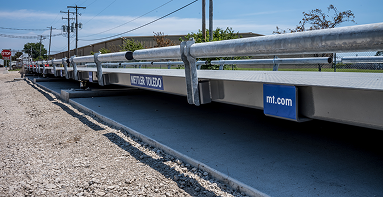
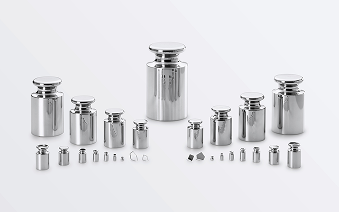
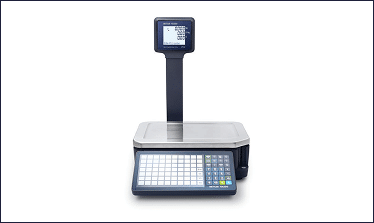
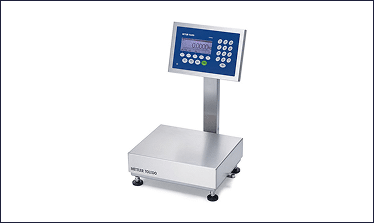
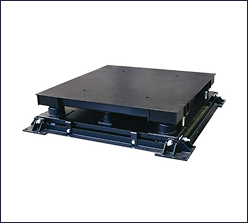
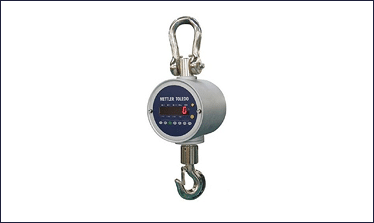
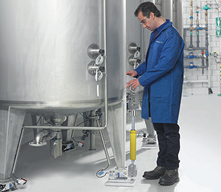
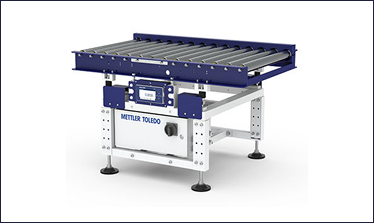
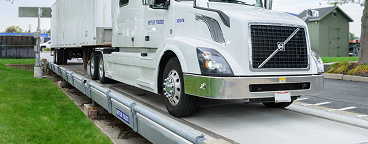
Axle Load Weighers
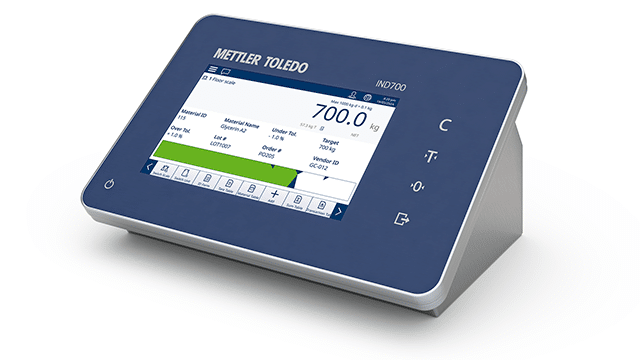
Weight Indicators
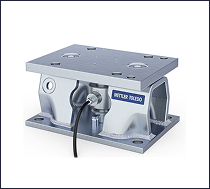
Weighing Modules
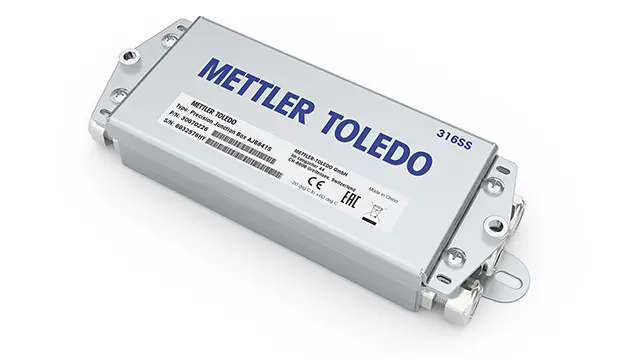
Junction Boxes
Your weighing system should do more than display a number. It should protect revenue, control materials, accelerate operations and give you confidence in every transaction.
Global Scales & Systems provides a comprehensive range of industrial weighing scale equipment for manufacturing, logistics, mining, construction, food processing, chemical, pharmaceutical, retail and other demanding industrial environments.
Our portfolio covers everything from individual weighing scales and components to complete engineered systems for vehicles, conveyors, tanks, silos, hoppers and production processes. Depending on the application, systems can be configured for simple weighing, process control, data capture, formulation, batching, or legal-for-trade applications.
The right solution is not necessarily the largest or most sophisticated scale. It is the system that delivers the required accuracy and capacity, survives the operating environment, integrates with your workflow and remains maintainable over its service life.
That is where Global Scales & Systems acts as a strategic industrial technology partner; not simply an equipment supplier. We support the complete lifecycle, from application assessment and equipment selection through installation, commissioning, calibration, maintenance, software, automation and ongoing technical support.
METTLER TOLEDO’s industrial weighing portfolio similarly spans bench, floor, pallet, truck and specialized scales, along with load cells, weigh modules, indicators and process weighing systems. Its published portfolio ranges from precision weighing to applications involving several tonnes.
PRODUCT INFORMATION
Industrial Weighing Scale Equipment
Applications:
- Manufacturing and production
- Mining and quarrying
- Logistics and transportation
- Warehousing and distribution
- Construction and building materials
- Food and beverage processing
- Chemical and pharmaceutical production
- Agriculture and bulk materials
- Oil, gas and process industries
- Retail and commercial operations
- Inventory and material control
- Vehicle and axle weighing
- Batching, filling and formulation
- Process monitoring and automation
Solution Portfolio:
| Product Group | Equipment | Typical Application |
|---|---|---|
| Heavy-Duty Weighing Scales | Heavy-Duty Weighing Scales | Heavy materials, pallets, bins, industrial loads |
| Vehicle Weighing | Truck Scales / Weighbridges | Trucks, articulated vehicles, inbound/outbound material control |
| Platform Weighing | Floor & Platform Scales | Pallets, drums, containers and bulky goods |
| Suspended Weighing | Crane & Hanging Scales | Suspended loads, lifting and material handling |
| General Industrial Weighing | Bench & Compact Scales | Production, packing, counting and workstation weighing |
| Commercial/Operational Weighing | Counter Scales | Retail, ingredient, portion and transaction weighing |
| Mobile Weighing | On-Board & Mobile Scales | Vehicles, mobile equipment and flexible weighing applications |
| Process Weighing | Conveyor & Belt Scales | Continuous bulk-material flow |
| Vessel Weighing | Tank, Silo & Hopper Systems | Bulk storage, batching, filling and process control |
| Vehicle Measurement | Axle Load Weighers | Axle and vehicle load monitoring |
| Components | Load Cells | Weight measurement and force sensing |
| Components | Weight Indicators | Display, control, data and communication |
| Components | Junction Boxes & Weigh Modules | Load-cell connection, distribution and mechanical integration |
| Calibration | Test Weights & Calibration Kits | Verification, adjustment and traceable testing |
DESCRIPTION
Industrial weighing is a control point for money, materials and production performance.
An inaccurate weighbridge can create disputes and revenue leakage. An unstable floor scale can slow production. Poorly selected load cells can compromise an entire tank-weighing installation. Inadequate calibration can undermine confidence in data that operators use to make costly decisions.
Global Scales & Systems approaches industrial weighing as a complete system rather than an isolated instrument.
We evaluate the load, environment, required accuracy, operating cycle, mounting method, data requirements, regulatory requirements and integration needs before recommending equipment. This enables businesses to invest in weighing technology that is fit for purpose instead of paying for specifications they do not need or discovering too late that a system is not robust enough for the application.
For regulated or trade-related applications, equipment selection must also account for the relevant metrological requirements. OIML R 76 covers non-automatic weighing instruments, while OIML R 50 covers continuous totalizing automatic belt weighers; OIML also maintains recommendations covering load cells, automatic rail weighbridges, hopper weighers and in-motion road-vehicle/axle weighing.
PRODUCT PARAMETERS
Because industrial weighing systems are application-specific, capacities, platform dimensions, readability and construction must be selected according to the individual installation rather than treated as one universal specification.
| Parameter | Selection Consideration |
| Capacity | Selected according to maximum gross load, working load and safety margin |
| Readability / Resolution | Determined by required weighing precision and application |
| Accuracy | Dependent on instrument class, load cells, installation, environment and calibration |
| Platform / Deck Size | Selected according to pallet, container, vehicle or product dimensions |
| Construction | Stainless steel, painted steel, coated steel or application-specific construction |
| Environmental Protection | IP-rated construction may be required for dust, moisture, washdown or harsh environments |
| Load Cell Technology | Analog or digital technologies depending on application and system architecture |
| Display / Indicator | Basic display through to advanced industrial terminals and controllers |
| Communication | Interfaces may include serial, Ethernet and industrial communication options depending on model |
| Mounting | Floor-mounted, pit-mounted, portable, suspended, vessel-mounted or integrated |
| Legal-for-Trade | Available where required, subject to the specific model, configuration and applicable local approvals |
| Hazardous-Area Suitability | Special configurations are available for applicable hazardous environments |
| Calibration | Initial and periodic calibration/verification based on application and regulatory requirements |
| Data Integration | Can be connected to production, ERP, warehouse, batching or process-control systems where supported |
Modern industrial systems can also provide functionality beyond weight display. For example, published METTLER TOLEDO systems include database functions, routine testing, calibration logs, data management, printing and multiple communication interfaces depending on the model.
PRODUCT FEATURES
Rugged Industrial Construction
Built around the realities of industrial operation, including heavy loads, repeated use and demanding working environments.
Accurate and Repeatable Weighing
Properly selected and calibrated systems provide dependable weight information for production, inventory, logistics and commercial decisions.
Multiple Capacity Options
Solutions can be configured from compact workstation scales through heavy-duty systems handling very large industrial loads.
Digital and Analog Technology
Depending on the application, systems may use conventional analog load cells or digital weighing technologies with additional diagnostic capabilities. Digital load-cell systems can simplify troubleshooting by providing information about individual sensors and system conditions.
Industrial Connectivity
Indicators and controllers can support communication and integration with printers, software, PLCs and wider plant systems, subject to model configuration.
Harsh-Environment Options
Industrial weighing equipment can be specified for wet, dusty, hygienic or otherwise demanding environments. Some published industrial scale configurations, for example, provide IP68/IP69K protection for harsh and washdown applications.
Legal-for-Trade Configurations
Where weighing forms part of a commercial transaction or regulated process, suitable approved configurations can be selected according to the applicable local requirements.
Process Integration
Tank, silo, hopper, conveyor and machine-integrated weighing systems can become part of an automated production process rather than operating as stand-alone scales.
Calibration and Serviceability
Proper installation, routine testing, calibration and preventive maintenance help maintain reliable performance over the service life of the system.
COMPONENTS OF MACHINES
A complete industrial weighing system commonly consists of several interconnected elements:
1. Weighing Structure
The platform, deck, vessel, hopper, conveyor frame or other mechanical structure that receives the load.
2. Load Cells
Sensors that convert mechanical force into a measurable electrical signal. Load-cell selection is critical because environmental conditions, capacity, accuracy, mechanical loading and installation all affect overall system performance.
3. Junction Boxes / Summing Systems
Used in conventional multi-load-cell systems to combine load-cell signals before they reach the weighing terminal. Proper installation and adjustment are critical to system performance.
4. Weigh Modules and Mounting Hardware
Mechanical assemblies used to safely transfer vessel or structural loads to load cells while controlling unwanted movement and loading conditions.
5. Weight Indicator / Terminal
The operator interface that receives and processes weighing signals and provides weight information, applications, controls and communications depending on the model.
6. Cables and Electrical Connections
Signal and power connections must be appropriately selected, routed, shielded and installed for the application.
7. Calibration Equipment
Test weights, calibration accessories and verification procedures are used to establish and maintain system performance.
8. Software and Data Interfaces
Where required, weighing data can feed production, inventory, ERP, batching, reporting or other business systems.
PRODUCT SPECIFICATION
Heavy-Duty Weighing Scales
Designed for demanding industrial loads such as pallets, containers, drums, bulk materials and heavy components. Construction, load capacity, platform dimensions and environmental protection are selected according to the application.
Truck Scales / Weighbridges
Used for weighing complete vehicles and controlling inbound and outbound material movement. Modern truck-scale systems can be configured for high-throughput operations and legal-for-trade applications. METTLER TOLEDO’s VTS23x, for example, is specified for high-volume operations of 400 trucks or more per day and uses digital POWERCELL load-cell technology in its weighing system.
Typical applications: mining, quarrying, cement, aggregates, waste management, logistics, agriculture and manufacturing.
Floor & Platform Scales
Heavy-duty platform systems for pallets, drums, containers, bins and bulky goods. Available configurations vary by capacity, deck size, construction and environmental requirements.
Crane & Hanging Scales
Suspended weighing solutions for applications where loads are handled by cranes, hoists or lifting equipment. The selected system must be matched to the working load, lifting configuration and applicable safety requirements.
Bench & Compact Scales
Compact solutions for production workstations, counting, formulation, portioning, packing, checkweighing and general industrial weighing. Current industrial examples include configurations with stainless-steel construction, advanced terminals and capacities up to 600 kg depending on model.
Counter Scales
Designed for compact weighing applications where operators need fast, straightforward measurements at a workstation, counter or point of operation.
On-Board & Mobile Scales
Designed to bring weighing closer to the material-handling process. These systems can reduce unnecessary transport to a fixed scale and provide weight information during mobile operations, depending on vehicle and application.
Conveyor & Belt Scales
Continuous weighing systems measure bulk material moving on conveyors, supporting production monitoring, inventory management and process control. OIML R 50 specifically addresses continuous totalizing automatic belt weighers, including systems operating with single-speed, variable-speed and multi-speed conveyors.
Tank, Silo & Hopper Systems
Weigh modules and load cells can be integrated beneath tanks, silos, bins and hoppers to determine the material mass within the vessel. These systems are commonly used for batching, filling, inventory monitoring and process control.
Axle Load Weighers
Used to determine axle loads and monitor vehicle loading. Applications can include fleet management, overload prevention and transportation compliance. OIML identifies dedicated requirements for automatic instruments for weighing road vehicles in motion and measuring axle loads under R 134.
COMPONENTS & ACCESSORIES
Load Cells
Available in configurations suited to platform scales, vehicle scales, tanks, silos, hoppers and machine integration. Correct capacity, accuracy, environmental protection and mounting arrangement are essential to achieving reliable system performance.
Weight Indicators
Industrial indicators transform load-cell signals into usable weight information and may provide functions including weighing, counting, batching, checkweighing, data handling and communication depending on the model.
Junction Boxes & Weigh Modules
Junction boxes support multi-load-cell configurations, while weigh modules provide the mechanical interface required for reliable vessel and structural weighing.
Test Weights & Calibration Kits
Calibration and testing equipment supports verification of weighing-system performance. The appropriate test method and weight class should be determined according to the scale, application, required accuracy and applicable regulatory requirements. OIML maintains recommendations for standard weights and load-cell metrology as part of its international framework.
WHY CHOOSE GLOBAL SCALES & SYSTEMS?
Your Strategic Partner Across the Entire Weighing Lifecycle
Buying the scale is only one part of achieving dependable weighing performance.
Global Scales & Systems supports companies across the GCC with an integrated approach covering industrial weighing, marking and coding, calibration, maintenance, automation, software and technical support.
Our value is in connecting the equipment to the business outcome.
That means helping you:
Reduce material giveaway by improving weighing accuracy and process control.
Minimize costly downtime through correct equipment selection, preventative maintenance and responsive technical support.
Improve throughput with weighing systems suited to the actual production workflow.
Protect commercial transactions with appropriate legal-for-trade equipment and calibration.
Gain better operational visibility by connecting weighing data with digital systems where required.
Extend equipment life through planned maintenance, calibration and replacement of critical components.
Standardize weighing operations across facilities and applications with a structured technology and service strategy.
Our approach combines equipment expertise with practical field experience so your weighing system works as part of the operation—not as another isolated piece of hardware.
FAQ
What type of industrial weighing scale do I need?
The correct scale depends on what you are weighing, maximum load, required accuracy, operating environment, weighing frequency, available installation space and whether the result must be legal for trade. Global Scales & Systems can assess the application and recommend the appropriate configuration.
Can industrial scales be integrated with software or ERP systems?
Yes. Depending on the selected indicator, terminal, controller and software architecture, weighing systems can provide communication and data integration for production, inventory, reporting, automation and business systems.
Are your industrial scales suitable for legal-for-trade applications?
Suitable models and configurations can be selected for legal-for-trade applications where required. Approval and compliance requirements depend on the specific instrument, configuration and jurisdiction.
How often should an industrial scale be calibrated?
Calibration frequency depends on the application, operating environment, required uncertainty, usage and applicable regulatory or quality requirements. A scheduled calibration and verification program is recommended rather than relying solely on a fixed generic interval.
Can you supply complete truck-scale systems?
Yes. Truck weighing projects can include the weighing structure, load cells, indicators, traffic management, software, accessories, installation, commissioning and ongoing service, depending on project requirements.
Can tank and silo weighing systems be customized?
Yes. Tank, silo and hopper weighing systems are highly dependent on vessel geometry, support structure, load conditions, material characteristics, environmental conditions and process requirements. The weighing components should therefore be engineered around the specific installation.
Do you provide calibration and maintenance services?
Yes. Our industrial weighing support can include installation, commissioning, calibration, verification, preventive maintenance, troubleshooting, replacement components and technical support.
Do you only supply METTLER TOLEDO equipment?
Global Scales & Systems is positioned as a strategic industrial technology partner, not simply a single-brand reseller. Our priority is to identify and deliver the technically appropriate weighing, automation, marking, coding and calibration solution for the customer’s application while providing the required engineering and lifecycle support.
Contact us today for advanced industrial weighing solutions designed for the high precision needs of your operations and industry.

 Click to start chat