
Pit vs Pitless Weighbridges: The Smart Choice for Saudi Industrial Sites
Comparing pit vs pitless weighbridges for a Saudi industrial site? See the real installation, cost, and SASO compliance differences here.

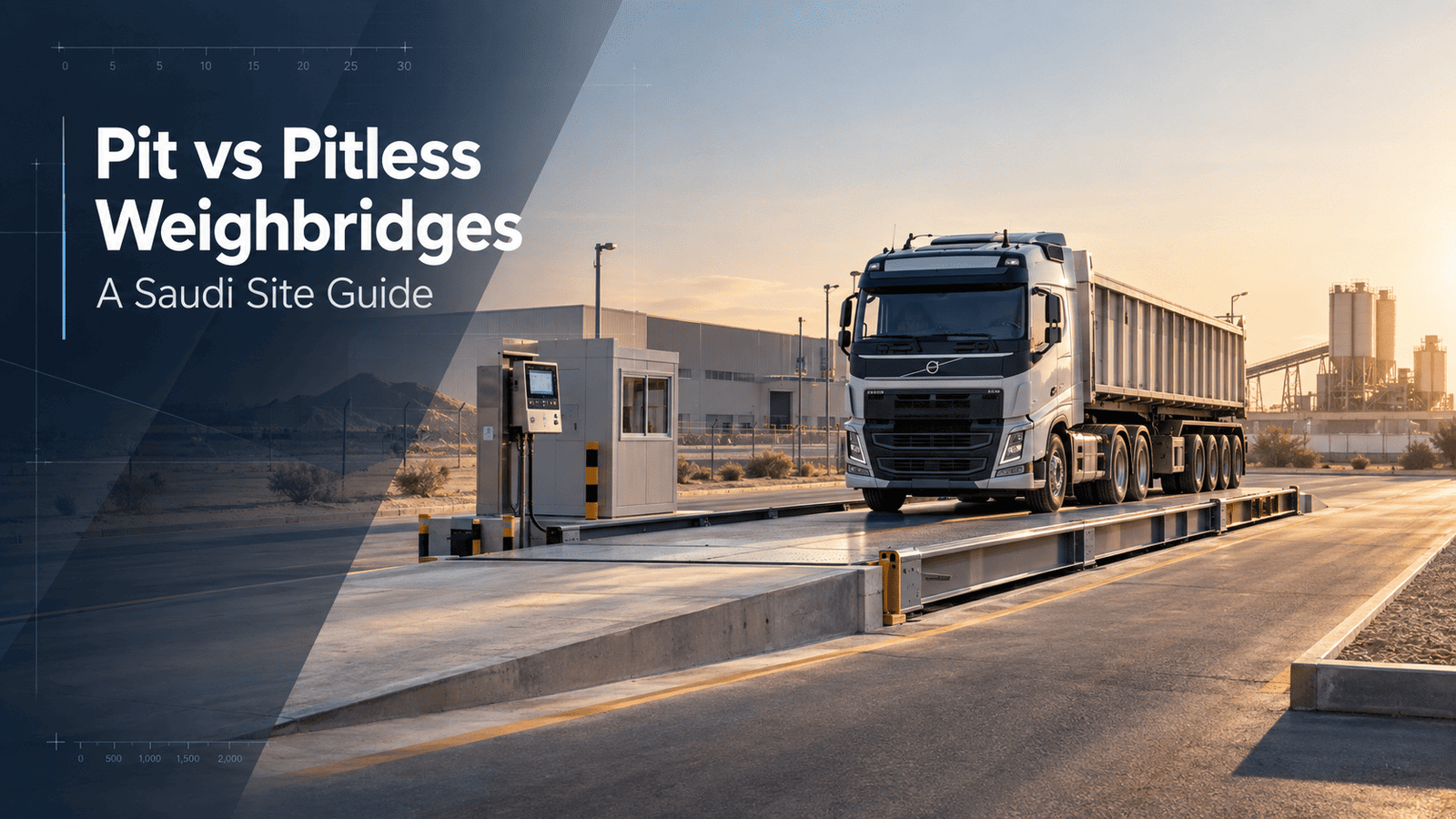
A logistics operator outside Dammam once spent six weeks and a good chunk of their civil works budget excavating a pit for a weighbridge they didn't actually need. The site had space, decent drainage, and trucks moving in and out all day. A surface-mounted system would have had them weighing loads in under two weeks. That's the real cost of getting the pit vs pitless weighbridges decision wrong: not just money, but months you don't get back.
If you're specifying a truck scale for a site in the Eastern Province, Riyadh, or anywhere with heavy vehicle traffic, this decision sits earlier in the process than most procurement teams realize. Get it right and your weighbridge runs quietly in the background for a decade. Get it wrong and you're retrofitting, re-excavating, or living with a system that fights your site every day.
01 What Pit and Pitless Weighbridges Actually Are
Here's the distinction that actually matters, not the marketing version.
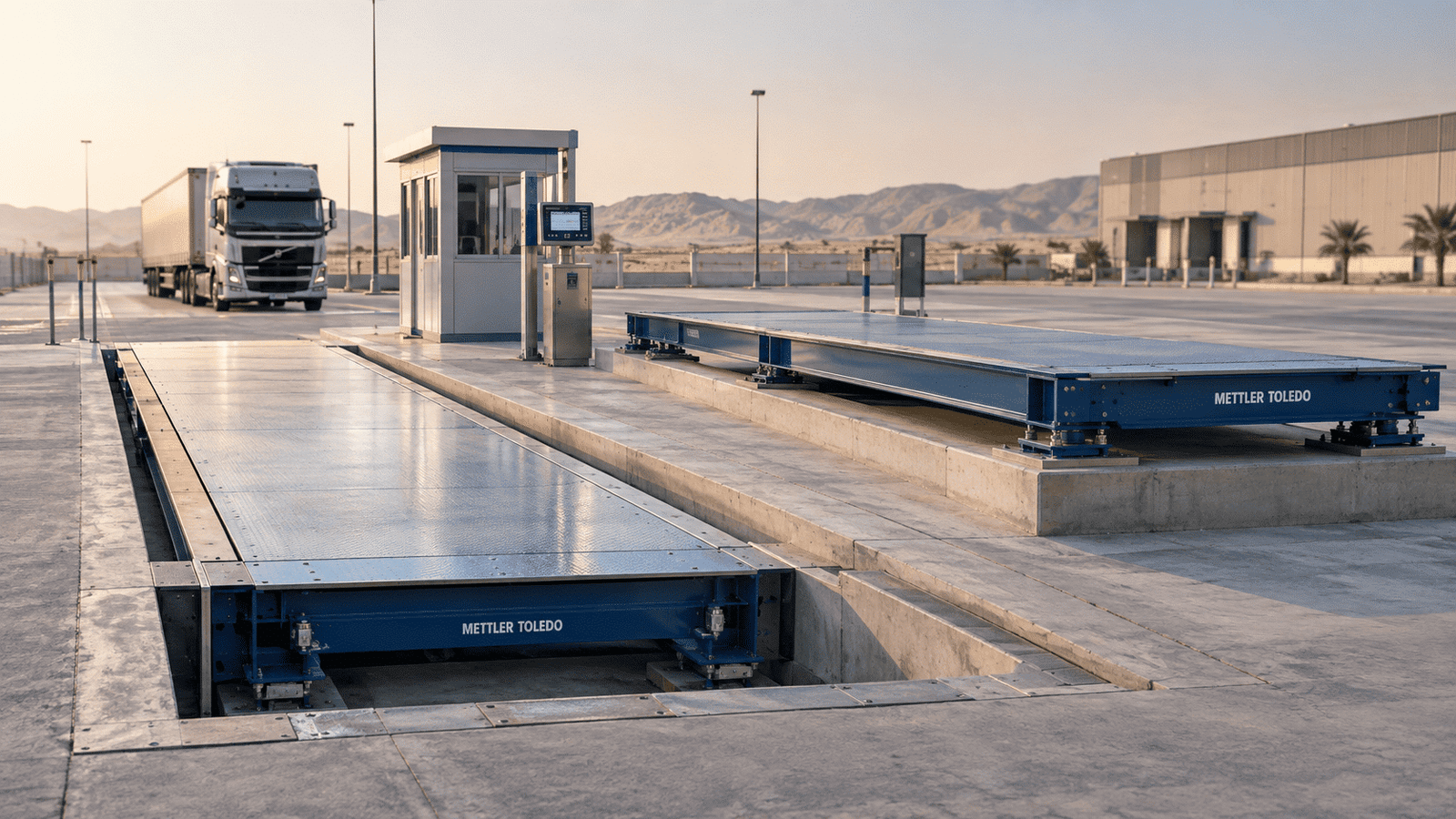
A pit weighbridge sits flush with the ground. The weighing platform drops into an excavated, concrete-lined pit so trucks drive straight across it. No ramps. No incline. Just a flush deck. It looks clean on a finished site, and it's the traditional choice for facilities where floor-level access matters, think grain and feed terminals, some port operations, or older plants that were built around a flush deck from day one.
A pitless (surface-mounted) weighbridge sits on top of the ground, usually on a shallow reinforced concrete foundation, with ramps leading trucks up to the platform. No excavation pit means no drainage system to engineer, no risk of sand or groundwater intrusion, and, in our experience, a much faster path from order to first weighment.
Both types use essentially the same technology underneath: load cells, a junction box, and a weight indicator or terminal. The difference is almost entirely in the civil works, and that's what drives your timeline, your budget, and your maintenance headaches five years from now.
02 Civil Works and Installation Realities on Saudi Sites
This is where the decision gets real, and where a lot of quotes quietly hide their true cost.
Pit installations need excavation to a defined depth, a reinforced concrete pit lining, and, critically, a drainage or sump system. In the Eastern Province and anywhere near the coast, that drainage system isn't optional. Groundwater intrusion into a weighbridge pit is one of the most common (and most expensive) failure points we see on site visits. Sand ingress is the other one. A pit that isn't sealed and maintained properly fills with fine desert sand over a few dusty seasons, and that sand works its way into load cell cavities and drainage channels, which is exactly the kind of slow, invisible damage that shows up as a costly repair a year or two later.
“ Groundwater intrusion into a weighbridge pit is one of the most common (and most expensive) failure points we see on site visits. — Section 02
Pitless installations sidestep most of this. You're pouring a shallow foundation slab, not excavating a multi-meter pit, so civil works timelines shrink and there's nowhere for water or sand to collect and cause problems. The trade-off is the ramp footprint. You need enough approach length for trucks to climb onto the platform smoothly, and that matters if your site is tight on space.
Then there's the heat. Ambient temperatures pushing past 50°C in summer affect concrete curing schedules for both types, but pit installations, with their below-grade concrete work and drainage detailing, tend to be more sensitive to curing conditions and harder to schedule around the hottest months. We keep seeing this same issue on pit projects: a civil contractor can't pour on schedule during peak summer, and the whole installation timeline slips by weeks.
03 Pit vs Pitless Weighbridges: Head-to-Head Comparison
| Factor | Pit Weighbridge | Pitless Weighbridge |
|---|---|---|
| Installation time | Longer (excavation, curing, drainage works) | Shorter (shallow foundation only) |
| Civil works complexity | High (excavation, concrete lining, drainage/sump) | Low to moderate (foundation slab, ramps) |
| Site footprint | Compact, flush with ground | Larger, needs ramp approach length |
| Flood and drainage risk | Higher, needs active management | Minimal |
| Sand and dust ingress risk | Higher, pit collects debris over time | Lower |
| Relocation | Not practical, effectively permanent | Easier, some configurations can be moved |
| Best suited for | Fixed, high-tonnage, flush-deck sites | Logistics hubs, multi-site operators, fast deployment |
| Maintenance access | More difficult, confined-space entry | Easier, open access from ground level |
Neither one is "better" in the abstract, and that's honestly the mistake most vendors make when they pitch you a default option. What matters is whether it's right for your site, your truck volume, and your five-year maintenance plan.
04 What It Actually Costs: SAR and USD Price Ranges
Cost is where these two systems diverge the most, and it isn't just the weighbridge itself. It's everything underneath it.
The figures below are indicative market estimates based on typical project scope in Saudi Arabia. Treat this as a planning guide, not a quote. Actual pricing depends on capacity, terminal specification, civil works scope, and site-specific factors your vendor should walk you through before you sign anything.
| Configuration | Use Case | Est. Price Range (SAR) | Est. Price Range (USD) |
|---|---|---|---|
| Pitless, entry-level | Small logistics depot | SAR 90,000–150,000 | $24,000–$40,000 |
| Pitless, mid-range (RFID, unattended) | Logistics / FMCG distribution | SAR 180,000–280,000 | $48,000–$75,000 |
| Pit-type, industrial (full civil works) | Mining / cement / oil and gas | SAR 350,000–600,000 | $93,000–$160,000 |
| Pit-type, enterprise (custom, high tonnage) | Port / mega-project | SAR 650,000+ | $173,000+ |
Figures are indicative market estimates for planning purposes only, based on typical Saudi project scope, and exclude site-specific civil works variations, ongoing calibration, and annual maintenance contracts. Get a formal quote against your actual site conditions before budgeting.
How to Read a Weighbridge Quote
A bit of advice from having sat through more vendor comparisons than I can count: don't just compare the headline number. Ask what's excluded. Civil works, especially excavation and drainage for a pit system, often gets quoted separately, and that's exactly where budgets blow out. Ask about calibration and the first-year service contract too. A cheap weighbridge with an expensive annual calibration cycle isn't actually cheap. And ask who owns the SASO legal-for-trade certification process. Is it the vendor, or is that on you?
05 Which One Fits Your Operation
Now that the pit vs pitless weighbridges comparison is on the table, here's how it plays out by industry.
Where a Pit Weighbridge Earns Its Cost
If you're running a cement plant, a mining operation, or a high-tonnage fixed facility where the weighbridge is essentially permanent infrastructure, a pit system still makes a lot of sense. Flush decks work better where truck volume is extreme and you can't afford ramp-related bottlenecks, or where the site was designed around a flush surface from day one. (Retrofitting a pitless system onto an existing flush-deck yard is its own headache, and usually not a cheap one.)
Saudi Arabia's mining sector gives you a sense of how much fixed industrial infrastructure is coming. The Kingdom's mining sector is projected to grow its GDP contribution from around $17 billion in 2024 to $75 billion by 2030, according to Saudi officials cited by Arab News, backed by tens of billions of dollars in new investment across iron, phosphate, aluminum, and copper projects. Every one of those sites needs accurate, certified weighing, and a lot of them are being built with permanent, high-volume weighbridges from the ground up.
Where Pitless Wins
For logistics operators, FMCG distributors, and anyone running multiple sites or expecting to relocate or expand, pitless is usually the smarter call. Faster installation means faster time to revenue. No pit means no drainage maintenance contract quietly eating into your operating budget. And if your footprint changes, whether that's a new depot, a relocated yard, or a site expansion, a pitless system is far easier to move or duplicate.
This matters more than it used to. Saudi Arabia's logistics sector currently contributes around 6% of national GDP, and the government's stated target is to push that to 10% by 2030 as part of the broader Vision 2030 logistics strategy, according to Ministry of Transport and Logistics Services figures reported by AGBI. Fifty-nine logistics zones are planned by 2030, with 21 already operational. That's a lot of new depots, distribution centers, and cross-dock facilities that need weighing infrastructure fast, not six months from now.
So which one actually fits your site? Start with your truck volume, your available footprint, and whether you'll ever need to relocate or expand. The answer usually becomes obvious once those three are on the table.
06 SASO Compliance: What Actually Matters
Here's the thing nobody in this industry likes to admit upfront: a beautifully installed weighbridge that isn't properly certified is a liability, not an asset.
In Saudi Arabia, weighing instruments used for trade, meaning any weighment that affects an invoice, a penalty, a customs declaration, or a contractual payment, fall under legal metrology oversight through the Saudi Standards, Metrology and Quality Organization (SASO). That applies regardless of whether you choose pit or pitless. The foundation type has no bearing on whether your scale is legal for trade. What matters is the load cell accuracy class, the terminal's approval status (often based on internationally recognized OIML or NMI-type pattern approvals), and whether the installation is calibrated and verified by an accredited body before it goes into commercial use.
Common mistake
This is where a lot of buyers get tripped up. They focus entirely on the civil works decision (pit vs pitless) and treat compliance as an afterthought, something to sort out after installation. That's backwards. Your weighbridge partner should walk you through certification requirements before the foundation is even poured, not after the concrete's cured and you find out the terminal isn't approved for legal-for-trade use in the Kingdom.
We've built our entire installation process around getting this sequence right, because a non-compliant weighbridge, however well it's built, isn't actually doing its job.
07 Getting the Most From Your Weighing Investment
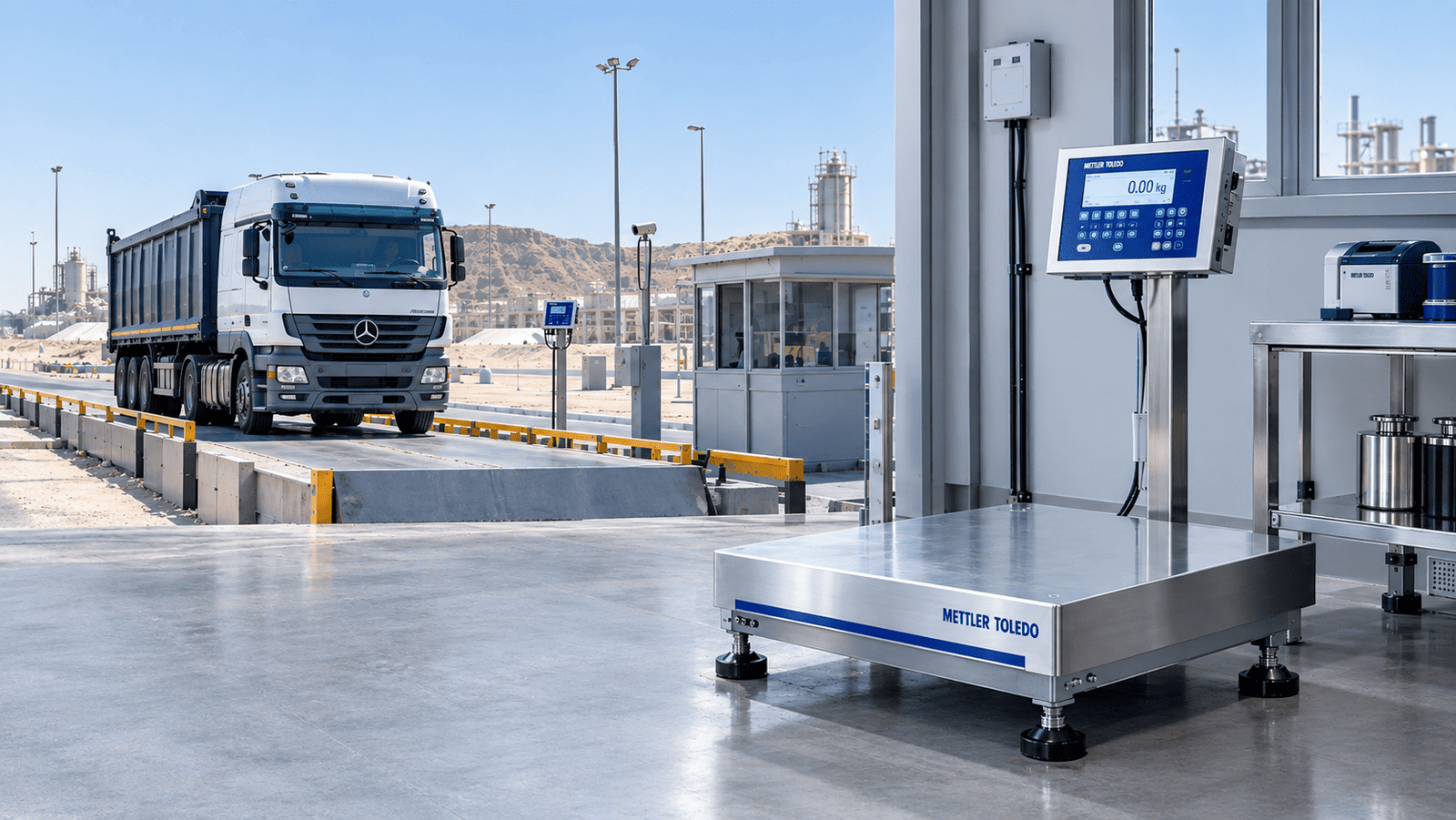
Whichever foundation type you choose, the components underneath it are what determine whether your weighbridge holds accuracy for ten years or needs constant recalibration. As Mettler Toledo's official partner across Saudi Arabia and the GCC, we spec pit and pitless systems using the same industrial-grade components, load cells, terminals, and software, regardless of foundation type.
| Feature | What It Actually Means for You |
|---|---|
| POWERCELL PDX load cells, 10-year warranty | No calibration-related downtime surprises for a decade, pit or pitless |
| IND9U unattended terminal with RFID, IP69K rated | Trucks weigh in and out without a gatekeeper, and the enclosure shrugs off sand and heat |
| StrikeShield lightning protection | Critical for exposed desert sites where a single strike can take down an unprotected terminal |
| DataBridge software (SS/MS/ES tiers) | Faster transaction processing at the gate, less queuing during peak truck traffic |
| Accredited calibration and SASO verification | Your weighments hold up in a dispute, an audit, or a customs check |
None of this is about picking a brand for the sake of it. A pit or pitless weighbridge is only as good as what's bolted to it, and after years of installing both types across the Kingdom, we've learned exactly where each one earns its keep and where it doesn't. If you're weighing up (no pun intended) which system fits your site, that's the conversation worth having before any concrete gets poured.
08 FAQ
What's the real difference between a pit-mounted and pitless weighbridge?
A pit weighbridge sits flush with the ground in an excavated, concrete-lined pit. A pitless weighbridge sits on a shallow foundation above ground, with ramps leading trucks up to the platform. Both use the same core weighing technology. The difference is almost entirely in civil works, cost, and installation time.
Is SASO certification required for truck scales in Saudi Arabia?
Yes. Any weighbridge used for trade, meaning weighments tied to invoicing, penalties, or contractual payment, needs to be legal-for-trade certified under SASO's legal metrology oversight, calibrated and verified by an accredited body. This applies equally to pit and pitless systems.
How long does weighbridge installation take in Saudi Arabia?
Pitless installations are generally faster, often a matter of weeks once the foundation is poured, since there's no excavation or drainage system to build. Pit installations take longer due to excavation, concrete curing, and drainage works, and timelines can stretch further during peak summer heat when curing schedules get affected.
Can a pitless weighbridge be relocated later?
In many cases, yes, and that's one of its biggest advantages for logistics operators or multi-site businesses. A pit weighbridge, by contrast, is effectively permanent once the civil works are complete.
How often do weighbridges need calibration in KSA?
Calibration frequency depends on usage intensity, site conditions, and your accreditation body's requirements, but most commercial weighbridges in the Kingdom are calibrated at least annually, with heavier-use sites often on a more frequent schedule. Ask your vendor to confirm the recommended cycle for your specific configuration.
Does the type of weighbridge affect SASO compliance?
No. Legal-for-trade compliance depends on the load cell class, terminal approval, and the calibration and verification process, not on whether the system is pit-mounted or pitless. Choose the foundation type that suits your site, then make sure the certification process is handled correctly either way.
If you'd rather have experts come look at your site before you begin installation, contact us now at Global Scales & Systems and we can walk your site and tell you exactly where the gaps are, honestly, before an auditor does.

 Click to start chat