
7 Brands, One Production Line: Global Scales & Systems Wraps Up a Landmark Showcase at Gulfood Manufacturing 2026
Smart weighing, coding, labeling and packaging automation drew food and beverage leaders to Hall 3, Stand D3-29, all looking to cut bottlenecks and keep their lines running.

Dubai, UAE | November 3 -5, 2026
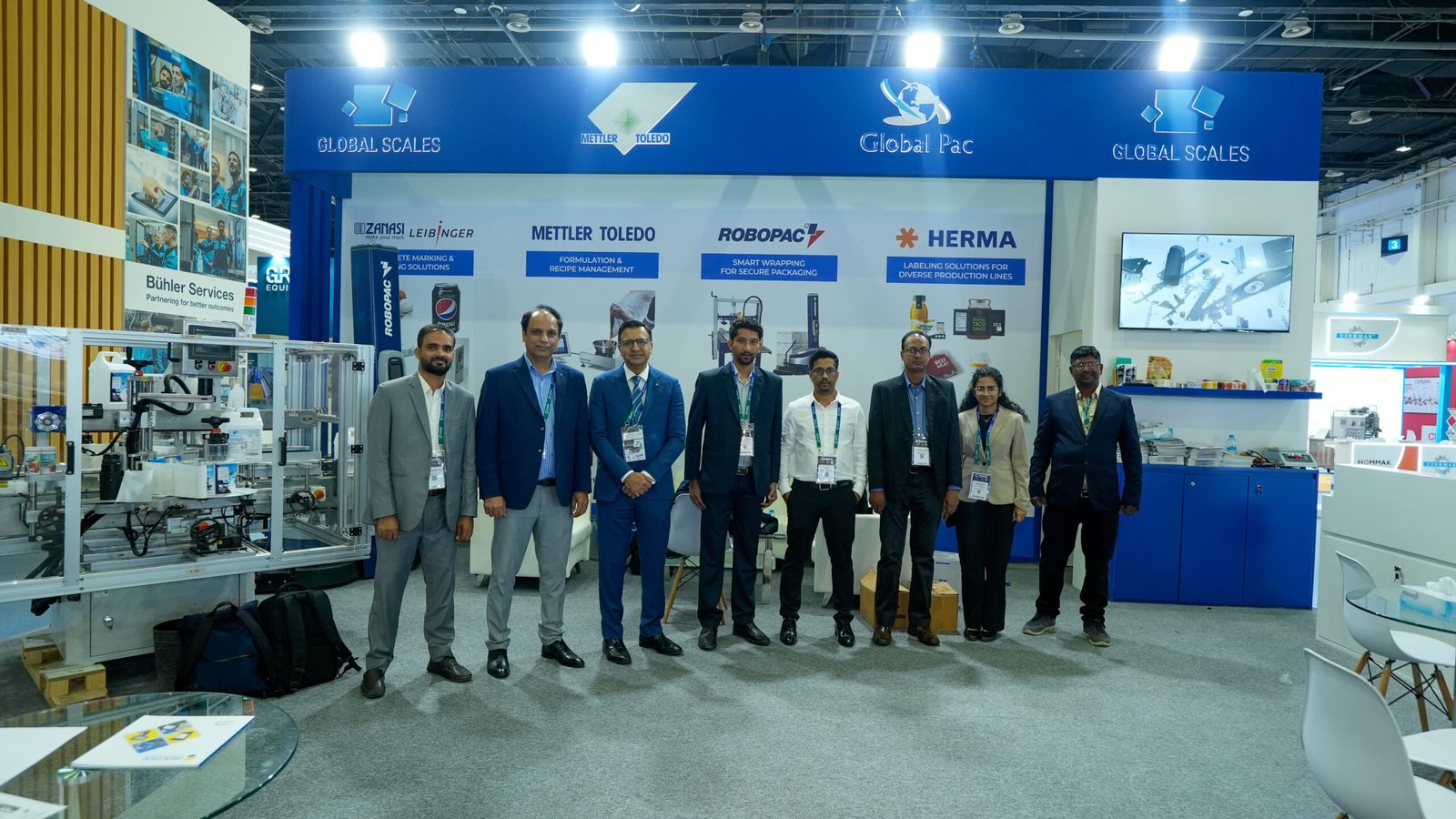
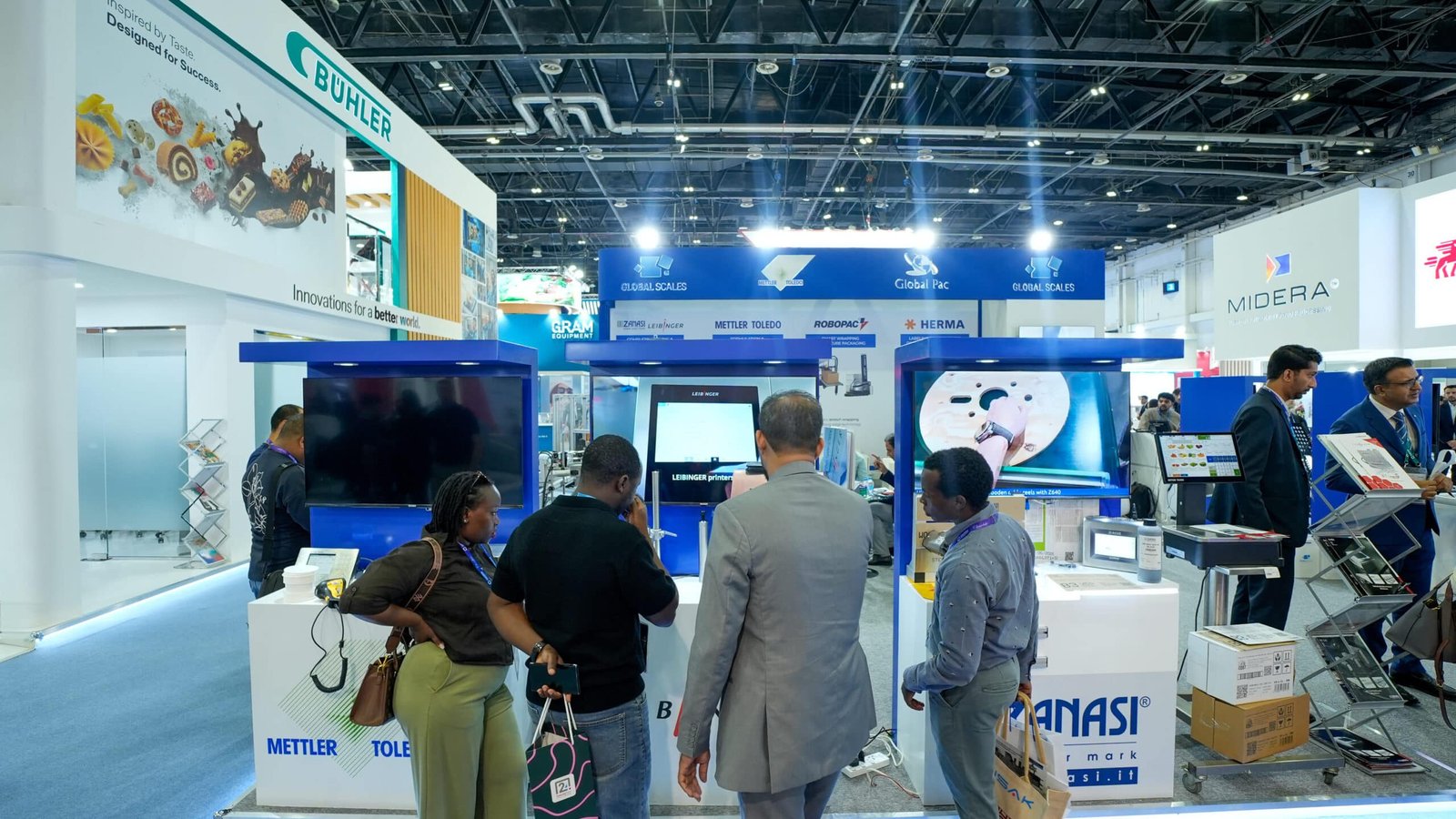
Three days, 21 halls, and a stand that never went quiet for a second. Global Scales & Systems closed out Gulfood Manufacturing 2026 at Dubai World Trade Centre on November 5, and Hall 3, Stand D3-29 turned into a working hub for food and beverage, dairy, FMCG and logistics leaders chasing the same two things: fewer production bottlenecks and less downtime. We brought seven brands to Dubai (Mettler Toledo, Leibinger, Zanasi, HERMA, Zebra, Robopac and Newland) and set them out the way a real line runs, from the first weigh-in to the last pallet wrap. This recap covers what we showed, what visitors wanted to talk about, and how you can still get the same conversation if you missed Gulfood Manufacturing 2026 in person.
01 What Was Really Driving Gulfood Manufacturing 2026
Gulfood Manufacturing 2026 was enormous, and the numbers back that up. The 12th edition ran November 3 to 5 under the theme “Powering Food Security Through Manufacturing Innovation,” and according to UAE Barq’s coverage of the opening day, the four co-located shows pulled together 2,500 exhibitors from 79 countries across 21 halls. That’s a lot of steel under one roof. But scale isn’t the story. What matters is the problem a plant manager had in mind while walking those aisles.
In my experience, nobody comes to a show like this to “buy a machine.” They come to stop losing product, pass the next audit, and keep the line moving through peak season. Three pressures show up in almost every conversation we have with food and beverage producers: tighter quality control, higher throughput, and zero tolerance for downtime. (Yes, they pull in different directions. That’s the whole difficulty.)
Take labeling first. A statistic shared at a 2026 Food Safety Summit workshop, reported by J.J. Keller Compliance Network, puts labeling and packaging errors at roughly half of all allergen-related incidents. Half. Think about that for a second: a wrong label on a correctly made product can set off the same chain of recalls and retailer phone calls as a bad recipe.
Meanwhile, the volume keeps rising. IMARC Group values the UAE dairy market at USD 4.8 billion in 2024 and projects USD 7.0 billion by 2033, a CAGR of 4.30%, while its outlook for UAE cold chain logistics climbs from USD 1.4 billion to USD 2.9 billion over the same window at 8.2%. More product moving through more chilled networks means more packs to weigh, code, label and wrap, with the same number of minutes in a shift.
Our answer to that pressure is a connected line, built from seven brands that we integrate and support as one system. That’s what we took to Hall 3.
“ Labeling and packaging errors sit behind roughly half of allergen-related incidents, and a label is only as reliable as the line that applies it. — Section 01
02 Seven Brands, One Workflow: Why We Build Lines Instead of Selling Boxes
A lot of the plants we visit don’t have an equipment problem. They have a handshake problem. The checkweigher came from one supplier, the printer from another, the label applicator from a third, the wrapper from a fourth, and nobody owns the gaps in between. When reject rates creep up at 2 a.m., every vendor points at the next machine along the line (we’ve sat in plenty of those meetings, and nobody enjoys them).
Global Scales & Systems started at the weighing end. As Mettler Toledo’s official partner in Saudi Arabia and the GCC, weighing and inspection is home ground for us, and we built outward from there: Leibinger and Zanasi for coding, Zebra and Newland for data capture, HERMA for labeling, Robopac for pallet wrapping. Seven brands, one team accountable for how they behave together, from commissioning through calibration and service.
Why does that matter to a plant manager? Because the useful questions on a production line sit between the machines. Does the weight result reach the label? Can the printed code be read at the next scan point? Does the pallet leave the wrapper in a condition the distribution center will accept? One accountable integrator can answer those. Four separate vendors usually just point at each other.
Common mistake
Buying every machine on its own spec sheet. A printer that looks perfect on paper still lets the line down if it can’t take a signal from the checkweigher or be verified at the next scan point. Ask each supplier how their equipment will exchange data with the machines before and after it, and get the answer in writing.
03 The Line We Brought to Hall 3, Stage by Stage
Here’s how the portfolio breaks down when you read it the way a plant does: in production order, with a specific operational problem attached to each stage.
Stage 1: Precision Weighing and Inspection
Mettler Toledo scales sit at the front of the line, and they earn their keep on giveaway. Giveaway is the quiet cost. Overfill each pack by a hair and nobody notices at the filler, but multiply that hair by every pack, every shift and every month, and it lands in your cost of goods. Checkweighing catches the other side of the problem too: underweight packs that turn into compliance headaches before they ever reach a shelf. Add inspection, and every pack leaves the stage with a verified weight record behind it, which is exactly what quality teams and auditors ask to see.
Stage 2: Continuous Coding and Traceability
Once a pack is weighed, it needs an identity. Leibinger and Zanasi inkjet coders put batch numbers, dates and lot information onto product and packaging at production speed, and a code that’s missing or smudged is a pack nobody can trace. That’s where Zebra mobile scanning and RFID data capture, alongside Newland scanning hardware, take over: reading those codes as product moves through the plant and warehouse, so the record on the screen matches the box on the pallet. When something does go wrong, the speed at which you can isolate a single batch decides whether you’re dealing with a small problem or a very large one.
Stage 3: High-Speed Labeling
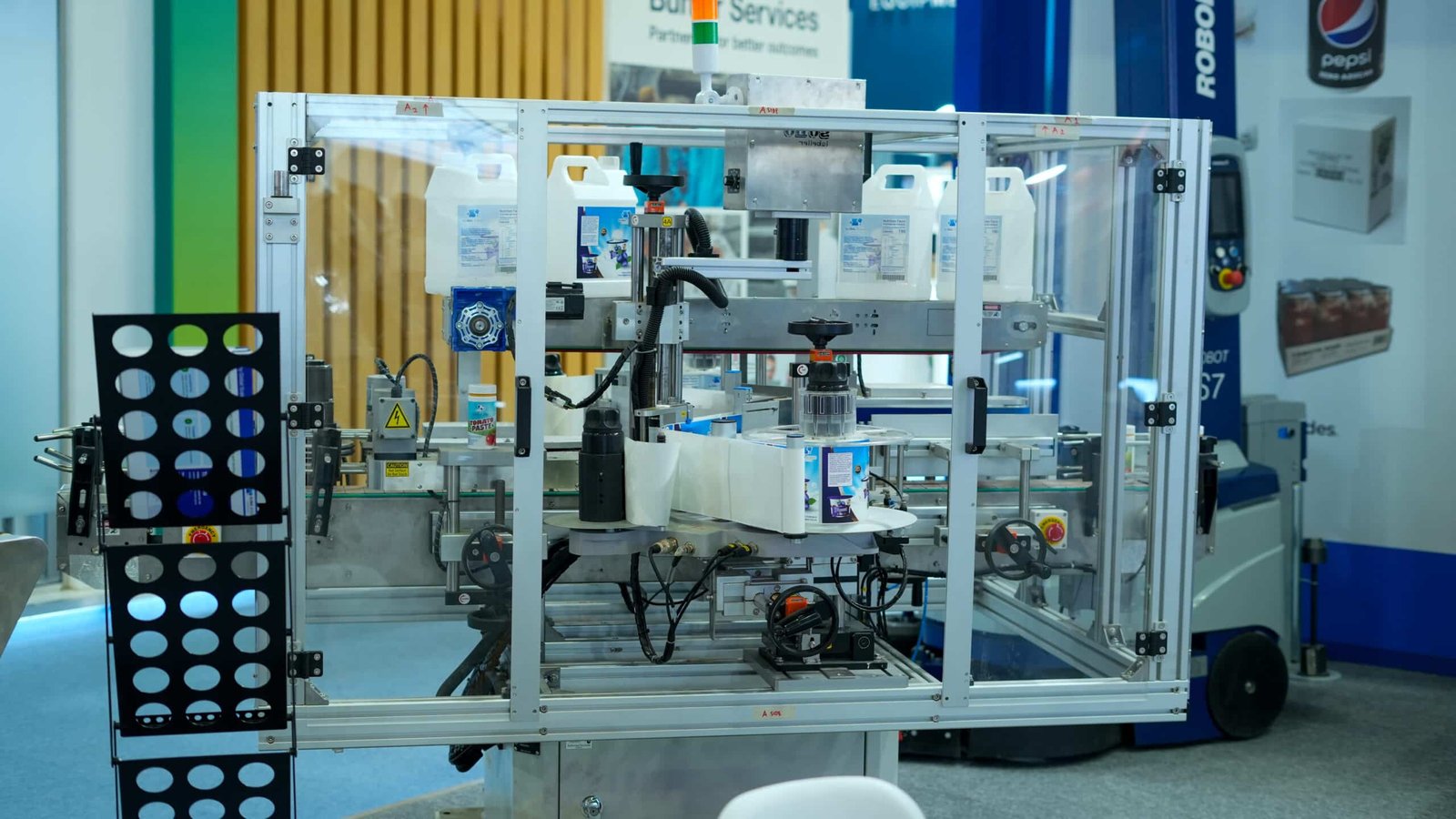
Labeling is where the allergen statistic earlier in this article bites hardest. HERMA automated label applicators put labels on at line speed, and the real value shows when label content is driven by live line data instead of a manual changeover someone has to remember. That’s why the conversation on our stand kept returning to weighers talking directly to labeling systems: weigh the pack, confirm it, and print the right label for exactly that pack. The fewer manual steps between a verified product and its label, the fewer chances for the wrong one to land on it.
Stage 4: End-of-Line Packaging
The last stage gets less attention than it should. Robopac stretch pallet wrappers secure the finished load so cartons reach the distributor in the condition they left your plant. For FMCG and cold chain logistics, a pallet that shifts in transit is a damage claim waiting to happen, and a wrap applied consistently on every shift is far easier to defend than one that depends on who’s running the line. It’s the least glamorous machine in the building. It’s also the one your customer sees first.
| Stage | Brands on the Stand | What It Fixes on Your Line |
|---|---|---|
| Weighing and inspection | Mettler Toledo | Excess giveaway, underweight packs, missing quality records |
| Coding | Leibinger, Zanasi | Missing or unreadable batch and date codes |
| Data capture | Zebra, Newland | Manual tracking errors and slow batch checks |
| Labeling | HERMA | Wrong, misplaced or missing labels |
| End-of-line packaging | Robopac | Unstable pallets and transit damage |
“ The fewer manual steps between a verified product and its label, the fewer chances for the wrong one to land on it. — Section 03
04 On the Stand: What Visitors Wanted to See and Talk About
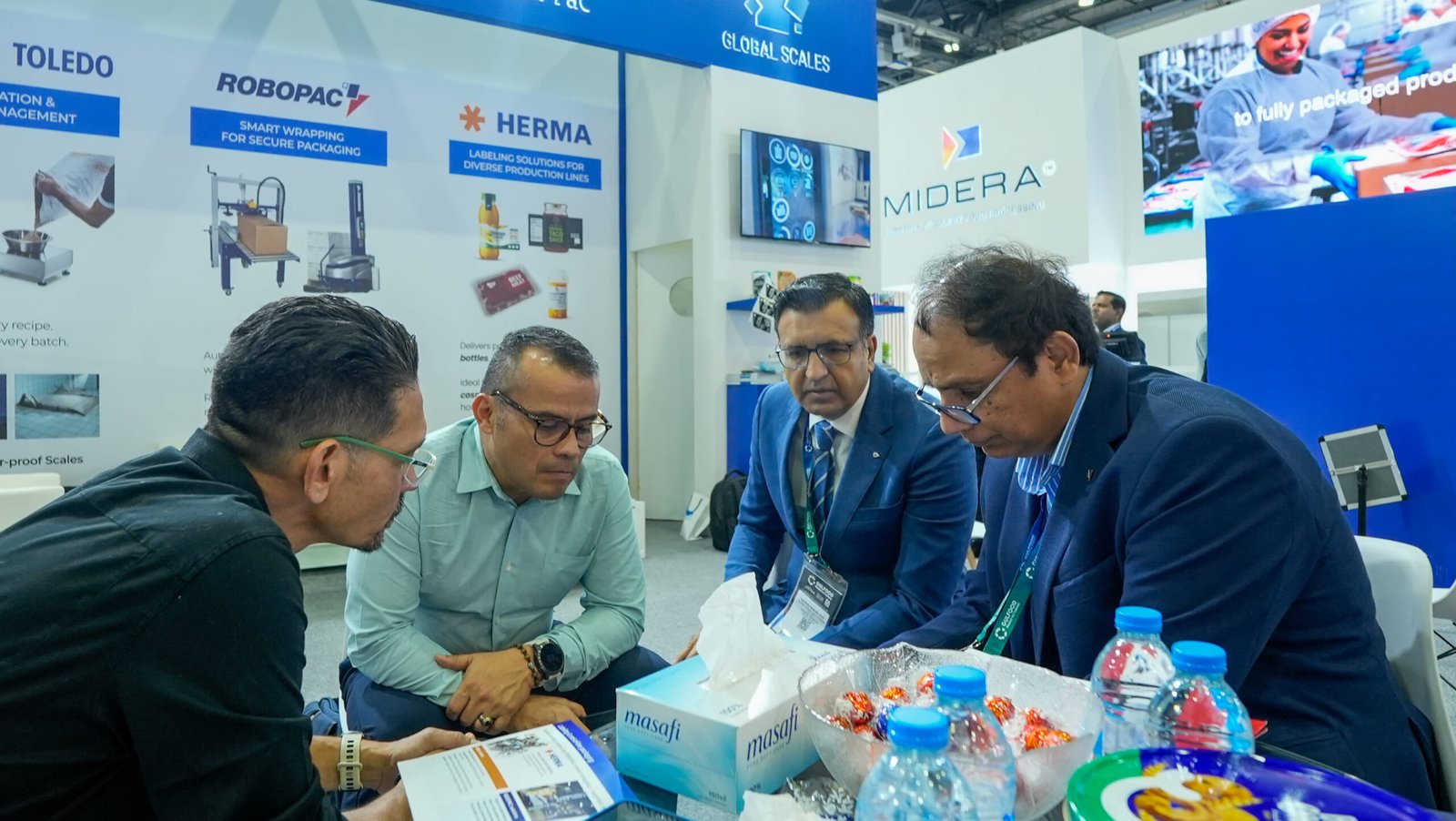
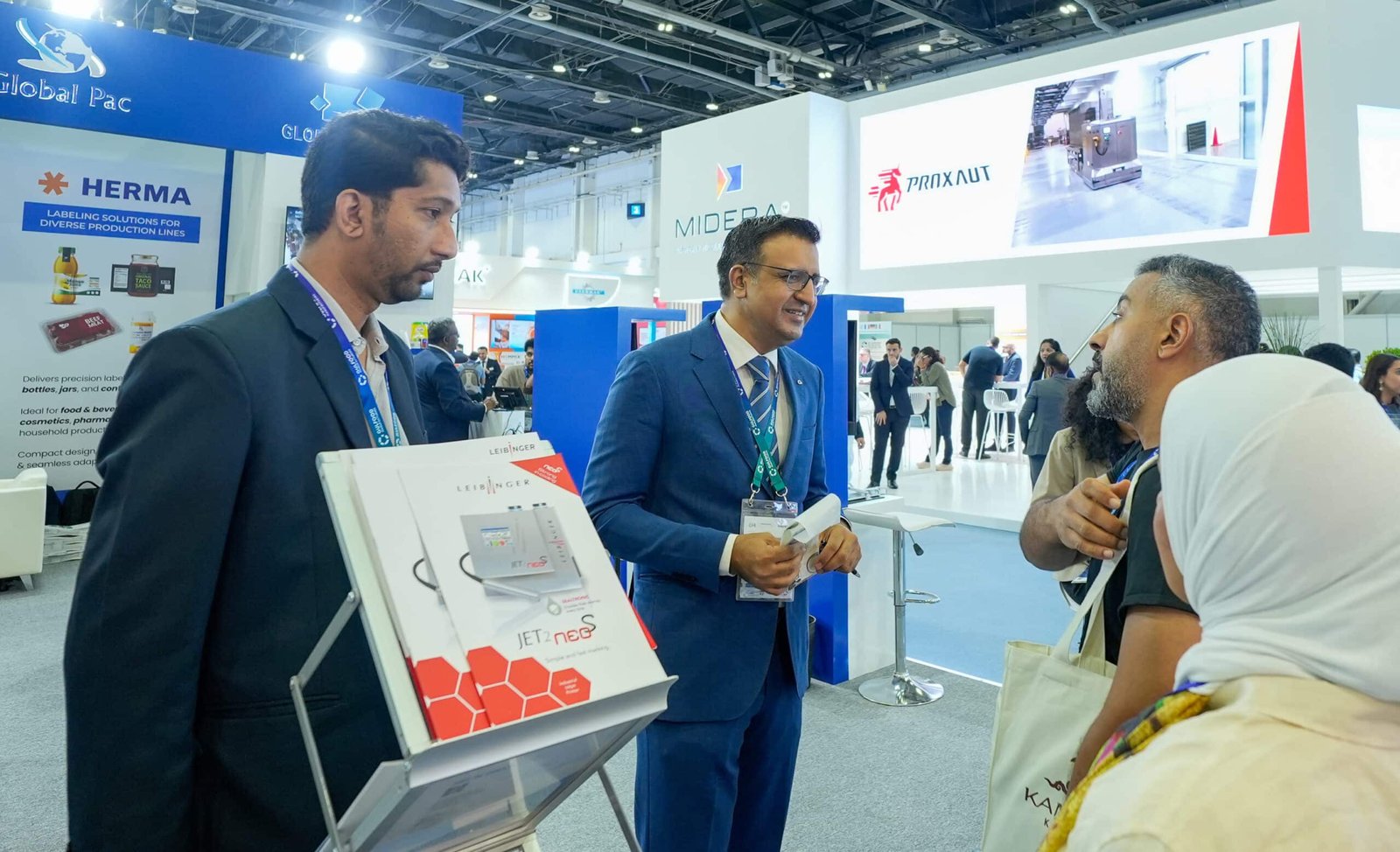
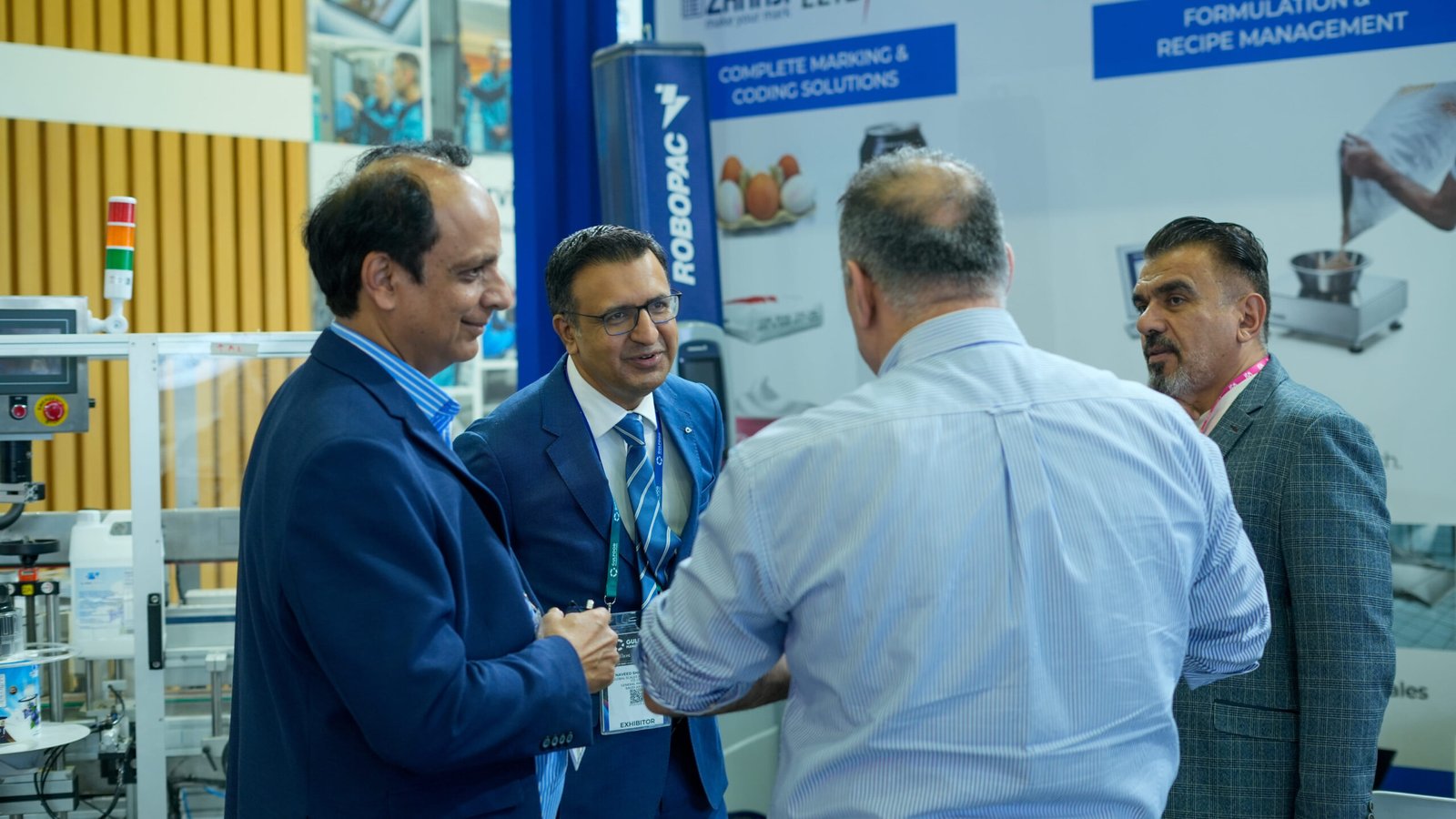
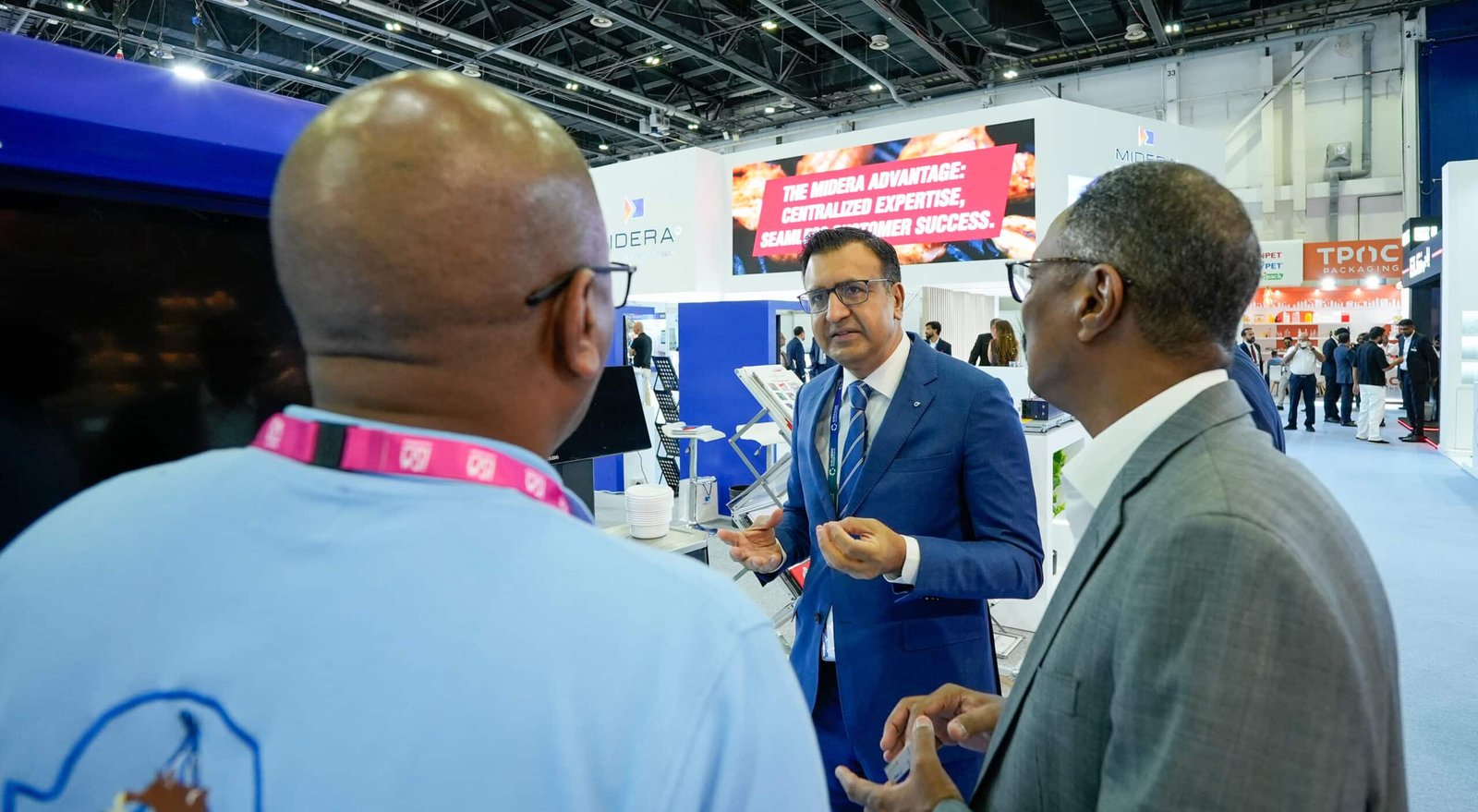
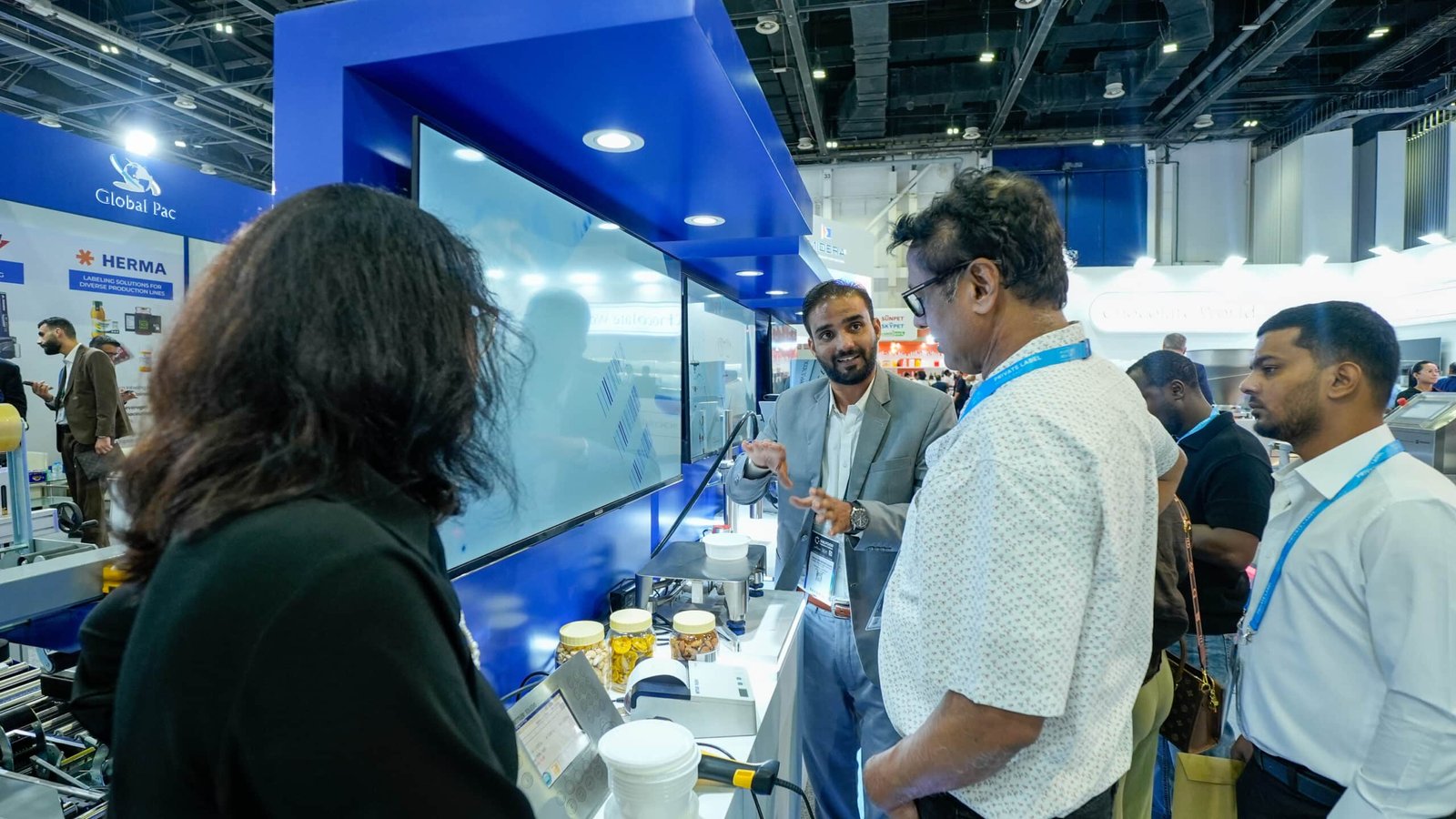
A trade show stand is only as good as the conversations it starts. Hall 3, Stand D3-29 became a working meeting point for food and beverage, dairy, FMCG and logistics decision-makers, many of them arriving with a line problem rather than a shopping list.
From the Show Floor
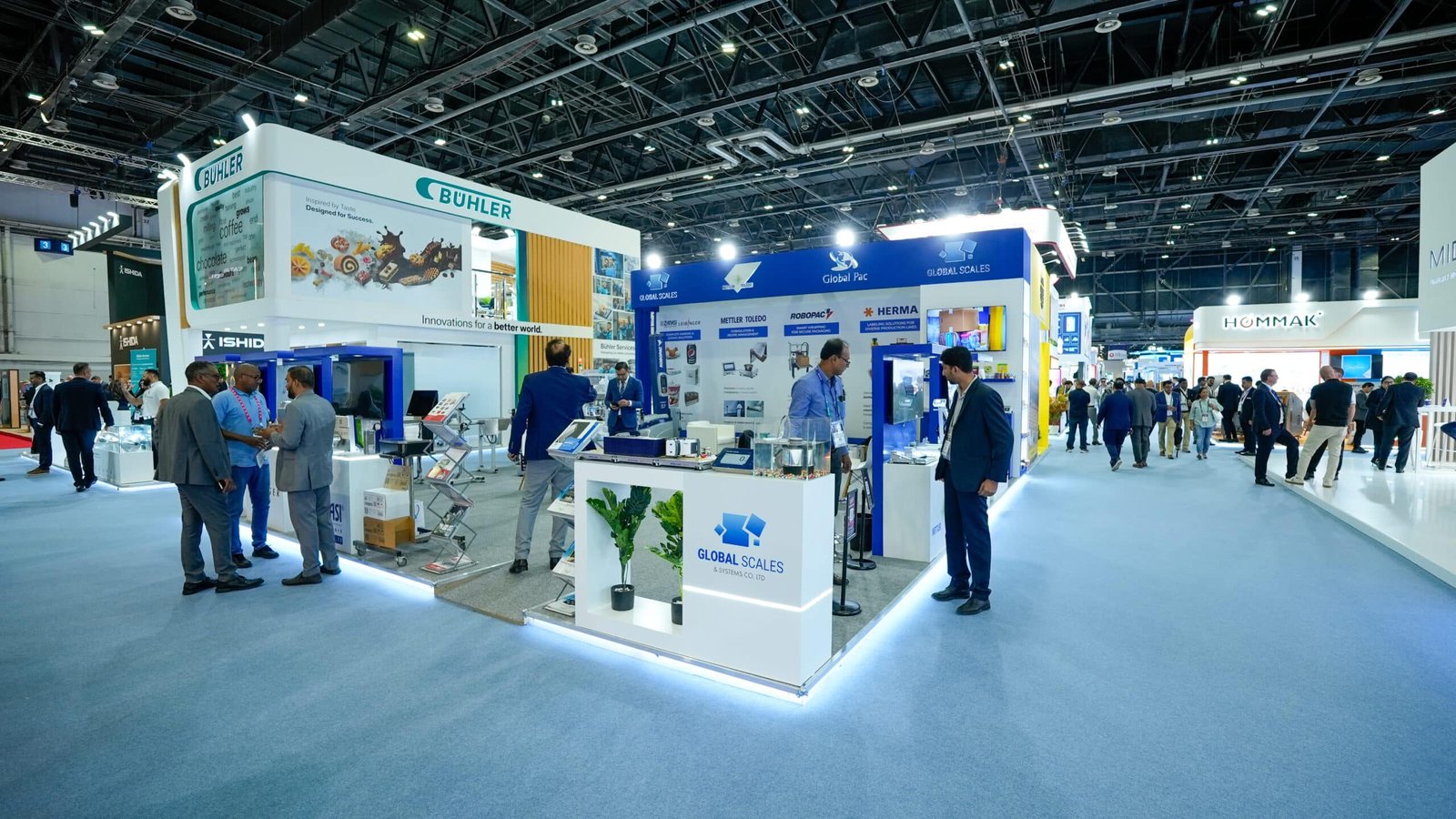
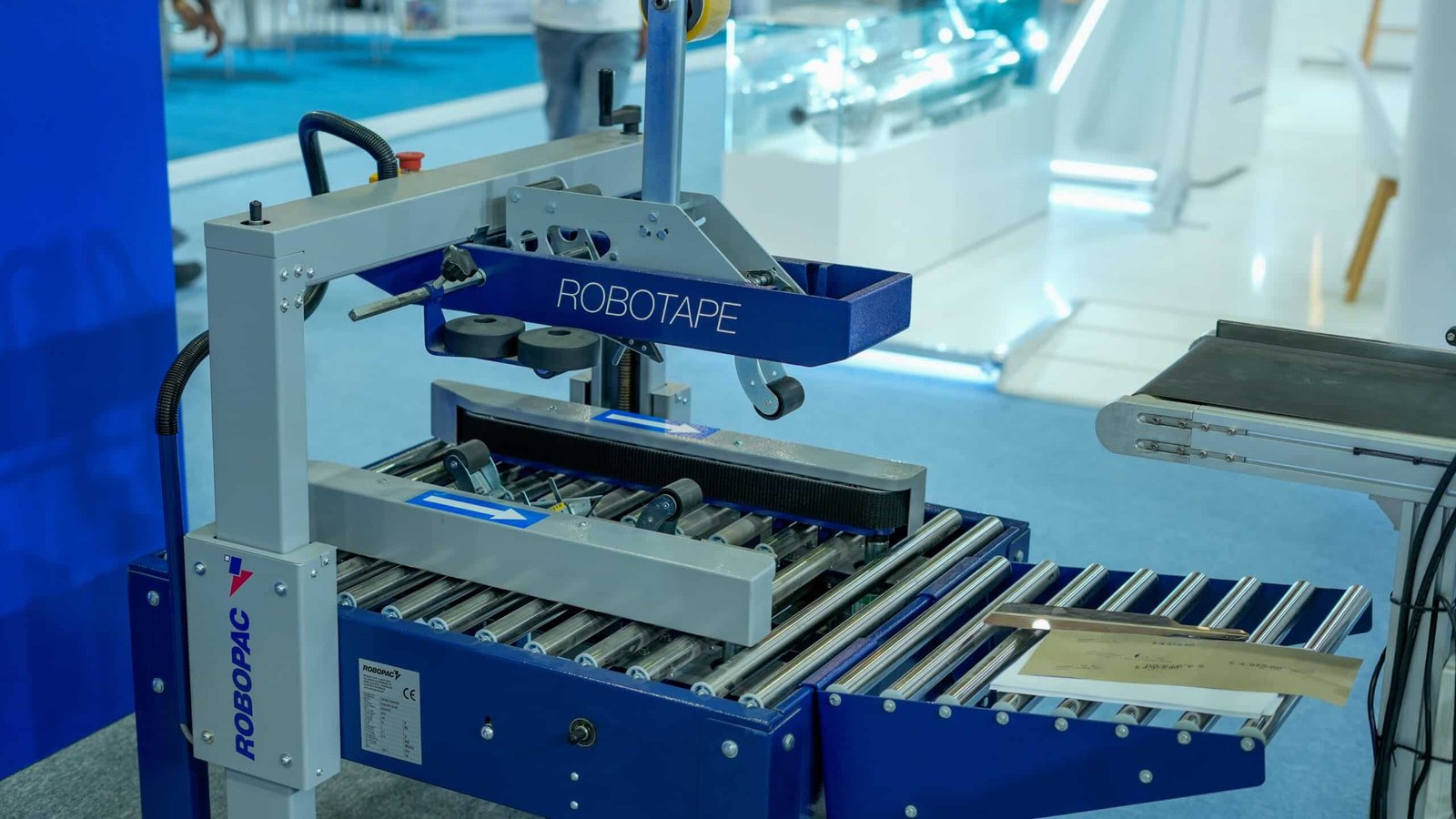
What Our Team Heard
“Visitors were particularly focused on integrating automated weighing scales directly with real-time coding, marketing and labeling systems.”
Global Scales & SystemsIt’s a sensible focus, and honestly, it’s the right question to be asking. A checkweigher on its own tells you a pack was wrong. A weigher wired into the line tells the rest of the line what to do about it.
Sectors in the Room
The visitor mix covered dairy, frozen foods and FMCG logistics, alongside the wider food and beverage manufacturing crowd that Gulfood Manufacturing 2026 is built around. Those sectors look different on the floor, but they tend to leak margin in the same four places: weight, codes, labels and pallets. Dairy producers live and die by fill accuracy and batch traceability. Frozen food teams need codes and labels that hold up in cold, damp conditions. FMCG and logistics operators get measured on whether pallets arrive intact and scan correctly the first time.
05 Missed Us at Gulfood Manufacturing 2026? You Haven’t Missed the Conversation
If you couldn’t make it to Dubai, nothing we showed in Hall 3 is out of reach. Every solution on the stand is available for a conversation at your site or ours, and there are three ways in:
- Private consultation. A working session with our automation engineers to walk through your line, your products and your bottlenecks.
- Live factory demo. See the equipment running, instead of reading about it on a datasheet.
- Local site evaluation. Our engineers visit your plant, trace where giveaway, codes, labels and pallets are leaking money, and map out what to fix first.
We cover the region from offices in Riyadh, Jeddah, Dammam and Dubai, so “local” actually means something. Still wondering whether your project is too early for this? Honestly, the best time to talk is before you’ve bought anything, because that’s when changing the plan costs nothing.
“ The best time to talk to an automation engineer is before you’ve bought anything. — Section 05
Pro tip
Bring your three costliest stoppages and your last three label or code rejects to the first call. Engineers can work from real numbers, and you’ll leave with a shortlist instead of a brochure.
06 FAQ: Global Scales & Systems at Gulfood Manufacturing 2026
What did Global Scales & Systems showcase at Gulfood Manufacturing 2026?
We showed a connected production line built from seven brands: Mettler Toledo weighing and checkweighing, Leibinger and Zanasi coding, Zebra and Newland data capture, HERMA labeling and Robopac pallet wrapping.
Where was the Global Scales & Systems stand?
Hall 3, Stand D3-29, at Dubai World Trade Centre, during Gulfood Manufacturing 2026 from November 3 to 5.
I missed the show. Can I still see these solutions?
Yes. Book a private consultation, a live factory demo or a local site evaluation with our automation engineers. The request form at the end of this article is the quickest route.
Which industries are these solutions built for?
Food and beverage, dairy, frozen foods, FMCG and logistics were the focus at the show. The same line logic carries over to other packed-goods industries we serve across the GCC, such as pharma and retail.
How do weighing, coding, labeling and packaging work together on one line?
When the stages are integrated as one system, data moves between them instead of relying on manual steps. A verified weight can drive the label, scanners confirm codes downstream, and the wrapper secures the finished pallet. That’s the difference between four machines and one line.
Does Global Scales & Systems support sites outside the UAE?
Yes. We work with industrial customers across Saudi Arabia and the wider GCC from offices in Riyadh, Jeddah, Dammam and Dubai.
07 Book Your Post-Show Consultation
Gulfood Manufacturing 2026 is over, but the conversations we started in Hall 3 don’t have to end with the show. Tell us about your line and our team will get back to you.
Missed us in Dubai?
Schedule a post-show consultation, line audit, or request a quote with our automation engineers today.
Request a QuoteDownload our Gulfood 2026 Automation Catalog featuring Mettler Toledo, Robopac, HERMA, and Leibinger solutions.
Download the Catalog
 Click to start chat