
9 Common Causes of Industrial Weighing Scale Failure, And How to Prevent Every One
A practical breakdown of the nine failure modes most commonly seen in KSA industrial facilities, why each one matters in this region, and exactly what to do before the damage compounds.

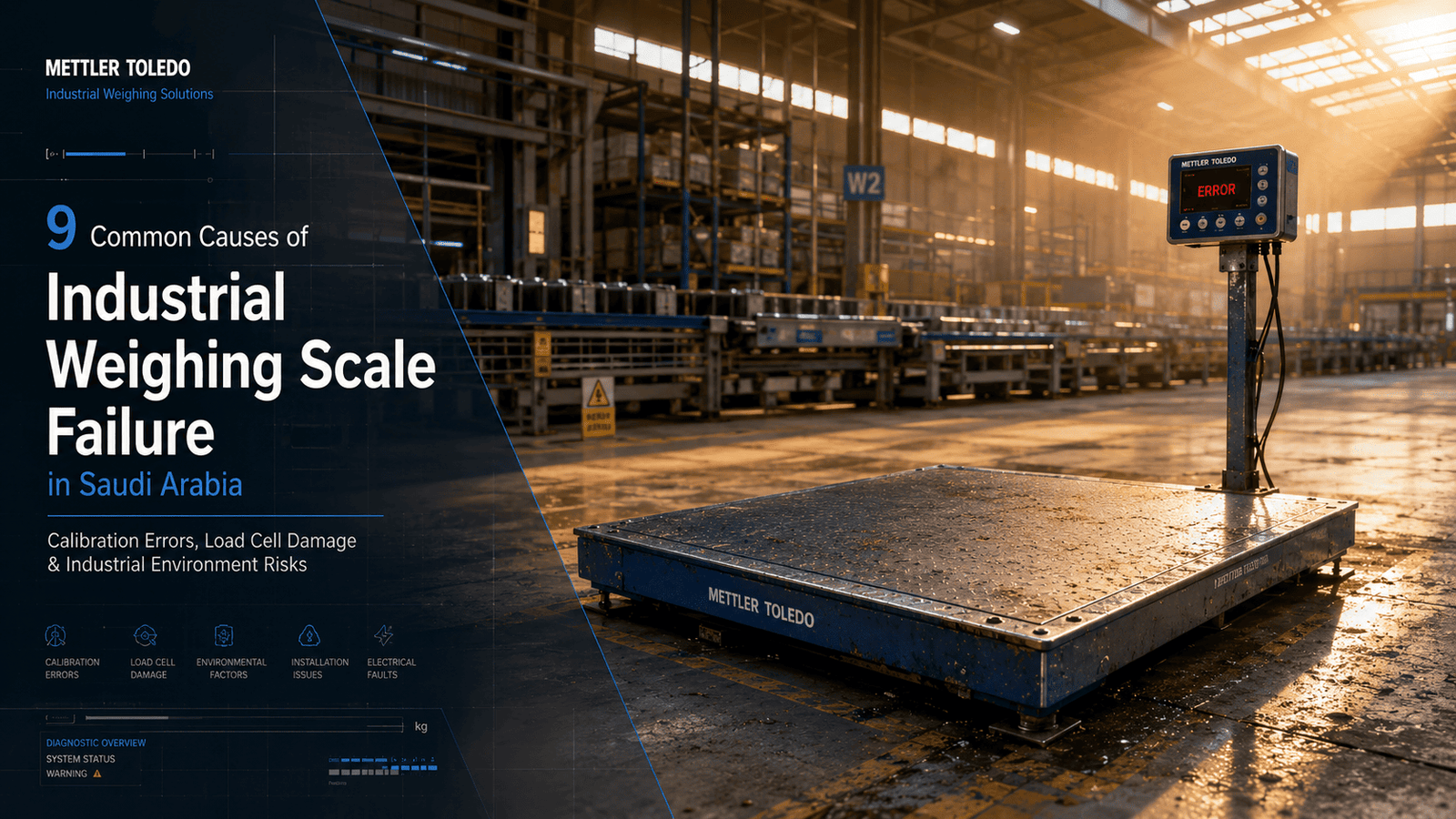
A scale reads 4,200 kg on a truck that visibly carries more. The batch report shows a consistent 0.8% underweight. The weighbridge terminal throws an E04 error in the middle of a peak shift, and nobody on site knows what it means or how long it's been happening. These aren't edge cases. We see versions of this story across facilities in the Eastern Province, Jubail, and Jeddah's industrial corridors on a near-weekly basis, and in almost every situation, the common causes of industrial weighing scale failure were preventable, sometimes months before the breakdown actually surfaced.
That's the uncomfortable truth about scale failure in industrial settings. It rarely arrives without warning. It builds quietly, through neglect, through environmental pressure, through operating habits that erode accuracy by fractions of a percent at a time. By the time someone notices something is wrong, the damage is usually already done.
This guide breaks down the nine most frequently occurring failure modes we encounter in KSA industrial environments, why each one is especially punishing in this region, and exactly what you can do to stop them before they cost you a calibration crisis, a SASO non-compliance notice, or a full scale replacement.
01 Why Industrial Scale Failure Is More Expensive Than You Think
Scales feel like utility infrastructure, always there, taken for granted until something goes wrong. But the financial consequence of failure is rarely limited to the repair bill. According to ABB's Value of Reliability Survey, two-thirds of industrial companies experience unplanned downtime at least monthly, at a median cost of $125,000 per hour across industrial sectors. A scale that's down at a logistics gate, a filling station, or a batching line doesn't just pause one process. It ripples outward: trucks queue, production schedules slip, drivers miss windows, and quality holds pile up, before you've factored in any regulatory exposure.
In Saudi Arabia, the stakes are compounded by the compliance dimension. SASO, the Saudi Standards, Metrology and Quality Organisation, is the mandated national authority for measurement accuracy and calibration, operating as a member of the International Organisation of Legal Metrology (OIML). Its National Measurement and Calibration Centre (NMCC), established in 1986 and internationally accredited to ISO/IEC 17025:2017, is the first point of reference for legal metrology in the Kingdom. Running scales that are out of calibration, damaged, or improperly maintained isn't just an operational problem here. It's a legal one.
“ Scale failure rarely arrives without warning. It builds quietly through neglect and environmental pressure, until the damage is already done. — Section 01
02 Overloading, The Fastest Way to Kill a Load Cell
This is number one on every experienced maintenance engineer's list, and with good reason. Load cells are precision-manufactured sensing components rated to very specific capacities. Exceed that number and you're not just risking a bad reading, you're permanently deforming the internal strain gauge. Overloading can deform the load cell body or damage internal strain gauges, leading to inconsistent readings, permanent drift, or complete failure.
The insidious thing is that catastrophic overloading is the exception, not the rule. Repeated instances of slight overloading, loads that don't immediately cause failure, contribute significantly to fatigue damage over time. A truck driver who routinely runs a few hundred kilograms over the rated limit, week after week, is slowly accumulating damage that won't show up in any single reading. The scale appears to work fine right up until it doesn't.
Prevention: Implement hard procedural controls on maximum loads, signage, operator training, and if your scale supports it, an automated overload alarm. For weighbridge applications, verify that your rated capacity genuinely accounts for the heaviest vehicle configuration on site (gross vehicle weight, not just cargo). If you're regularly operating near the limit, size up.
03 Environmental Damage, The KSA Factor Nobody Talks About Enough
If you're operating industrial scales in Saudi Arabia, you're dealing with conditions that most weighing equipment wasn't originally designed for. Ambient temperatures in the Eastern Province and Riyadh regularly hit 45°C to 50°C during summer. That kind of sustained heat accelerates degradation of seals, gaskets, and cable insulation far faster than temperate-climate equipment lifecycles suggest.
Add fine desert particulate that gets into enclosures, cable routing channels, and indicator housings in ways that are genuinely difficult to prevent without IP-rated equipment and disciplined cleaning schedules. Moisture ingress is the third environmental attacker, particularly relevant in coastal industrial areas like Yanbu and Jubail, where humidity swings between shifts can create internal condensation inside unsealed load cell housings. Temperature cycling in high-humidity environments is one of the most likely conditions to produce internal condensation within welded load cell cavities. Once moisture gets in, it corrodes the strain gauge, shorts the circuit, and produces readings that erode slowly before failing outright.
Prevention: Specify IP-rated equipment appropriate to your environment, at minimum IP67 for most KSA outdoor industrial applications, IP69K for washdown environments. Install scales with stainless steel enclosures and factory-sealed load cells. In extreme heat locations, consider shading structures over weighbridge platforms. Never position junction boxes or indicator housings where water accumulation is possible after cleaning or rainfall.
Common mistake
Buying to a generic IP specification rather than a KSA-specific one is one of the most costly procurement mistakes we see. IP67 is not IP69K, and in a high-pressure washdown environment, that difference will eventually end in a failed load cell and an unplanned replacement. Always verify the IP rating against your actual cleaning process, not the cleaning process you assume is happening.
04 Cable and Connector Damage, Small Problem, Big Consequences
Walk around any industrial floor scale that's been in service for two or more years and look at the cables. It's humbling how often you'll find cuts, abrasions, pinching damage from forklift traffic, or corroded connector entries. Damaged or loose cables are one of the most common causes of weighing errors in industrial environments, and this cause is routinely underestimated because cable damage doesn't always produce an obvious error.
Sometimes it creates intermittent signal loss. The scale reads normally most of the time, then produces an outlier that operators assume is a user error. The batching report looks slightly off. The truck weighing register shows an occasional discrepancy. Nobody connects the dots until the reading drift becomes undeniable. Cable damage from rodents is another underappreciated failure vector, and in outdoor Saudi industrial sites with adjacent vegetation, rodent gnawing on cable runs is genuinely common.
Prevention: Route signal cables away from forklift traffic paths. Use armoured cable sheathing in any floor-level run. Inspect cable runs during every scheduled maintenance visit, not just when a fault appears. For new installations, insist on conduit-protected routing wherever cables cross vehicle travel lanes.
05 Electrical Surges and Lightning Strike Damage
KSA's desert climate creates particular electrical risk. Summer convective storms in the central and western regions produce high lightning activity, and the combination of poorly grounded industrial infrastructure with sensitive load cell electronics is a recipe for equipment loss. Lightning strikes, unstable power, or sudden electrical spikes can overwhelm sensitive strain gauges, burning circuitry, distorting signals, or permanently destroying calibration.
The damage pattern from a direct strike is typically binary, either the load cell survives or it doesn't. But power surge damage from unstable industrial supply (common in remote plant locations fed by aging substation infrastructure) can produce subtler problems: signal drift that accumulates gradually, or calibration that cannot hold between service visits.
Prevention: Surge protection at the indicator input is a minimum standard, not optional. For outdoor weighbridges or any scale exposed to direct atmospheric risk, dedicated lightning protection for the entire load cell array is worth the investment. If you're working in a site with known supply instability, an isolation transformer for the scale circuit is a sensible step. For clients running Mettler Toledo POWERCELL PDX load cells, as Global Scales & Systems supplies across the KSA market, the built-in StrikeShield lightning protection addresses this directly, it's one of the few load cell systems with hardened electrical protection engineered into the product rather than bolted on afterward.
06 Vibration and Mechanical Fatigue
Conveyor scales, batching systems, and any weighing equipment mounted near rotating machinery is exposed to continuous vibration. This matters because vibration induces high-frequency cyclic loading on load cell components. Over time, that cyclic stress accumulates as fatigue damage, gradually reducing the mechanical elasticity of the load cell element, which compromises linearity and accuracy.
Most modern load cells from reputable manufacturers are designed to withstand over 5 million cycles at full capacity without significant degradation. But that rating assumes operation within specified parameters: normal temperature range, no overloading, proper mechanical installation. When any of those factors are compromised, vibration fatigue compounds the damage rate significantly. In cement plants, petrochemical processing, and mining environments, which represent a large portion of GSS's client base across KSA, vibration exposure is constant and severe.
Prevention: Anti-vibration mounts on scale platforms reduce transmitted vibration substantially. For conveyor weighing applications, verify that the weigh bridge section is mechanically isolated from drive components. Damping pads between the load cell mounting plate and the structure are low-cost insurance. Check mounting hardware torque values during scheduled maintenance, vibration loosens things.
“ In cement plants, petrochemical processing, and mining environments, vibration exposure is constant and severe, and it compounds every other failure mode already in play. — Section 06
07 Poor Calibration Practices
Here's the thing nobody in this industry likes to admit: calibration is treated as a checkbox, not a control mechanism. The scale gets calibrated once a year when the inspector comes around, a sticker gets applied, and everyone moves on. What happens between visits rarely gets scrutinised. A weighing system can gradually lose accuracy over months, too slowly to be immediately noticeable. Errors accumulate: incorrect batch weights, longer setup times, and recalibrations that become accepted as normal.
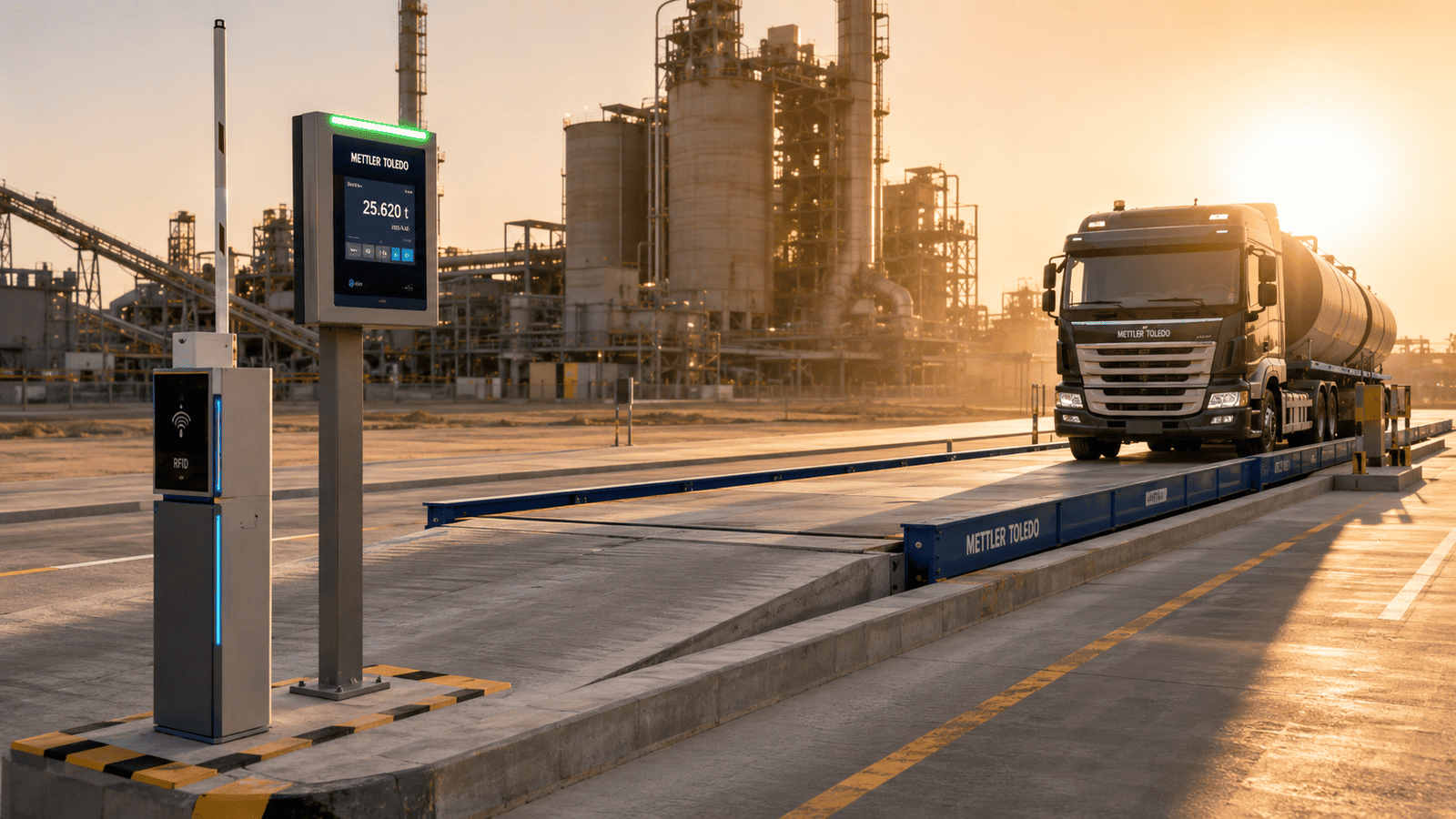
By the time someone raises a concern, the drift has been compounding silently for weeks or months. Product giveaway, incorrect billing, failed QC holds, these are downstream symptoms of a calibration gap, not independent problems. SASO, as Saudi Arabia's mandated measurement and calibration authority aligned with OIML standards, requires that measuring instruments used in legal metrology contexts meet statutory calibration obligations. For scales used in commercial trade, billing, or regulated production, calibration is not advisory. It is a legal requirement.
Prevention: Move from annual calibration events to scheduled interim verification checks, monthly for high-throughput trade applications, quarterly minimum for production use. Use certified test weights appropriate to the scale's operating range. Maintain a calibration log with dates, technician sign-off, and pass/fail threshold records. Treat a calibration shift, not just a calibration failure, as a trigger for investigation.
Pro tip
A calibration log is your primary evidence trail in any SASO audit or trade dispute. Document every check: date, technician name, test weight values used, pre- and post-adjustment readings, and a clear pass/fail record. A log that shows consistent monthly verification is far more defensible than a single annual certificate from a sticker on the side of the terminal.
08 Improper Installation and Unlevel Mounting
A scale that's installed incorrectly will never perform correctly, regardless of the equipment quality. Yet in the rush of commissioning new facilities or relocating equipment, installation fundamentals get cut short more often than you'd expect. If all the legs of a scale are not properly touching the surface, unbalanced mounting can cause inaccurate readings, and if a heavy or critical load is placed on an improperly mounted scale, structural failure becomes a genuine risk.
For floor scales on industrial concrete, surface flatness and level tolerance is tightly specified by every reputable manufacturer. For weighbridges, the civil foundation specification is the single most important factor in long-term performance. In KSA, where expansive desert soils can produce ground settlement after monsoon rains, foundation movement over time can subtly shift a previously level installation, and the performance degradation that follows is typically misdiagnosed as a load cell problem rather than a civil one.
Prevention: Commission scales only with certified weighing engineers, and demand a post-installation level and zero-balance verification before accepting handover. For weighbridges, specify a civil contractor who understands SASO foundation requirements for legal-for-trade instruments. Set a six-monthly level check as part of your maintenance schedule, particularly for outdoor installations on non-reinforced concrete.
09 Neglected Preventive Maintenance
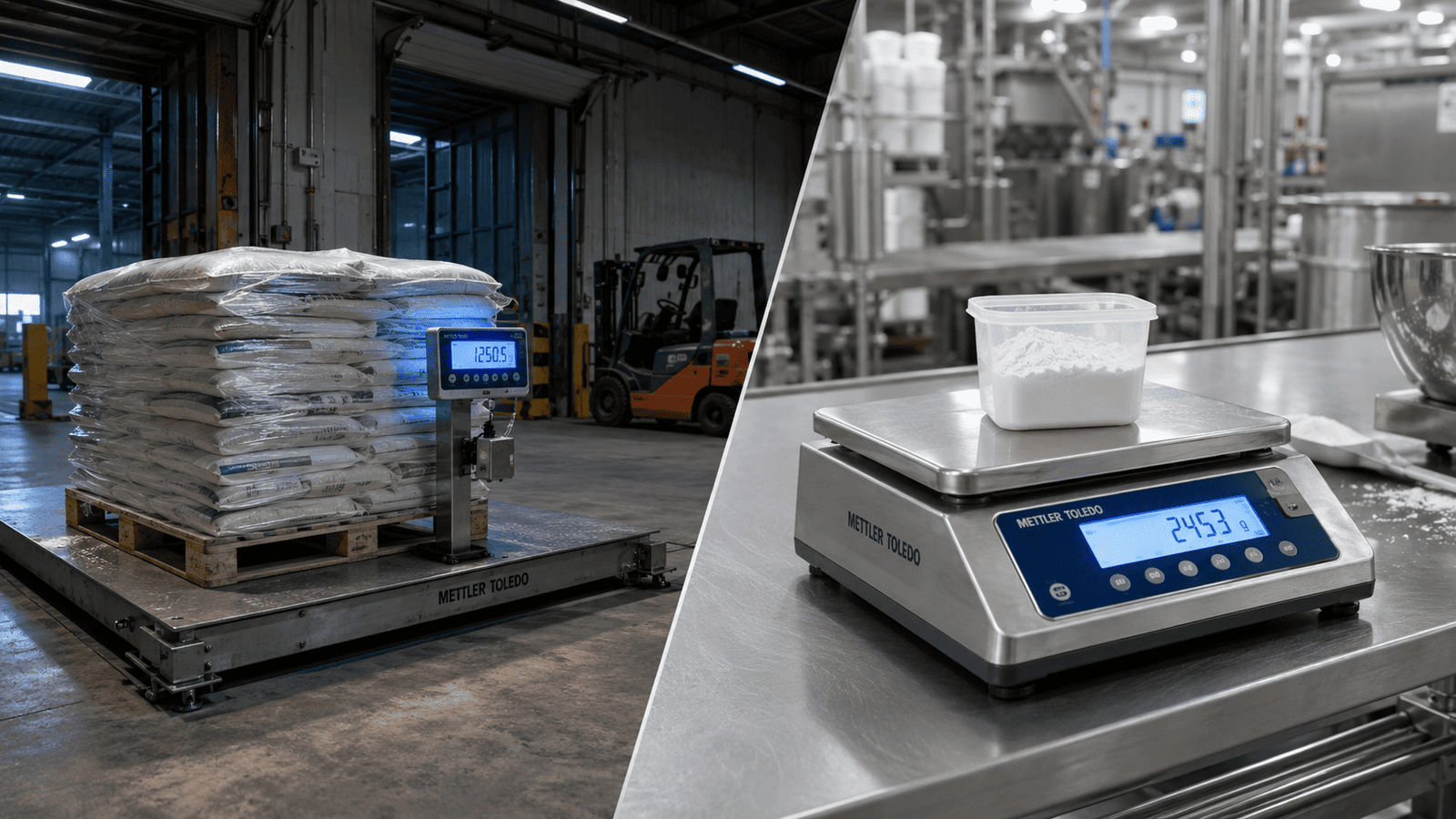
This is the cause that underpins most of the others. The majority of industrial scale failures aren't manufacturing defects, they are the consequences of neglect and poor handling. That is a direct industry observation, and it tracks precisely with what we encounter on-site. The most expensive failures are almost always traceable to a period where maintenance scheduling slipped: a budget cycle that deferred service visits, a key technician who left, a busy operational period where "we'll do it next month" became six months of accumulated risk.
The costs caused by faulty weighing do not occur at the moment of failure, but in the months leading up to it. Gradual deviations, silent errors, avoidable rework. That framing shifts the conversation. The failure you're paying for today was a decision made, or not made, a long time ago.
Prevention: Build a written preventive maintenance schedule with defined frequencies: daily zero-check by operators, weekly visual inspection of cables and platform condition, monthly calibration verification with certified weights, quarterly full service by a qualified technician. Make documentation mandatory. A maintenance log is your evidence trail in any SASO audit or dispute.
“ The failure you're paying for today was a decision made, or not made, months ago. Scale failure is rarely a surprise. — Section 09
| Maintenance Task | Recommended Frequency | Responsible Party |
|---|---|---|
| Zero-balance check | Daily | Operator |
| Visual inspection (cables, platform, seals) | Weekly | Operator / Supervisor |
| Calibration verification with test weights | Monthly | Qualified technician |
| Full inspection (load cells, connectors, mounts) | Quarterly | Service engineer |
| SASO/NMI statutory calibration | Per regulatory schedule | Accredited lab |
| Foundation level check (weighbridges) | Every 6 months | Service engineer |
10 Chemical and Corrosive Exposure
The final cause hits particularly hard in pharma, food processing, chemical manufacturing, and oilfield environments. Cleaning agents, process chemicals, and solvents don't distinguish between the production area and the weighing equipment sitting in it. Exposure to water, humidity, or chemicals can short out load cell electronics or corrode internal components, producing intermittent signals, oxidation, and early failure. High-pressure cleaning, common in food-grade and pharmaceutical environments, is a particularly reliable way to drive moisture past inadequate IP sealing. Operators hosing down a production floor don't always differentiate between the drain channels and the scale platform they're passing over.
For scales in corrosive chemical handling areas, the risk extends to the structural integrity of the platform itself. Mild steel frames exposed to acidic or caustic splashing will corrode from the outside in, often invisibly beneath a painted surface, until a structural inspection reveals metal loss that makes the whole assembly unsafe.
Prevention: Specify the correct material grade for the application from day one, stainless steel platforms and load cells for food, pharma, and washdown environments. Verify IP ratings match your actual cleaning process. If you're running high-pressure hose-downs, you need IP69K, not IP67. When purchasing, ask specifically whether the load cell sealing is welded (preferred) or merely sealed with a cable entry boot, which degrades over time.
11 What These Nine Causes Have in Common
Look across the list and a pattern emerges. Most of these failures don't start with equipment, they start with decisions. The specification made at purchase. The maintenance budget approved or deferred. The operator training that was skipped. The installation that was rushed. Good equipment protects you against some of this. But equipment alone doesn't solve a process problem.
That's the position we hold for clients across Saudi Arabia, not just a supplier of precision weighing equipment, but the partner that helps you build the operating practices, maintenance frameworks, and SASO compliance structures that protect your investment over a ten, fifteen, twenty-year horizon. The global industrial weighing equipment market was valued at $2.3 billion in 2024 and is forecast to reach $3.12 billion by 2029 at a CAGR of 5.9%, according to The Business Research Company. Saudi Arabia's industrial expansion under Vision 2030 is driving a meaningful share of regional demand. But investment in equipment only delivers returns when the equipment is maintained, calibrated, and operated correctly.
| Equipment Feature | What It Protects Against |
|---|---|
| IP69K-rated stainless load cells | Moisture, chemical exposure, high-pressure washdown damage |
| POWERCELL PDX StrikeShield protection | Electrical surge and lightning strike failure |
| Anti-vibration platform mounts | Mechanical fatigue and cyclic load cell stress |
| Welded cable entry sealing | Environmental moisture ingress through connector points |
| Overload protection stops | Load cell deformation from shock loading or overweight events |
| Predictive diagnostics (POWERCELL PDX) | Early drift detection before failure becomes a compliance issue |
12 FAQ: Industrial Weighing Scale Failure in Saudi Arabia
What are the most common causes of industrial weighing scale failure?
The most frequent causes are load cell overloading, environmental damage from heat and dust, cable and connector deterioration, electrical surges, vibration fatigue, poor calibration practices, improper installation, neglected preventive maintenance, and chemical or corrosive exposure. In KSA specifically, sustained summer temperatures and fine desert particulate compound several of these failure modes significantly.
How do I know if my industrial scale is failing before it completely breaks down?
Watch for these early signals: readings that drift between uses without load changes, failure to return to zero consistently, poor repeatability (the same load weighing differently across three attempts), intermittent error codes on the display, and calibration that won't hold between service visits. These are all indicators of an underlying problem that will worsen without intervention.
How often do industrial scales need calibration in Saudi Arabia?
For scales used in legal metrology contexts, commercial trade, billing, regulated production, SASO mandates statutory calibration at defined intervals, and verification must be performed by an SASO-approved or NMI-accredited laboratory. For non-trade production use, monthly internal verification using certified test weights is best practice, with full service calibration quarterly or semi-annually depending on criticality and throughput.
Does SASO require calibration certification for industrial scales in KSA?
Yes. Under Saudi Arabia's Law of Measurement and Calibration (Royal Decree No. M/51, 2013), scales used in statutory or commercial contexts must meet SASO's technical and metrological requirements. SASO's NMCC is the Kingdom's National Measurement Institute and operates as the reference authority for legal metrology. Non-compliant scales used in trade or regulated production expose operators to enforcement risk.
Can environmental conditions in Saudi Arabia cause scale failure?
Absolutely, and this is an area we emphasise specifically with KSA clients. Sustained ambient temperatures of 45°C to 50°C, fine desert particulate, and coastal humidity all accelerate load cell seal degradation, cable insulation failure, and electronic component wear at rates significantly higher than temperate-climate equipment lifecycles suggest. Correct equipment specification for the KSA environment at purchase is the most important single prevention step.
How much does industrial scale downtime actually cost?
The direct cost varies by industry and throughput, but the broader picture is stark. Across industrial sectors globally, ABB's research found a median unplanned downtime cost of approximately $125,000 per hour. For a logistics gate, a batch filling line, or a truck weighing station in KSA running at volume, even a fraction of that figure builds up quickly, before counting any SASO compliance penalties or customer penalties from missed delivery windows.
What should I look for in an industrial scale maintenance partner in Saudi Arabia?
Look for a company that can service the full lifecycle, not just repair on breakdown, but scheduled preventive maintenance, certified calibration traceable to SASO/NMI standards, and the technical depth to advise on equipment specification when you're replacing or upgrading. Global Scales & Systems Co. Ltd. provides maintenance assessments across existing scale assets throughout Saudi Arabia and the GCC. Contact us to schedule a site review.

 Click to start chat