
7 Costly Mistakes That Fail a Weighbridge Calibration Audit in KSA
The weighbridge calibration mistakes that fail SASO and NMI audits in Saudi Arabia, and how to fix each one before inspection day.

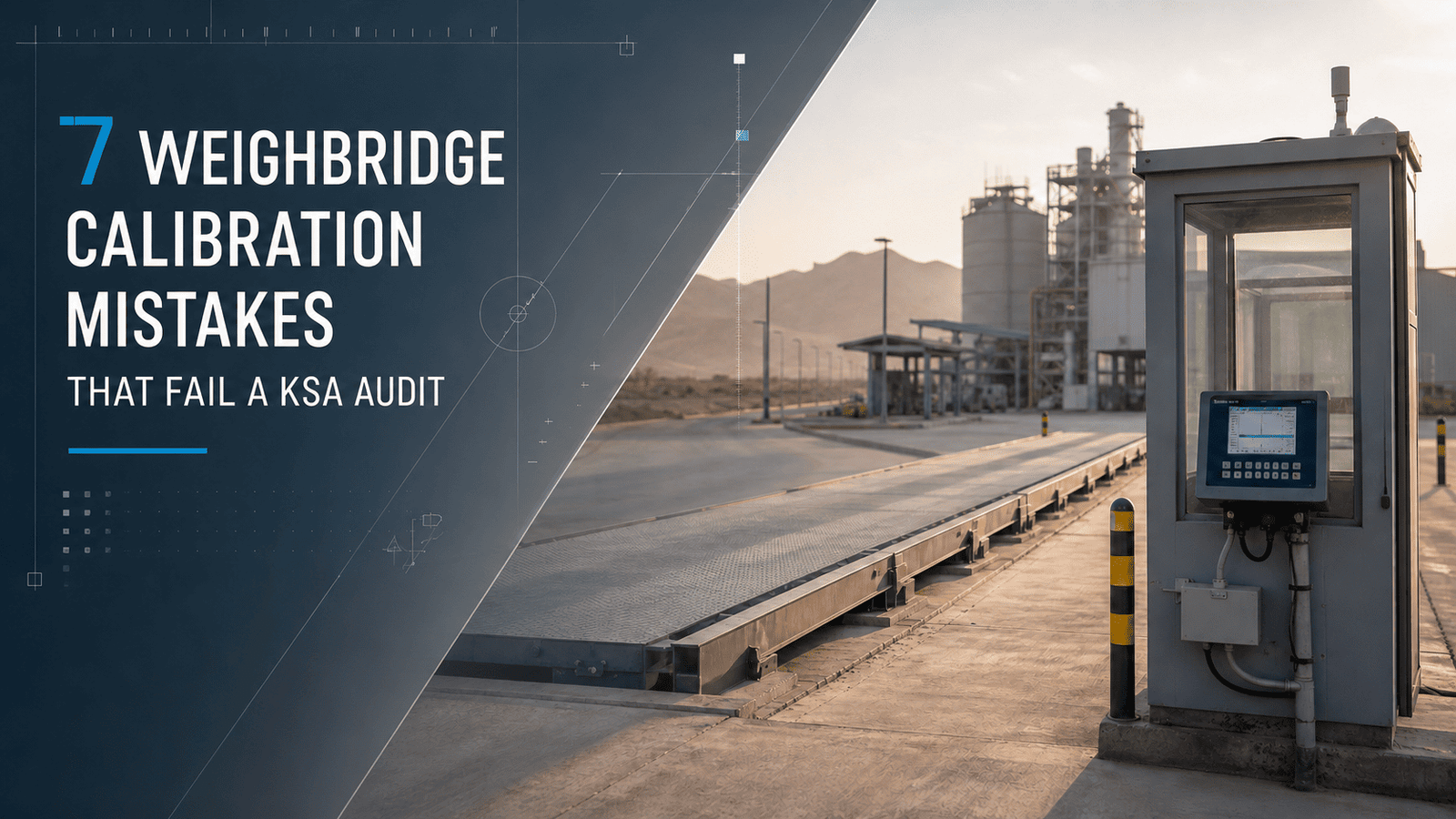
Two days before a SASO compliance renewal, a quality manager in Jubail called us while watching his weighbridge audit go sideways in real time. The auditor pulled the calibration certificate, checked the date against the truck traffic log, and the two didn't match. That single gap, a scale recalibrated on paper but not really in practice, put a non-compliance flag on the entire site. We've seen this exact scenario play out more often than not, and it's almost always one of the same handful of weighbridge calibration mistakes. Not a broken load cell. Not bad equipment. Just a process nobody thought to check until the auditor was standing on the platform.
01 Why a Weighbridge Calibration Audit Carries More Weight in Saudi Arabia
Here's the thing nobody in procurement likes to admit: a weighbridge audit in Saudi Arabia or anywhere for that matter isn't really about the scale. It's about whether your paperwork can survive contact with a regulator. Under the Kingdom's Law of Measurement and Calibration (Royal Decree No. M/51, 2013), any weighbridge used for commercial trade, billing, or regulated production falls under statutory calibration requirements enforced by the Saudi Standards, Metrology and Quality Organization (SASO). SASO's National Measurement and Calibration Center, the NMCC, functions as the Kingdom's National Measurement Institute and is the reference authority for legal metrology nationwide.
“ A weighbridge audit in Saudi Arabia isn't really about the scale. It's about whether your paperwork can survive contact with a regulator. — Section 01
Saudi Arabia's technical requirements for weighing instruments also follow the international OIML R 76 recommendation for non-automatic weighing instruments, which sorts equipment into accuracy classes I through IIII. Most industrial and commercial weighbridges fall under Class III. If your instrument, your calibration record, or your verification lab can't be traced back to that framework, the audit doesn't go your way, no matter how good the scale itself is.
And the stakes are rising, not falling. Saudi Arabia's digital weighing scale market is projected to grow from USD 89.3 million in 2025 to USD 144.8 million by 2034, a 5.52% CAGR, according to IMARC Group. More weighing assets in the field, from the Eastern Province to NEOM-linked logistics corridors, means more scrutiny on how well they're maintained, not less. That scrutiny is exactly where the weighbridge calibration mistakes below start creeping in.
02 The 7 Weighbridge Calibration Mistakes That Fail an Audit in KSA
Most audit failures aren't equipment failures. They're process failures wearing an equipment failure's clothes. Here's the quick version, followed by what each one actually looks like on site.
| # | Mistake | Why Auditors Flag It |
|---|---|---|
| 1 | Using an expired or unaccredited calibration certificate | Not traceable to an SASO or NMI-approved lab |
| 2 | Skipping interim checks between full calibrations | No documented drift monitoring in between statutory visits |
| 3 | Ignoring foundation and civil works settling | Accuracy shifts even when load cells are fine |
| 4 | Missing pre-audit zero-balance and linearity checks | Auditors test multiple load points, not just full load |
| 5 | Poor traceability documentation | Can't prove certified test weights or technician credentials |
| 6 | Recalibrating after, not before, a component swap | New hardware introduces drift auditors will catch |
| 7 | Treating calibration as a one-time fix | Same failures resurface at the next cycle |
1. Using an Expired or Unaccredited Calibration Certificate
This is the one that catches people off guard the most. A certificate exists, it's laminated, it's framed somewhere in the site office, but it wasn't issued by an SASO-approved or NMI-accredited lab, or it expired eight months ago and nobody renewed it. Auditors don't accept "we know a guy who calibrates scales." They want a certificate that traces back through an accredited chain, full stop.
Prevention is simple, even if the fix isn't. Keep a live calendar of every calibration due date tied to the instrument's serial number, not the site. And confirm, in writing, that whoever issues the certificate is actually on SASO's approved list before you pay the invoice.
2. Skipping Interim Checks Between Full Calibrations
Full calibration might happen annually, or every six months for high-frequency sites, but that doesn't mean the scale should go untouched in between. Busy logistics hubs and cement plants running multiple shifts can drift measurably within weeks. If your only data point is last year's certificate, an auditor has no way to know whether the scale held steady or wandered off spec the week after it was issued.
We tell clients the same thing every time: run a quick internal verification with certified test weights on a set schedule, monthly is a reasonable baseline for high-throughput operations, and log it. That log becomes evidence, and evidence is what audits actually run on.
3. Ignoring Foundation and Civil Works Settling
Nobody thinks about concrete until it moves. Desert soil conditions, heat cycling, and heavy repeated axle loads can cause a weighbridge pit or foundation to settle unevenly over time, which throws off accuracy even when the load cells themselves are performing exactly as designed. It's not a scale problem. It's a ground problem wearing a scale problem's clothes.
Pro tip
A structural inspection of the foundation should be part of every calibration visit, not an afterthought. If your calibration provider only ever touches the indicator and load cells, ask why.
4. Missing Pre-Audit Zero-Balance and Linearity Checks
Here's a mistake that's almost embarrassing once you see it: teams check the scale at full load because that's the number everyone cares about, and skip verifying it at zero, quarter-load, and mid-range. Auditors test across the full weighing range precisely because a scale can read correctly at one point and drift at another.
5. Poor Traceability Documentation
A calibration can be technically perfect and still fail an audit if you can't prove it. Which test weights were used? Are they themselves traceable to a national standard? Was the technician certified? Auditors aren't just weighing your truck, they're weighing your paper trail.
6. Recalibrating After, Not Before, a Component Swap
Swap a load cell or replace an indicator, and the instrument's behavior changes, sometimes subtly, sometimes not. Plenty of sites replace the part, run it for a few weeks "to see how it goes," and only schedule recalibration once something feels off. By then you've potentially been weighing, and billing, incorrectly the whole time.
Common mistake
The rule that actually works: any hardware change triggers a recalibration before the scale goes back into commercial service, not after.
7. Treating Calibration as a One-Time Fix
Every mistake above traces back to this one, really. Calibration gets treated as a checkbox exercise instead of an ongoing program, so the same issues resurface at the next cycle. Fix the certificate this year, and next year you're back explaining the same gap to the same auditor.
03 What Auditors Actually Check When They Inspect Your Weighbridge
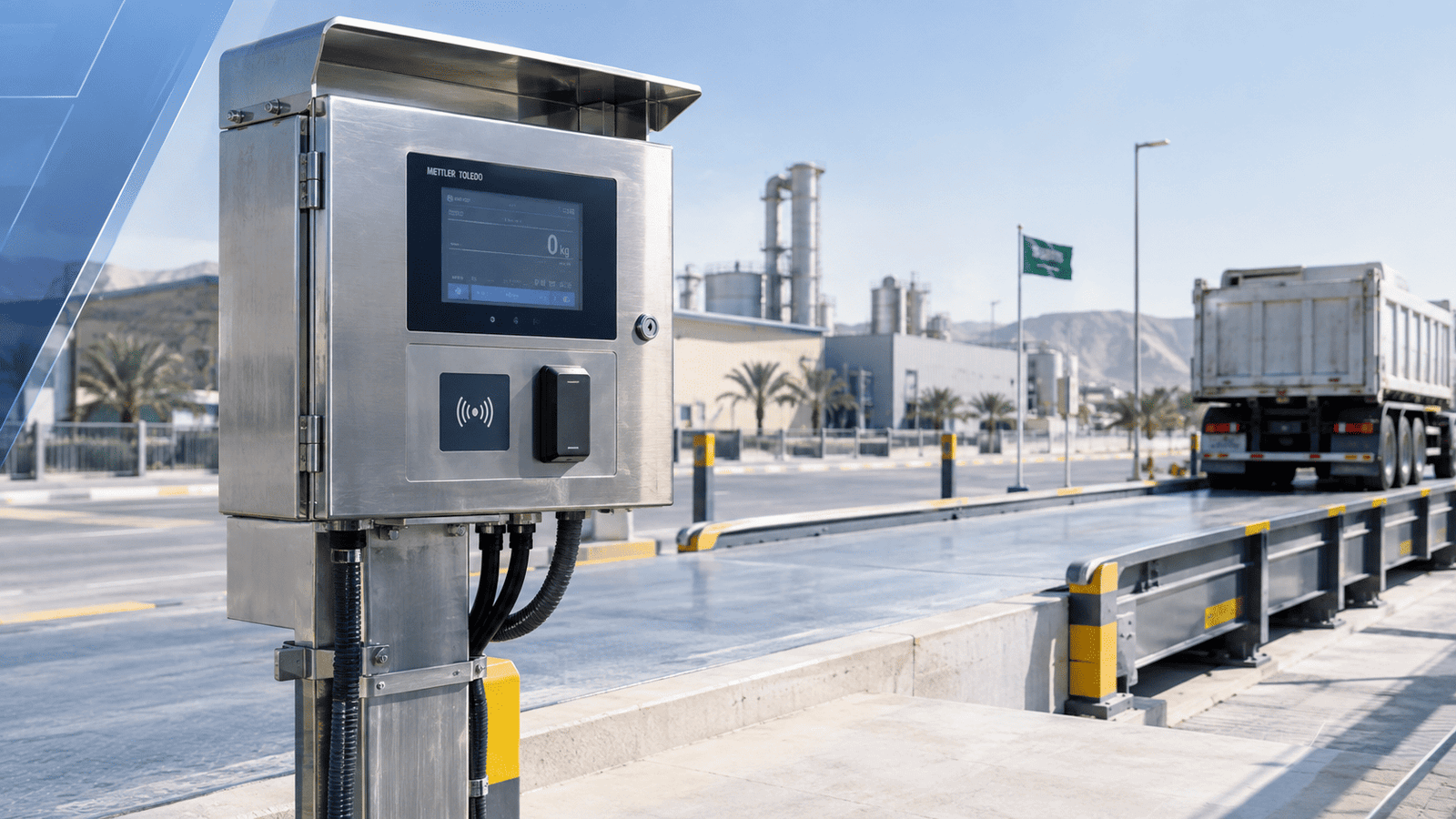
So what actually separates a pass from a fail when the auditor walks in? Function checks, load-point tests, a foundation glance if it's due, and paperwork. That's it, but each element carries equal weight (no pun intended).
- Zero and span check against commissioning-verified points
- Multi-point linearity test across the full working range
- Physical inspection of the pit, deck, and foundation for movement or damage
- Verification that the calibration lab and technician credentials trace back to an SASO or NMI-recognized chain
- Cross-check of maintenance logs against actual usage records
Miss any one of these and you're not failing because your scale is bad. You're failing because the evidence trail has a hole in it, and that hole is almost always one of the seven weighbridge calibration mistakes above.
04 How Global Scales & Systems Positions You to Pass, Not Just Prepare
In my experience working with operations and quality teams across the Eastern Province, Jeddah, and Dammam, the sites that never fail an audit share one habit: they treat their calibration provider as a compliance partner, not a repair vendor they call when something breaks.
That's the role Global Scales & Systems plays across Saudi Arabia and the wider GCC. We don't just calibrate a weighbridge and hand you a certificate. We build the documentation trail an SASO or NMI auditor expects to see: traceable test weights, technician credentials, foundation inspection notes, and a maintenance history that tells a consistent story from one audit cycle to the next.
Where it's relevant, our role as Mettler Toledo's regional partner also lets us spec instrumentation built for audit resilience from the start, load cells with predictive diagnostics that flag drift before it becomes a finding rather than after. But honestly, the equipment is only ever half the answer. The other half is the discipline behind it, and that's where most sites lose points.
| What We Bring | What It Means for Your Audit |
|---|---|
| SASO/NMI-traceable calibration certification on every visit | No traceability gaps for auditors to flag |
| Foundation and civil inspection bundled into every calibration | Settling issues get caught before they show up as drift |
| Predictive-diagnostic load cells (where specified) | Drift gets flagged early instead of surfacing at audit time |
| Centralized documentation per asset | One file, not a scavenger hunt, when the auditor asks for records |
| Scheduled interim verification programs | A documented history between statutory calibrations |
05 Building an Audit-Ready Calibration Program
None of this requires a bigger budget. It requires a calendar, an owner, and a habit of asking your calibration provider for evidence, not just a signature.
Start with three things: map every weighbridge and scale by serial number against its next due date, request interim verification logs (not just annual certificates) from your provider, and keep every document tied to a single asset file that survives staff turnover. Do that, and audit day stops being a surprise. It becomes a formality. No scrambling. No last-minute calls. Just a file that already has the answer.
That's the standard we hold ourselves to across every industrial vertical we work in, from logistics depots to cement plants to oil and gas facilities, and it's the standard Vision 2030-era operators are increasingly expected to meet.
06 FAQ: Weighbridge Calibration Audits in Saudi Arabia
How often does a weighbridge need calibration in Saudi Arabia?
Most industrial weighbridges should be calibrated at least once a year as a widely followed industry benchmark. High-throughput sites, such as busy logistics hubs or cement plants running multiple shifts, are generally advised to calibrate every six months given the added wear on the instrument.
What's the difference between calibration and verification for a weighbridge?
Calibration compares the instrument's readings against a traceable reference standard and corrects any inaccuracy. Verification confirms the instrument still performs within its approved accuracy class between full calibrations. Both matter for an audit, and they're not interchangeable, even if some vendors use the terms loosely.
Who is authorized to calibrate a weighbridge in Saudi Arabia?
Only SASO-approved or NMI-accredited laboratories and technicians can issue calibration certificates that will hold up under a statutory audit for weighbridges used in trade or regulated production.
Can a weighbridge stay in service if it fails calibration?
If a weighbridge used for commercial trade or regulated production fails calibration, it should be pulled from billing-relevant use until it's repaired and recertified. Continuing to weigh commercial loads on a failed instrument is exactly the kind of gap a SASO audit exists to catch.
What documents should I have ready before a weighbridge calibration audit?
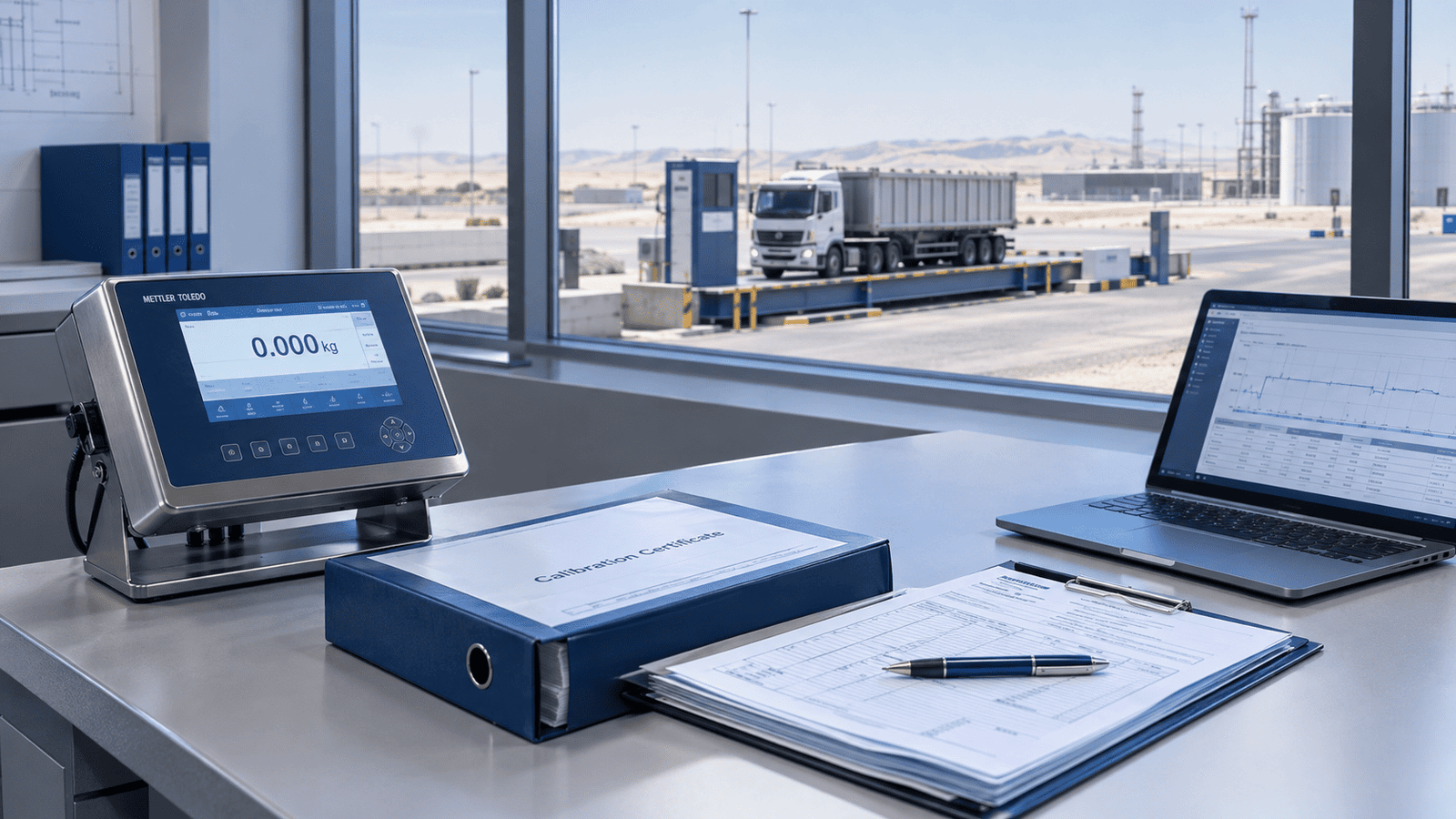
At minimum: the current calibration certificate from an accredited lab, maintenance and interim verification logs, technician credentials, and any foundation or civil works inspection notes from the past year.
Does a new load cell or indicator require a fresh calibration certificate?
Yes. Any hardware change, whether it's a load cell, indicator, or junction box, changes the instrument's behavior enough that it needs to be recalibrated and recertified before it goes back into commercial service.
A weighbridge audit doesn't have to be the tense two hours your quality manager dreads every year. Fix the seven weighbridge calibration mistakes above, keep your documentation in one place, and treat calibration as a program rather than an event, and audit day becomes something closer to routine. If you'd rather have a second set of eyes on your current setup before your next audit window, contact us now at Global Scales & Systems and we can walk your site and tell you exactly where the gaps are, honestly, before an auditor does.

 Click to start chat