
How to Avoid Overloading Fines: 7 Critical Best Practices for Fleet Operators
Saudi fleet operators face fines up to SAR 100,000 for overloading. Here are 7 proven practices to stay compliant, protect your vehicles, and avoid costly penalties.

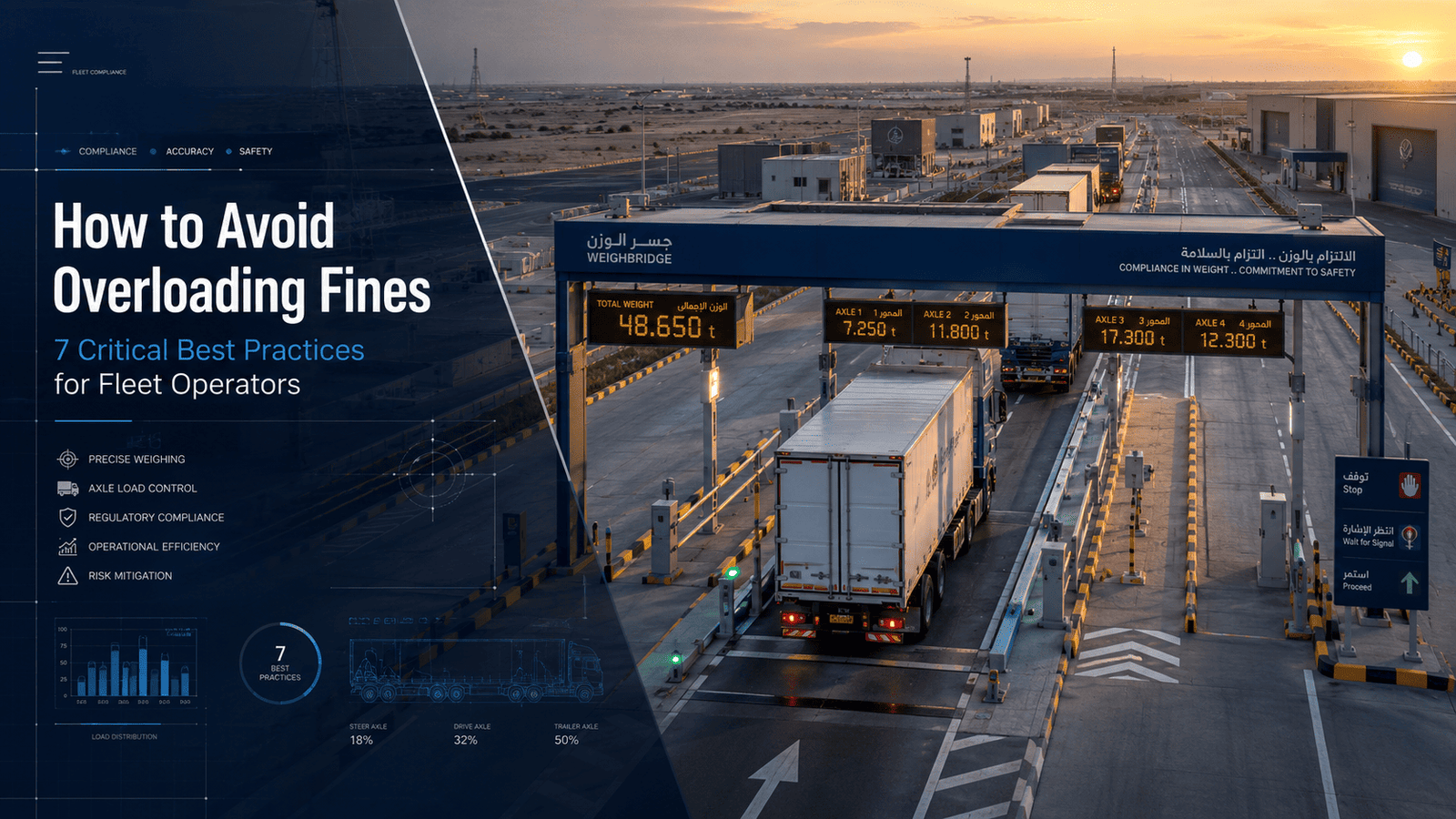
A SAR 100,000 fine. For a single trip. That is the ceiling the Roads General Authority set for overweight truck violations in the Kingdom and with enforcement cameras now active on major freight corridors, the gap between "we'll be fine" and a six-figure penalty has never been thinner. Learning how to avoid overloading fines is no longer optional for Saudi fleet operators. It is a business survival issue.
The KSA road freight market was valued at USD 8.61 billion in 2024, with a 6.2% CAGR projected through 2031. That growth trajectory only holds if your fleet stays operational, not parked at an impound lot while you work through a fine stack that doubles with every repeat offence.
Here is the reality: most overloading violations are not deliberate. They happen because of miscalculated tare weights, uneven load distribution, and no accurate weighing at the point of dispatch. All of that is fixable. Let's go through it.
01 What the RGA Actually Says: KSA Axle Weight Limits Explained
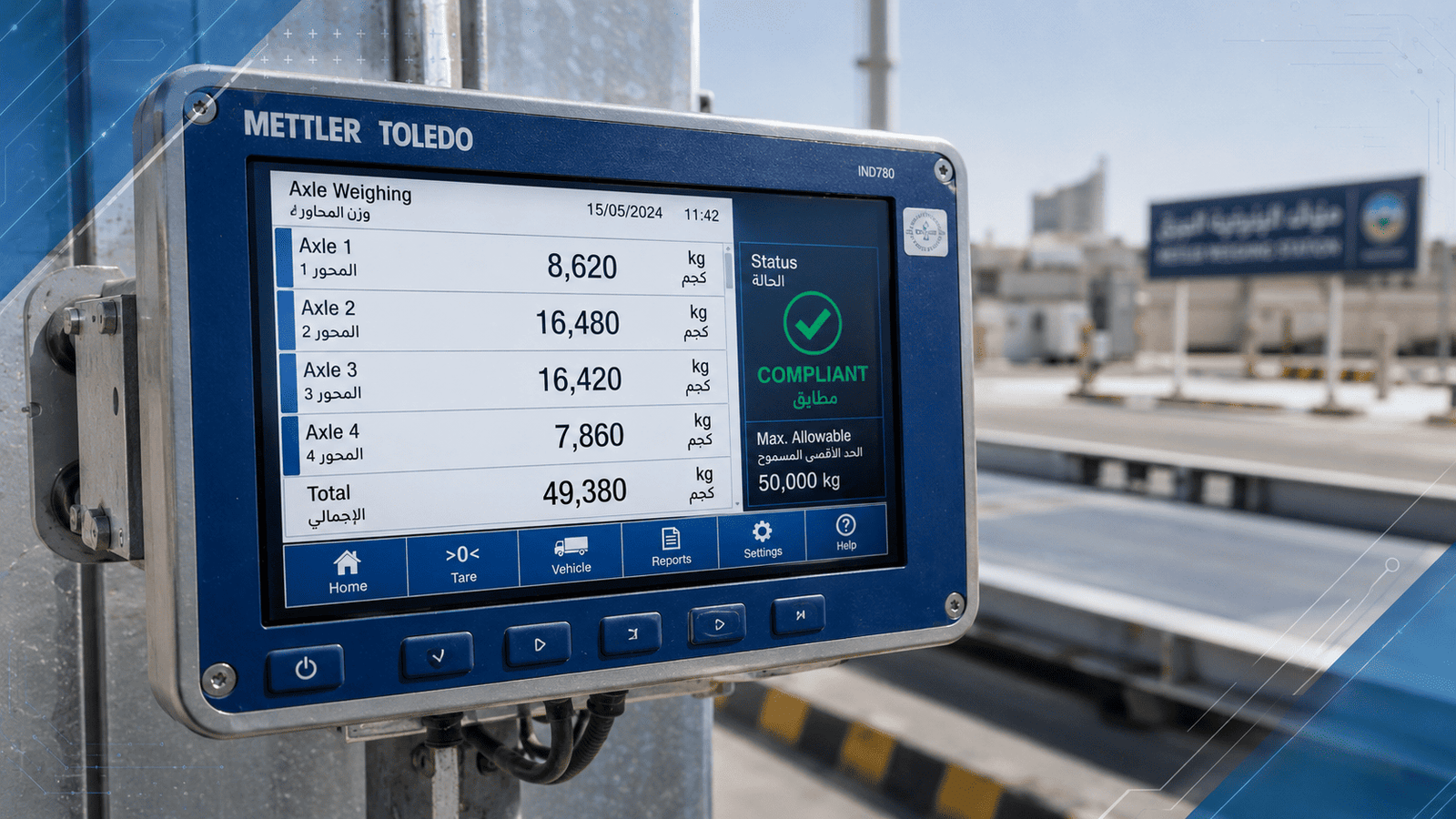
Before you can protect your fleet, you need to know exactly where the lines are. The Roads General Authority published its official weight limits in September 2024 and they are axle-based, not just total-gross-based.
| Number of Axles | Maximum Gross Weight (KSA) |
|---|---|
| 2 axles | 21 tonnes |
| 3 axles | 34 tonnes |
| 4 axles | 42 tonnes |
| 5 axles | 45 tonnes |
The penalty structure is where fleet operators get caught off guard: SAR 200 for every 100 kg over the limit, up to a maximum of SAR 100,000. A truck running 2,000 kg overweight is a SAR 4,000 fine on the spot. A 5,000 kg overrun? SAR 10,000. And that is before factoring in what happens to repeat offenders.
If you are operating foreign-registered trucks, the penalty regime is steeper. The Saudi Transport General Authority has issued SAR 10,000 fines plus 15-day impoundments for a first violation, rising to SAR 160,000 and 60 days off the road for a fifth. That escalating structure is not theoretical. Enforcement campaigns targeting freight corridors have already resulted in multiple seizures.
The RGA also applies dimension limits: no truck exceeding 23 metres in length, 2.6 metres in width, or 4.8 metres in height. Dimension violations carry a separate SAR 1,000 fine.
One point that catches operators out: axle load compliance is separate from gross-weight compliance. You can be under the gross limit and still receive a fine if a single axle is carrying more than its rated share. Load distribution matters as much as total load weight.
“ You can be under the gross limit and still receive a fine if a single axle is carrying more than its rated share. Load distribution matters as much as total load weight. — Section 01
02 Why Fleet Operators Underestimate Overloading Risk
We keep seeing the same pattern across logistics and industrial clients. The fleet manager assumes the truck is fine because the last load ran without incident. The driver reports no issues. The cargo documentation looks reasonable. Nobody steps on a scale. And then the checkpoint does it for them.
The most common reasons operators end up overweight without intending to:
Tare weight drift. Every truck picks up weight over its life: mounted toolboxes, additional fuel tanks, mud, sand accumulation in wheel arches, extra cab fittings. A truck that was 8.2 tonnes tare when it left the manufacturer may be running closer to 8.7 tonnes two years later. That 500 kg difference eats directly into your payload capacity.
Loading by volume, not weight. Warehouse teams often fill a trailer by visual assessment. A load that looks 70% full can be 110% of the legal axle limit if the cargo is dense or unevenly distributed: steel pipe, aggregate, packaged cement, FMCG pallets with inconsistent stacking. Visual loading is the wrong tool for a weight problem.
Multi-stop accumulation. A truck that starts a route compliant can become non-compliant mid-route if a second cargo collection adds unplanned weight. Without a weigh-in at each loading point, there is no check.
Driver documentation pressure. On high-throughput logistics runs, drivers are under schedule pressure. They rely on shipper-provided cargo weights, which are sometimes estimated, sometimes rounded, and occasionally wrong. The driver takes the fine. The operation absorbs the disruption.
All of these are solvable, but they require a weighing discipline built into operations, not a policy document filed in a drawer.
Common mistake
Relying on a truck's original manufacturer tare weight for dispatch calculations is one of the most common errors in KSA fleet operations. Vehicles accumulate permanent additional weight over time, added toolboxes, tanks, and cab fittings, meaning the tare figure in your system may already be hundreds of kilograms out of date. Always weigh each vehicle empty before calculating payload capacity.
03 7 Proven Practices to Avoid Overloading Fines
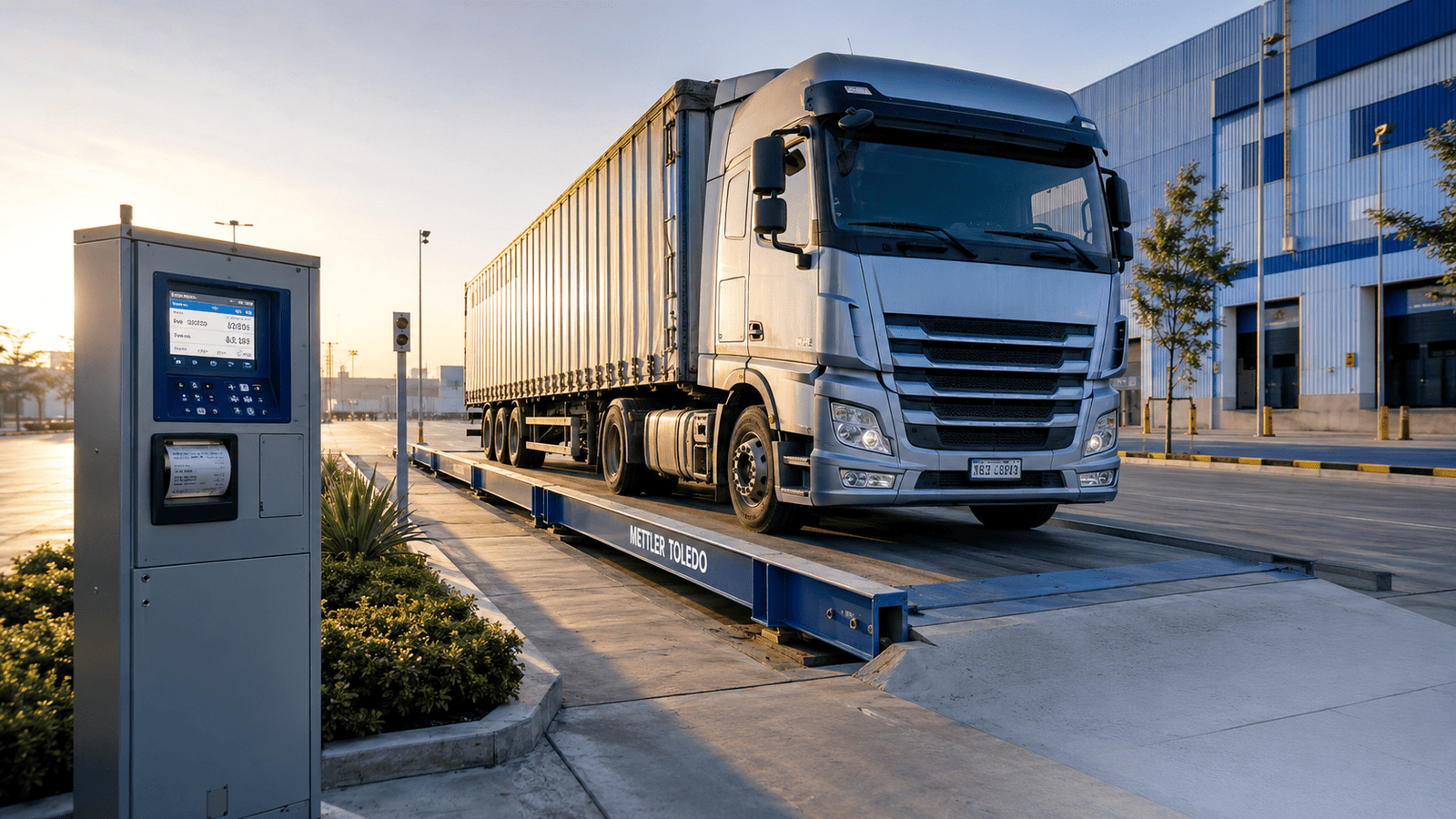
These seven practices cover the full compliance chain, from the weighing gate to the driver cab to your manifest records. Implementing even four or five of them will measurably reduce your overloading risk. Implementing all seven eliminates it as a routine operational problem.
1. Weigh Every Load Before Dispatch, Without Exception
The single most effective intervention is the most obvious one: weigh the truck before it leaves your facility. This is where a properly calibrated, SASO-compliant weighbridge or platform scale pays for itself. The clients who consistently avoid overloading fines are the ones who made weighing mandatory at dispatch, not advisory, not occasional. Mandatory.
A surface-mounted truck scale or weighbridge at the exit gate removes the guesswork. The driver gets a printed weight ticket. If the truck is overweight, you catch it before the checkpoint does. The cargo gets adjusted. The truck leaves compliant.
“ The clients who consistently avoid overloading fines made weighing mandatory at dispatch. Not advisory, not occasional. Mandatory. — Section 03
2. Know Your Tare Weight and Update It Regularly
Establish the certified tare weight of every vehicle in your fleet and recertify it at minimum annually. Tare weight changes as vehicles age, get fitted with additional equipment, or accumulate permanent debris. If your dispatch calculations are based on a tare figure that is 400 kg out of date, you are already starting from the wrong number.
The right approach: weigh each truck empty at the start of each day or each loading cycle. This is standard practice in well-run mining, cement, and aggregate operations. It takes two minutes and removes one of the most common calculation errors from your compliance process.
3. Calibrate Your Weighing Equipment to SASO Standards
A weighing scale is only as reliable as its last calibration. In Saudi Arabia, commercial and legal-for-trade weighing equipment must comply with SASO standards, which align with OIML accuracy requirements. An uncalibrated scale that reads 500 kg light is not a safety net. It is a liability generator.
Calibration drift is a real issue in KSA's climate. Scales operating in 50°C-plus ambient temperatures experience thermal expansion in their load cell components, which can shift zero points and span values. A scale that was accurate in January may be reading differently by July. Annual calibration is the minimum. For high-throughput operations, quarterly calibration is worth the investment.
Global Scales & Systems provides SASO-compliant calibration services across the Kingdom. When your scale records are audited by an enforcement authority, certified calibration documentation is what stands between you and a disputed fine.
4. Train Your Dispatch Team, Not Just Your Drivers
Overloading fines land on the operator, not just the driver. Your dispatch and warehouse teams need to understand weight limits as clearly as your drivers do, arguably more, because they are the ones making loading decisions.
A practical training programme covers axle load limits per vehicle type (not just gross weight), how to read cargo weight documentation critically, and load distribution principles, since rear-heavy versus front-heavy loads affect axle readings differently. It should also cover what to do when a cargo weight does not match the shipper's declaration.
This does not require a full-day seminar. A 90-minute monthly briefing with real examples from your own fleet is more effective than an annual policy update that nobody reads.
5. Build Weighing Into Gate Control, Make It a Hard Requirement
Build the weigh-out into your gate control process as a hard gate requirement, not a step drivers can skip under schedule pressure. The truck does not exit until a weight ticket is generated and recorded.
Automated weighbridge terminals with ticket printers and fleet management integration remove the human friction. The driver pulls onto the platform, the system records the weight against the vehicle number plate or RFID tag, the ticket prints, the gate opens. No delay. No override.
For high-throughput sites such as distribution centres, cement plants, and FMCG warehouses, this kind of automated integration is the only way to maintain compliance at volume without bottlenecking your dispatch cycle.
6. Audit Your Load Manifests Against Actual Weights
Keep records. When a truck returns from a route, compare the weight ticket at departure against the cargo manifest. Over time, patterns emerge: a particular supplier consistently under-declares cargo weights; a specific product category is always heavier than the documentation says; a particular route accumulates unplanned additional loads.
This audit process takes roughly 30 minutes per week across a mid-sized fleet. The value is in catching systematic errors before they become systematic fines. It also gives you documented evidence of due diligence if a fine is ever disputed.
7. Use Portable Axle Weighpads for Multi-Stop Routes
For fleets running multi-stop routes where vehicles pick up cargo at multiple points, a fixed weighbridge at dispatch alone is not enough. Portable axle weighpads deployed at key collection points allow weight checks mid-route before the load becomes non-compliant.
Portable weighpads are particularly relevant for construction sector operators, agricultural commodity transport, and any operation where return loads are collected opportunistically. They are compact, battery-operated, and accurate to within the tolerances required for pre-compliance checking. They will not replace a certified weighbridge for legal-for-trade transactions, but as an operational check before approaching an RGA checkpoint, they are a sound investment.
Pro tip
For fleets with 10 or more vehicles, integrate your weighbridge terminal with your fleet management software. Weight tickets logged automatically against vehicle plate numbers give you a compliance audit trail with zero manual admin, and mean you can pull documented evidence of due diligence for any trip in seconds if a fine is disputed.
04 The Real Cost Nobody Calculates: Beyond the Fine Itself
The fine is the visible number. The real cost of an overloading violation runs deeper and for most fleet operators it takes several incidents before the full picture becomes clear.
Vehicle wear and mechanical failure. An overloaded truck is mechanically stressed beyond its design envelope. Suspension components, brake systems, and tyres wear at accelerated rates. The cumulative maintenance cost over a fleet's lifetime can dwarf the fines themselves, particularly on routes with challenging road surfaces across KSA's central and northern corridors.
Driver liability and loss. In KSA, the driver who receives the violation takes the fine and the traffic points. A good driver who accumulates points becomes uninsurable and eventually loses their licence. Replacing an experienced heavy vehicle driver in a market where the workforce gap is estimated at 663,000 logistics professionals by 2030 is not a small problem.
Route bans and operational disruption. Trucks stopped at checkpoints create knock-on delays across your dispatch schedule. If a vehicle is impounded, that unit is out of service for the full duration. On a tight fleet, one impoundment can cascade into missed SLAs, penalty clauses with clients, and reputational damage that takes months to repair.
Insurance complications. Most commercial vehicle insurers apply exclusions or increase premiums following overloading violations. If a non-compliant vehicle is involved in an accident, coverage may be disputed entirely.
05 Weighing Equipment for Fleet Compliance: What to Specify
Not all scales are equal. For fleet compliance in Saudi Arabia, here is what to look for and what each equipment type is best suited for.
| Equipment Type | Best For | Key Specification to Verify |
|---|---|---|
| Pit-mounted weighbridge | High-volume dispatch, 24/7 operation | SASO legal-for-trade certification, IP rating |
| Surface-mounted platform scale | Retrofit installations, mid-size operations | Axle-load capability, OIML accuracy class |
| Portable axle weighpads | Multi-stop routes, site compliance checks | Wireless transmission, battery life, accuracy class |
| Weigh-in-motion (WIM) | Very high throughput, automated gate control | Statutory approval, calibration traceability |
The minimum specification for any scale used in a compliance context: SASO-certified for legal-for-trade use, with a documented calibration history. A scale bought from an uncertified supplier at a low price is not a compliance tool. It is a liability.
For most mid-to-large fleet operators in KSA, a surface-mounted platform scale at the dispatch gate, paired with fleet management software integration, is the most practical and cost-effective compliance solution. Global Scales & Systems has deployed these configurations across logistics, FMCG, and industrial sectors throughout the Kingdom.
“ A scale bought from an uncertified supplier at a low price is not a compliance tool. It is a liability. — Section 05
06 FAQ: Overloading Fines and Fleet Compliance in Saudi Arabia
The questions we receive most often from fleet operators across KSA and the GCC.
What is the maximum fine for truck overloading in Saudi Arabia?
The Roads General Authority has set the fine at SAR 200 for every 100 kg over the permitted axle weight, with a maximum cap of SAR 100,000 per violation. Dimension violations (length, height, width) carry a separate SAR 1,000 fine.
Can I dispute an overloading fine if my weighing equipment showed I was compliant?
Disputing a fine requires documented evidence that your weighing equipment was calibrated and SASO-certified and that the weight ticket was issued at or near the time of dispatch. An uncalibrated or uncertified scale provides no legal defence. This is precisely why certified calibration documentation matters.
How often should commercial truck scales be calibrated in KSA?
Annual calibration is the minimum for most legal-for-trade applications. For high-ambient-temperature environments (above 45°C average in summer months), quarterly calibration checks are advisable given thermal expansion effects on load cell accuracy. Always retain calibration certificates; they are your paper trail in a compliance audit.
What are the axle weight limits for five-axle trucks in Saudi Arabia?
Per the RGA's 2024 guidelines, a five-axle truck is permitted a maximum gross weight of 45 tonnes. Individual axle limits also apply: a single axle is capped at 8 tonnes, a double axle at 10 tonnes. Exceeding any of these limits, gross or individual axle, can trigger a fine.
Does the overloading fine apply to empty trucks returning to depot?
The fine applies to vehicle weight at the point of inspection, meaning gross vehicle weight including any residual load, fuel, cab fittings, and chassis weight. An empty truck running under tare-weight limits is not subject to overloading fines. The key word there is calibrated tare weight, not assumed tare weight.
Are there exemptions for abnormal or oversized loads in KSA?
Yes. Saudi Arabia allows permits for abnormal or oversized loads under specific conditions, issued by the Roads General Authority. These cover construction equipment, modular structures, and cargo that cannot be segmented. Permit applications require route pre-approval and, in many cases, escort vehicle requirements. Apply through official RGA channels well in advance of the planned movement.
07 The Single Takeaway
Most overloading fines in Saudi Arabia are avoidable. Not because the regulations are easy to meet, they are precise and they are enforced, but because the root cause is almost always the same: operators do not know their actual vehicle weight at the point of dispatch.
A calibrated, SASO-certified scale at your exit gate closes that gap. Everything else in this article, from tare weight management to load distribution training to manifest auditing, amplifies the value of that single piece of infrastructure.
The KSA road freight market is growing at 6.2% annually, according to DataBridge Market Research. That growth means more volume, tighter enforcement, and more competitive pressure on margin. Fleet operators who embed weighing compliance into their daily operations protect their vehicles and their licences. More than that, they protect the reliability that makes them worth contracting with in the first place.
Global Scales & Systems is the industrial weighing and compliance partner of choice for logistics, FMCG, and infrastructure operators across Saudi Arabia and the GCC. If you want to review your current weighing setup or build a compliant dispatch gate solution from scratch, contact our team.
All fine amounts and weight limits are based on information published by Saudi Arabia's Roads General Authority and Saudi Transport General Authority as of 2024 to 2025. Regulations are subject to change. This article does not constitute legal advice. Operators should verify current requirements through official Saudi government channels and seek qualified legal counsel for compliance decisions specific to their operation.

 Click to start chat